 One platform connecting startups, corporations, research institutions, regions and investors
 Southeast Asia Innovation Landscape 2026
 ESG Data-as-a-Service (DaaS) A game-changer for resource-constrained SMEs

Apply technology to achieve important breakthroughs – Which industries have gradually created highlights in the Vietnam market?

Entering the New Normal, economic industries in Vietnam have gradually been rehabilitated and brought about a turning-point in the market with the outbreak of investment activities and the participation of new technological waves
Agricultural and Food Technology – A key for Vietnam’s development and a learning point from Israel
Agriculture is an important economic sector in Vietnam, contributing 14.9% to Vietnam’s GDP (2020). Along with the development of science and technology, Agritech (application of technology in agriculture) was born with the desire to improve productivity and product quality, and gradually improve people’s lives. The role of Agritech is also increasingly evident in overcoming problems in the agricultural industry such as the reduction of the labor force, the impact of climate changes, low labor productivity, and low agricultural products value, etc
Israel is a country famous for its innovations in agricultural growth in poor soil conditions and efficient use of water resources. Thanks to those innovations, the agricultural industry of this Middle Eastern country always ensures productivity and product quality.
The number of startups in the agriculture and food sectors is staggering: Israel now has more than 500 Agri-FoodTech startups. Even in times of the global pandemic, $290 million was invested in Israeli Agri-FoodTech companies in 2020, just $50 million down from 2019’s $320 million. That translates into technologies such as Artificial Intelligence, Internet of Things and Sensors, Data Storage, Robotics, Biological Solutions, and Water Technology.
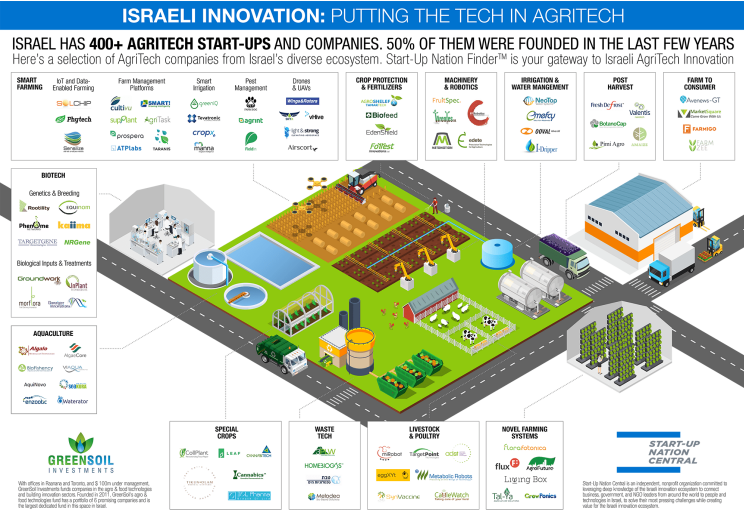
Israel has constantly researched and promoted the application of high technology in agriculture. As a result, in a short time this country has moved from food shortage to food self-sufficiency. Always at the forefront of applying science to agricultural production, Israel has become an agricultural example of the world.
An uncommon chance for tourism companies to surpass through technological application in order to optimize customers’ experience
In order to create sustainable changes, each destination and business need to build a customer-centric mindset in any strategy or product plan. We will be in an era where customer experience will be at the heart and destination of every strategy. Any innovative solution or application can only be considered adequate if it adequately meets the experience needs of the target customers of each destination and business.

Visitors will have more and more constant changes in the demand for more personalized experiences. Innovation will be the key to helping Vietnam’s tourism industry respond flexibly and quickly to these changes of tourists on the basis of innovation being closely linked with customer understanding.
Technology, innovation, and entrepreneurship are effective levers to restructure the tourism industry after Covid-19, promoting industry cooperation links, multi-industry linkages, and multi-resources to create a new industry competitive position for Vietnam regionally and internationally. Innovation promotes the process of changing the mindset and restructuring the tourism industry. Specifically, it changes research methods, market accessibility, businesses operation, value chains and supply chains, which helps orient and create models of sustainable tourism, safe tourism, smart tourism and new indigenous tourism based on innovative cultural and technological platforms. Technology facilitates the development of the startup ecosystem, innovates tourism, service, and culinary industries with new business models, and creates new products and services, along with traditional products that will increase national competitiveness.
Prediction about cryptocurrency trends and going through a landscape of Vietnam’s market in “hibernation” season
According to Chainalysis, Vietnam is a perfect example of a country where the level of participation in cryptocurrency transactions far exceeds the ranking of the economy. Although only ranked 53rd in GDP with about $262 billion and is ranked as a low-averageincome country, Vietnam still has a fairly high level of acceptance for cryptocurrency transactions.
Accordingly, Vietnam ranks 10th out of 154 countries in the Global Cryptocurrency Acceptance Index. This is one of the rare indexes where Vietnam has the same rank as developed countries such as the US, China or South Africa, and even higher than many other developed countries such as the UK, France, Germany, and Spain, Japan, Korea,…
According to a number of studies from reliable sources such as Chainalysis, Finder, ConsenSys, Vietnam holds impressive positions as follows:
- Top 1 in crypto adoption index (Chainalysis)
- Top 1 in crypto ownership index with 41% of people owning (Finder)
- Top 2 in DeFi Adoption Index (Chainalysis)
- Top 3 in terms of monthly Metamask wallet users
Not stopping at a investment perspective, Vietnam is also a country that owns many outstanding crypto and blockchain projects of global stature such as: Axie Infinity (AXS), Coin98 (C98), Kyber Network (KNC), TomoChain (TOMO), Kardia Chain,… with oustanding features including:
- Cryptocurrency investors in Vietnam are aged between 26-35 years old, mainly in Ho Chi Minh City and Hanoi.
- Up to now, about 19% of all investors in the crypto market have a full-time job in the field.
- In the first half of 2021 alone, 38.1% more participants entered the Crypto market.
Crypto is no longer a strange name in the Vietnamese market when every day new people enter this market. Before the drastic changes of technology, Crypto also brings many benefits to the modern financial market, specifically in the following aspects:
- Decentralized Finance – The Future of Decentralized Finance
- Tokenomics – a new concept, a new business model
- NFT (NON-FUNGIBLE TOKEN) – The fever of the world in 2021
>> Read more about Vietnam Open Innovation Landscape in 2022 at: http://ldp.to/BBUreport2022_register07