
 One platform connecting startups, corporations, research institutions, regions and investors
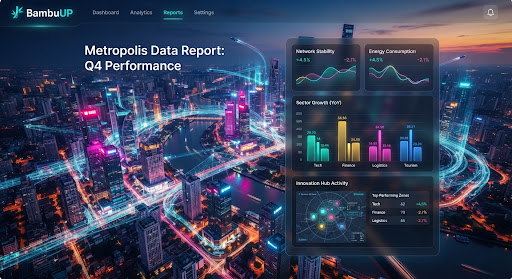 Southeast Asia Innovation Landscape 2026
 ESG Data-as-a-Service (DaaS) A game-changer for resource-constrained SMEs

Real-time Financial Data Promote Innovation and Digitalization For Businesses

Faced with the problem that the use of continuously out-of-date data affects innovation and business growth, leveraging the power of real-time financial data.(real -time financial data) is an optimal solution for businesses. The ability to continuously update accurate financial data from this form will contribute to the advantage of modern finance departments, especially for companies determined to adopt digital transformation to change their financial position and change your entire operating process.
Why use real-time financial data?
The ability to continuously update accurate financial data from this form will contribute to the advantage of modern finance departments, especially for companies determined to adopt digital transformation to change their financial position change your entire operating process
Competitive Advantage
Through real-time data processing and analysis, companies can understand how they perform in the market, what works and what doesn’t, and keep abreast of industry trends. So, for example, companies can see when their competitors change their business, pricing, or marketing strategies and react faster than before. This gives them the agility and flexibility they need to adapt quickly to changing market conditions and stand out from the crowd.
In turn, the ability to respond better to their competition and capitalize on trends gives them the competitive advantage to ensure continued success.
Forecasting financial problems during operation
When accessing and updating information from financial data in real time, businesses can get all the information related to business aspects such as revenue, quantity of goods, marketing … a fastest and most accurate way. From the data collected continuously every hour, managers can quickly identify the problem that the business is facing and propose the most optimal solutions, thereby avoiding unnecessary risks. affect the business situation and the “face” of the brand in the market.
Get your business financial plan on track
Real-time financial data is an effective solution to help businesses ensure that cash flow and spending management still goes according to the original plan and does not deviate from the original goal. In the case of being affected by difficulties in the market or needing to innovate in the way businesses operate, data is the basis for making accurate and convincing decisions regarding changes in the business environment. financial policies such as issuing shares or long-term debt.
In what ways can businesses apply financial data in real time?
1. Automate cash flow with new technology
Entering the period of strong digital transformation, many businesses are always looking for ways to apply new technologies to automate cash flow with the aim of creating flexibility and optimizing business operations, especially in terms of finance. With the application of technologies that aggregate financial data in real time, payments for partners or invoices for customers are automatically activated and processed by technology to help the accounting team of the business saves a lot of time in completing financial procedures and minimizes unnecessary errors in transactions.
With the benefits and potential of cash flow automation in improving productivity and efficiency within the business, this method is gradually being used more and more by businesses in activities:
- Track cash flow: Keeping payment records in electronic form will help business owners or proactive finance personnel easily access and update detailed status of transactions. This helps them quickly spot problems, especially in handling overdrafts on invoices.
- Streamline the process of transactions: Businesses will save time in approving payments, records or invoices as managers can quickly connect to financial technologies across any device for moderation and approval.
- Improve service and increase customer experience: With the application of technology to automate cash flow, transaction procedures with customers will take place quickly when they are invoiced and set up automatic payment . This not only increases convenience for customers, but also helps businesses optimize the experience for their target audience through the data on purchasing patterns collected and analyzed from payment software, from which an effective approach strategy can be formulated and implemented.
2. Evaluate supply chain, improve contract quality and increase working capital

Real-time financial data helps businesses track and capture changes taking place in the supply chain – a component that seems to have no impact on financial decisions under traditional operating methods. From there, the financial department of the business can capture information related to the habits, frequency of product use and supply chain operation to implement the most effective financial plan.
According to a 2020 survey by Oxford Economics, real-time financial data is an essential element in maintaining and displaying the overall status of a supply chain. The quick update of changes in supply chain-related aspects (including supplier information, shipping units, inventory status, etc.) and the impact on factors related to the supply chain. Financial resources such as partners or capital will help businesses manage risks and develop effective improvement strategies. Cases that are updated from real-time financial data may include periodic or non-recurring cost fluctuations affecting the outcome of negotiations and discussions with suppliers. grant; or a change in the inventory management process will affect working capital for the purpose of increasing liquidity for the business.
3. Invest in analytics and reduce costs through planning
Cutting costs is considered a sensitive issue and should be handled with care, but it is also one of the essential elements in a business’s financial optimization plan. Therefore, enterprises need to develop a planning plan with scenarios about potentials and risks in the process of financial operation and use, this is when financial data in real time comes into play. ” while creating a solid foundation for the process:
- Analyze and make accurate financial decisions: With the value and insights of real-time data, businesses can capture and capitalize on potential opportunities in the copper market. time to take the basis for analysis, making important financial decisions in strategic planning and building the most optimal operating process.
- Simplify and digitize the process of creating – approving expenses: Financial data is aggregated in real time to help businesses control and manage costs more easily, thereby saving maximum costs of materials and papers and reduce the time to gather documents and make payment requests.
- Identify risks and fix financial problems: Real-time financial data provides businesses with an overview and multi-dimensional view of the rapidly changing market, therefore identify problems in business and operational processes to ensure its ability to generate revenue.