 One platform connecting startups, corporations, research institutions, regions and investors
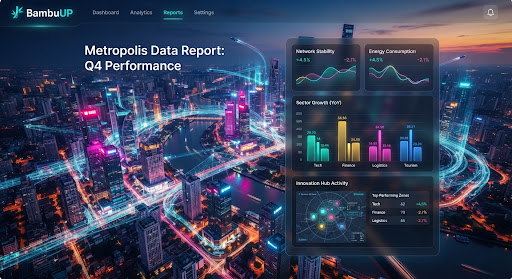 Southeast Asia Innovation Landscape 2026
 ESG Data-as-a-Service (DaaS) A game-changer for resource-constrained SMEs

InnovationUP #1: How to Apply ERP to Businesses?
In the face of economic downturns, the community has witnessed the departure of hundreds of thousands of businesses as they struggle to sustain themselves and find new directions to overcome difficulties. Is digital transformation the optimal “formula” for businesses to solve these challenges?
According to PwC’s 27th Annual Global CEO Survey – Asia Pacific, 63% of CEOs believe that their companies will not be able to survive in the next 10 years if they continue to operate along their current path. Faced with this predicament, 97% of companies in the region are beginning to implement some form of innovation. This indicates that more and more businesses are grappling with uncertainties about their survival without a renewal strategy. It’s a dual task for CEOs: Besides focusing on profitability challenges, businesses need to simultaneously innovate their operations to ensure adaptability in the future.
Businesses need to innovate their business operations to ensure adaptability in the future.
Pressure and risks from the leader’s perspective
Recently, the Boston Consulting Group released a report from a survey of over 600 executives worldwide. When asked about spending trends, 65% of business leaders said they want to cut costs in the supply chain and manufacturing operations. Driven by common difficult situations, there’s an increasing demand for innovation and digital transformation among businesses. In this context, ERP is considered an effective solution to optimize costs. However, it’s essential to emphasize that the digital transformation journey doesn’t have a one-size-fits-all formula. Just following trends without a clear plan can lead to many unwanted difficulties and challenges.
For many businesses, implementing digital transformation is seen as a major and challenging task, requiring significant time and effort. The Annual Global CEO Survey shows that the approach of CEOs in the Asia-Pacific region is increasingly focused on addressing short-term risks. This is reflected in the fact that CEOs feel less impacted by inflation (down 21%), macroeconomic fluctuations (down 9%), and political conflicts (down 12%). Therefore, many businesses are deviating from long-term sustainability despite recognizing the importance of digital transformation.
Many businesses deviate from long-term sustainability despite recognizing the importance of digital transformation.
Moreover, the current trend in businesses is to rapidly respond to the needs of each department by deploying corresponding software or technology solutions. However, this often leads to inconsistent and continuous data, difficult to access and analyze in real-time. This creates a significant challenge in data and information management, especially as the pace of business is faster than ever.
Mrs. Nguyen Huong Quynh, CEO of BambuUP, shares the current situation of digital transformation in Vietnamese businesses: “Firstly, many Vietnamese businesses do not understand what digital transformation is, and they are only at the basic stage. Secondly, many Vietnamese businesses jump in without thorough and effective preparation, lacking digital mindset for their personnel. This is a mistake that Vietnamese businesses often make, seemingly paradoxical but currently happening in reality.”
Digital transformation, not just about “digits”
According to Mr. Pham Quang Chien, Deputy General Director of Citek Technology, “technology application must go hand in hand with business development strategies.” Implementing digital transformation is a complex process that affects many departments within a business. Once a business embarks on digital transformation, this process needs to integrate and automate many different functions such as financial management, human resources, sales, production, etc. This process is complex and often lasts for several months.
Essentially, applying digital transformation means that businesses fundamentally change their business models. Especially after the pandemic, the market has undergone significant fluctuations with the emergence of new distribution channels. This is a sensitive time when all businesses question updating and adjusting their business strategies.
In the face of this urgency, mere adaptation is not enough. Businesses should push for business innovation efforts, with digital transformation being essential. Digital transformation is a useful tool for implementing business strategies more effectively. The digital transformation of a business is a challenging process, easily disheartening. In some cases, businesses are very determined to transform but abandon the effort because they don’t see results commensurate with the costs incurred.
Every problem has a solution
To overcome these mistakes, businesses need to plan specific and detailed strategies. In which, business leaders should prioritize efforts to create detailed but flexible transformation roadmaps, adapting to emerging threats and opportunities. The management board should consider the assistance of specialized experts and report directly to leadership levels. “Currently, businesses cannot go alone anymore. We need to collaborate, synergize with technology businesses, build a flexible integrated technology ecosystem to have multiple options along the roadmap and bring quick effectiveness,” Mr. Chien shared.
The 27th Annual Global CEO Survey also proposes an innovation roadmap prioritizing the use of technology to proactively innovate and empower organizations. Businesses need to integrate existing capabilities in data, analysis, and value with the Oracle NetSuite ERP system built and provided as a SaaS model. This allows businesses to identify risks in key areas, including supply chains. This requires investment; however, businesses can buy and use small service packages according to their needs instead of installing a large system with high costs but still ensuring effectiveness.
Furthermore, Oracle NetSuite ERP allows the installation of various functions in different stages of business development. With Oracle NetSuite ERP, the world’s number one cloud-based ERP solution, businesses have a powerful resource to accelerate development in fiercely competitive markets. This system helps businesses manage and organize important processes from finance, accounting, customer relationship management, manufacturing management, supply chain management, sales, e-commerce…
CITEK Technology accompanies the Open Innovation Ecosystem Report of Vietnam with the role of “pioneering innovation”
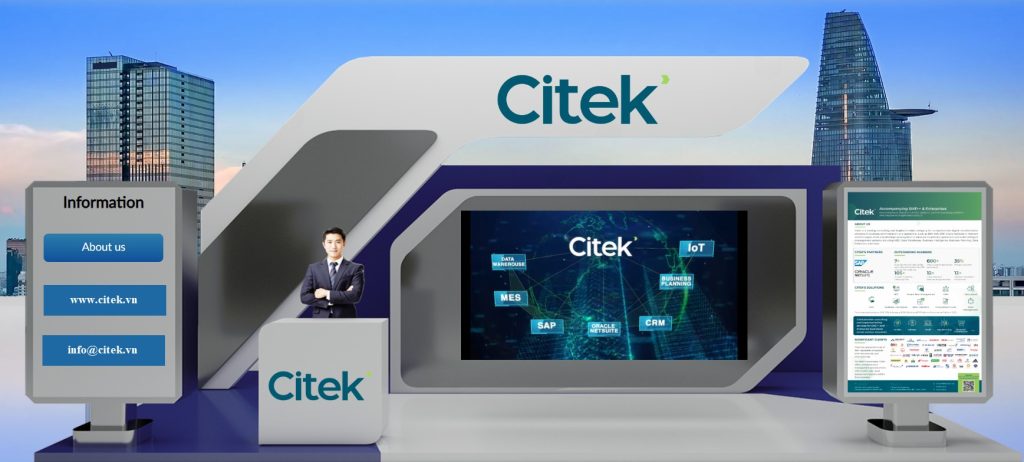
CITEK is a leading consulting and comprehensive digital transformation solution provider in business management and operation such as ERP SAP, ERP Oracle NetSuite in Vietnam and the region. Citek is a reliable partner, supporting businesses to optimize their business processes through modern and effective solutions. These solutions include MES (Manufacturing Execution System), Data Warehouse, Business Intelligence, Business Planning, and Data Collection, CDP, Sales portal…
CITEK Technology accompanies the Vietnam Open Innovation Ecosystem Report with the role of “pioneering innovation.”
In this way, Citek is not only a solution implementation partner but also a companion, working together with businesses in the journey of digital transformation and sustainable development. Citek has gained the trust of over 100 reputable companies at home and abroad with more than 600 successful implementation projects. Especially, for SME++ businesses, Citek has a comprehensive management solution from CRM to ERP, quickly implemented within 3 – 4 months.
Citek has gained the trust of over 100 companies at home and abroad such as Hoa Phat Group, Gelex Group, Loc Troi Group, Adidas, Cadivi, Honda Vietnam, Diana, Big C, Novaland, Mitsubishi Electric… With significant contributions in the field of digital transformation, recently, Citek was honored at the Vietnam’s Top 10 ICT Companies 2021 Awards, Sao Khue Award 2021, and Sao Vang Dat Viet Award 2021.
Read more about the global BANI 2030 trends and the priorities of leaders in the Vietnam Open Innovation Ecosystem Report 2023. The report provides a strategic database for businesses in Vietnam, synthesizing potentials and challenges for businesses and corporations through detailed analysis of global innovation and technology trends, as well as specific situations in Vietnam. In addition, the report also proposes some methods and guidelines to support businesses in promoting the innovation process.