 One platform connecting startups, corporations, research institutions, regions and investors











 Playbook & Handbook · February 6, 2026
Winning Accelerator Playbook 2026 by BambuUP
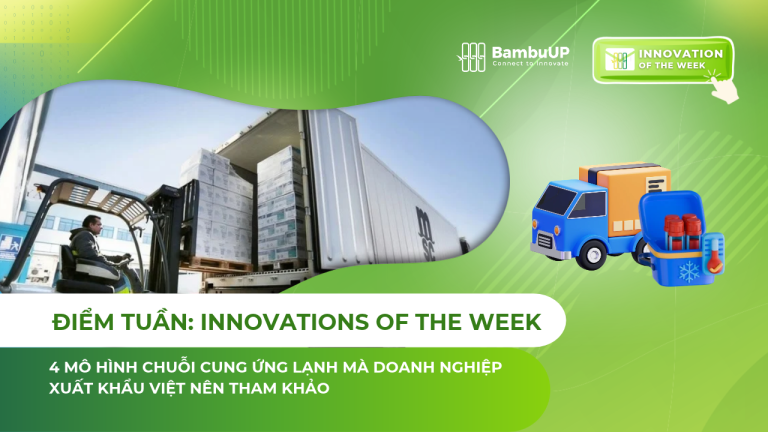 4 Cold Chain Models Vietnamese Exporters Should Consider


1. Technology overview
Epoch Biodesign is a London-based biotechnology company founded by Jacob Nathan, who started it as an independent project to find plastic-degrading microbes. It targets synthetic textiles and plastics, especially nylon, that are currently landfilled or incinerated because mechanical recycling cannot return them to virgin quality.
Its platform combines generative AI, physics-based modelling and proprietary biological data to design enzymes that act as selective catalysts and break PA66 and PA6 down at the molecular level, at room temperature and atmospheric pressure, from mixed waste feedstock. Recycling and polymerisation are integrated so the output is virgin-quality biorecycled nylon. The company runs its HQ, R&D lab and a biorecycling demonstrator in London and a PA66 polymerisation plant in Blanes, Spain, and sells conventional and biorecycled PA66 to fashion, performance apparel and automotive customers.
2. Highlighted features & specifications
- AI enzyme design: generative AI and physics-based modelling create enzymes with new functions.
- Low-energy biorecycling: enzymes run at room temperature and atmospheric pressure.
- Mixed feedstock: high-purity output from mixed nylon waste streams.
- Integrated polymerisation: recycling and PA66 polymerisation combined for virgin-quality output.
- Product catalogue: conventional and biorecycled PA66 for apparel, performance wear and automotive uses.
- Industrial scale-up: London demonstrator plus a PA66 plant of more than 52,000 tonnes per year in Spain.
3. Potential application
Sportswear and swimwear factories in Vietnam can supply nylon cutting waste to partner programmes and buy biorecycled PA66 yarn for brand orders. Automotive parts makers can source biorecycled PA66 for components. Textile groups can join R&D pilots on enzymatic recycling of their own waste streams.
4. Benefits
Nylon waste that would go to landfill or incineration becomes virgin-quality material, giving brands a route to textile-to-textile recycling for a fibre that is hard to recycle mechanically. Enzymes work at room temperature and atmospheric pressure, which the company says lowers energy use and cost. Mixed feedstock is accepted, reducing the need for pre-sorting. An integrated PA66 plant lets customers buy both conventional and biorecycled grades from one supplier.
5. Market trends & opportunities
Fashion and sportswear brands face textile EPR schemes and recycled content targets, but nylon has few recycling routes. Vietnam is one of the largest garment and sportswear exporters, so buyers increasingly ask suppliers for recycled synthetic fibres and for programmes that recover cutting waste.
6. Other information
Founded by Jacob Nathan (Forbes 30 Under 30); headquartered in London, UK, with more than 120 staff including a team in Blanes, Spain. It has raised over USD 40 million, including an USD 18.3 million Series A; investors include Lowercarbon Capital, Extantia Capital, Mundi Ventures (Inditex), lululemon and Happiness Capital. It reports 40 active partnerships and has an MoU with INVISTA.