 One platform connecting startups, corporations, research institutions, regions and investors








 Playbook & Handbook · February 6, 2026
Winning Accelerator Playbook 2026 by BambuUP
 4 Cold Chain Models Vietnamese Exporters Should Consider

4 Cold Chain Models Vietnamese Exporters Should Consider
Every year, a significant share of the world’s fresh food and temperature-sensitive medicines is lost somewhere between the farm or factory and the end customer, and Vietnamese exporters feel that gap most when a shipment is rejected at the destination port. Meet four cold chain innovators (Inteligistics, Mobiqu, Lineage Logistics, and CSafe Global) that use machine learning, power-free packaging, automated warehouses, and hub networks to keep products at the right temperature from origin to shelf. Discover what their models can teach Vietnamese exporters preparing to go global.
Inteligistics: Machine Learning for Fresh Produce Shelf-Life Prediction
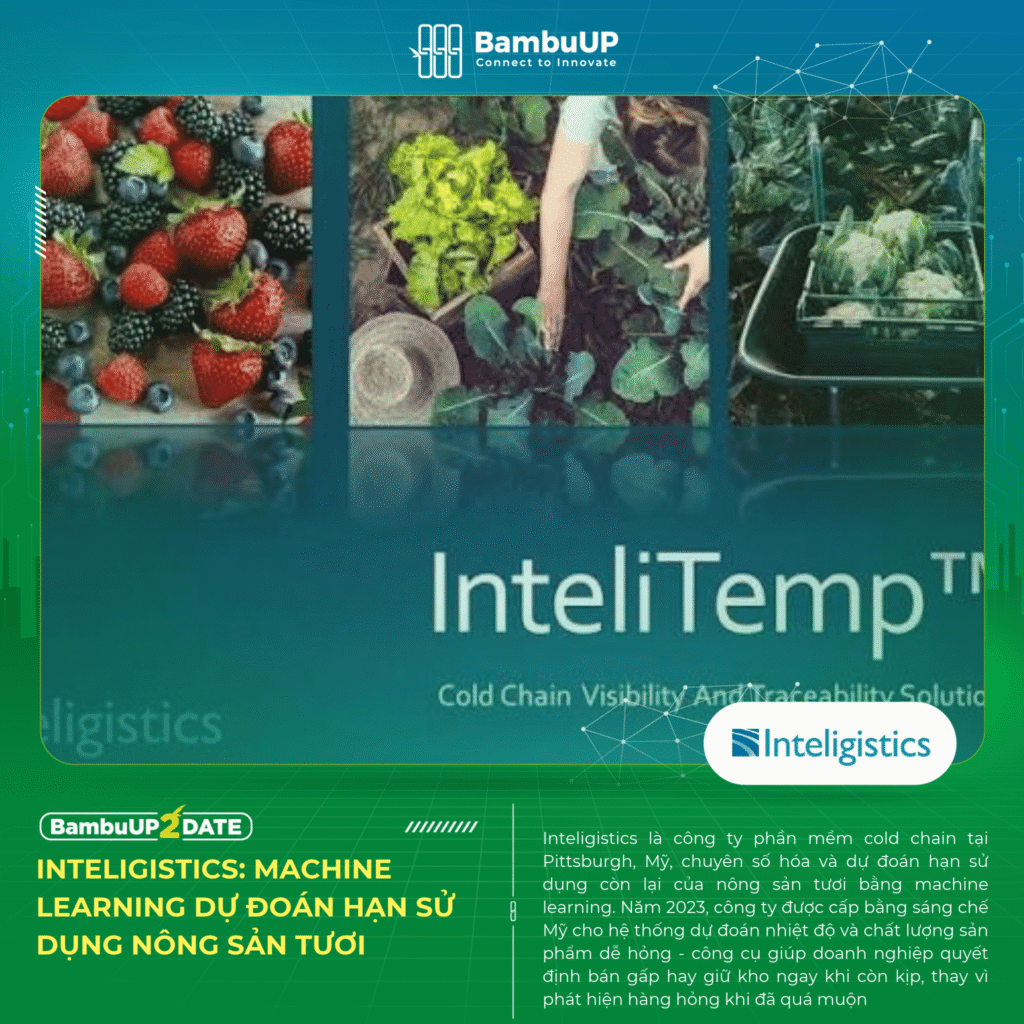
Inteligistics addresses a very specific problem. In the fresh produce supply chain, businesses often learn that goods have spoiled only when they reach the customer, by which point the damage is done and nothing can be salvaged. Founded in 2004 in Pittsburgh, Pennsylvania, and led by Chairman and CEO Rao Mandava, Inteligistics has built a digital cold chain platform that combines wireless temperature sensors, passive radio-frequency identification, and data analytics to track the entire journey of perishable products.
At the core of the technology is the InteliLife Predictive Shelf Life Model, a science-based engine that combines kinetic data on changes in quality attributes with real-world environmental data (time, temperature, humidity) to analyze alternative scenarios. This enables businesses to manage inventory and sales based on estimated remaining quality and shelf life at any point in the distribution chain (Source: Produce Processing).
In November 2023, the company was granted U.S. Patent No. 11,810,041 by the United States Patent and Trademark Office for its “systems, methods, and computer program products for predicting temperature and quality of perishable products.” The system integrates environmental and product data with real-time temperature probe data to generate a machine learning model that predicts product temperature and quality throughout the supply chain (Source: Vegetable Growers News). Lawrence Mallia, Vice President of Digital Transformation, emphasizes that rapid cooling and maintaining the cold chain are the most critical determinants of quality and shelf life. The system optimizes cooling cycles within refrigeration equipment, thereby reducing energy consumption, increasing product throughput, lowering labor costs, and minimizing food loss.
Vietnam’s agricultural and seafood exporters (dragon fruit, durian, shrimp) are confronting precisely the challenge Inteligistics is built to solve. Shelf life is estimated by experience rather than data, so at-risk shipments are identified only after arriving at the destination port, leaving no option but to absorb the loss or sell at a steep discount. A real-time predictive tool that supports decisions such as “expedite sale in a nearby market”, “hold in storage”, or “reroute” while the cargo is still in transit is a capability that many Vietnamese exporters do not yet have.
Mobiqu: A 168-Hour Thermal Container That Requires No Power
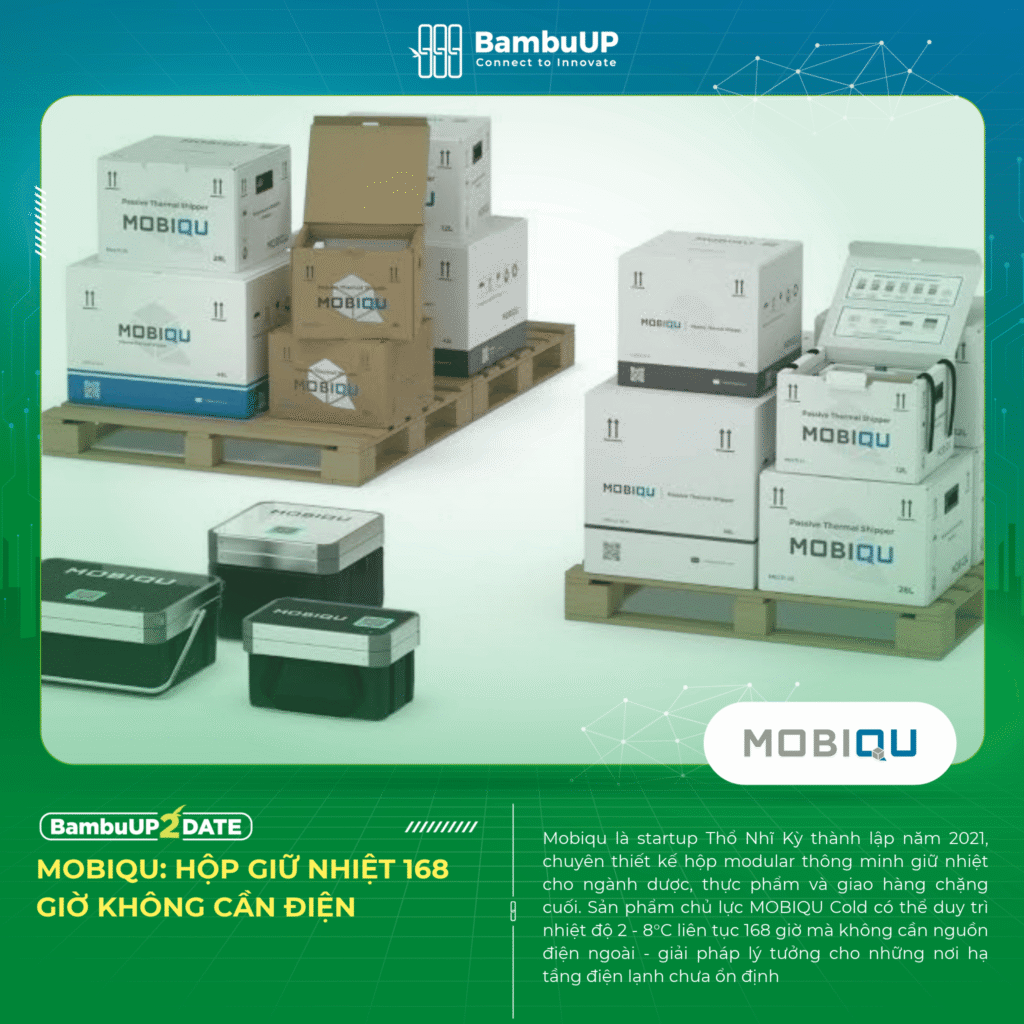
Founded in 2021 by Savas Onur Eroglu, Selcuk Kochan, and Berkan Sirin, Mobiqu develops modular container systems for last-mile logistics and cold chain, operating a B2B model that serves the pharmaceutical, healthcare, food, and retail sectors. The startup is a graduate of the Fark Labs accelerator program and a participant in the TÜBİTAK 1512 program (Source: Dealroom). Pain point: Mobiqu targets the transport of temperature-sensitive vaccines, medicines, and biologics to regions without continuous refrigeration infrastructure, a very real challenge in emerging markets.
The company has developed two core product lines:
- MOBIQU Cold: Temperature-controlled packaging that maintains a range of approximately 2°C to 8°C for up to 168 hours without any external power source, designed for the transport of vaccines, medicines, and other temperature-sensitive biotechnology products.
- MOBIQU Smart Box: An IoT-based system for food and beverage delivery, featuring active temperature control and real-time tracking. It enables end-to-end traceability with instant updates at every stage of delivery, and the box can be opened by authorized personnel via QR code for enhanced security (Source: Dealroom).
Funding: The company closed a seed round on July 15, 2023 (amount undisclosed), at a valuation of USD 3.5 million, led by Fark Labs and Mene Health Group (Source: Dealroom). Its investor base subsequently expanded to include İşbank, Workup, and Hackquarters (Source: VCBacked).
Relevance for Vietnamese enterprises: Many of Vietnam’s agricultural and seafood sourcing regions are located far from urban centers, where electrical grid coverage and cold storage infrastructure remain uneven. This is precisely the scenario for which Mobiqu’s “168 hours without power” solution was designed. For pharmaceutical companies expanding vaccine and biologics distribution to district- and commune-level facilities, this model merits consideration as an alternative to costly investments in refrigerated trucks or fixed cold storage at every delivery point.
Lineage Logistics: Automated Cold Storage in Partnership with Tyson Foods
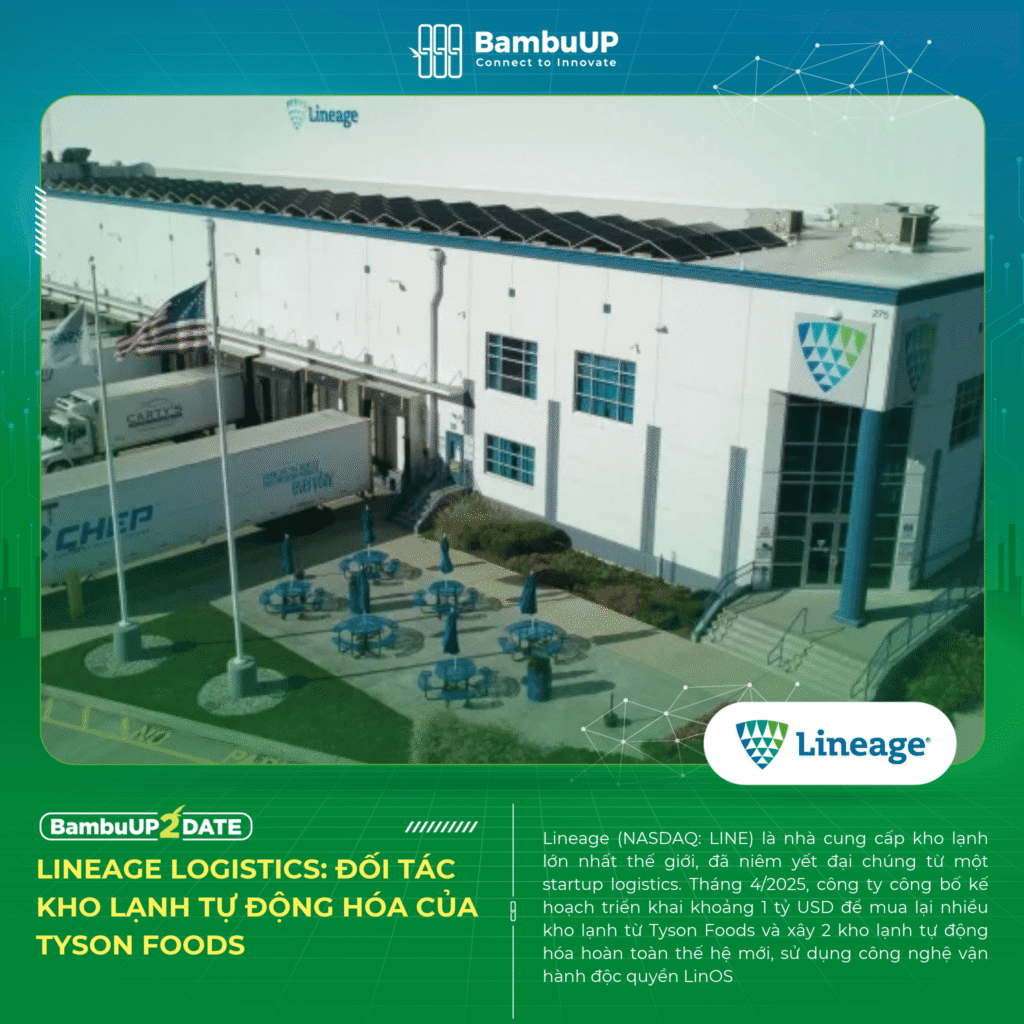
At industrial scale, large food corporations such as Tyson Foods need a partner with the financial and technological capacity to operate large-scale automated cold storage, a challenge that a single manufacturer would find nearly impossible to tackle alone, in terms of both capital and technical expertise.
On April 30, 2025, Lineage, Inc. announced plans to expand its U.S. cold storage network through a series of acquisitions, greenfield developments, and advanced automation deployments. Specifically, Lineage entered into agreements to acquire several existing U.S. cold storage facilities from Tyson Foods, building on a long-standing customer relationship. Alongside the acquisition agreement, Lineage will sign additional multi-year agreements to design, build, and operate two next-generation, fully automated cold storage facilities in major U.S. distribution markets, with Tyson Foods serving as the anchor customer. Tyson has already begun storing product at Lineage’s new automated facility in Hazleton, Pennsylvania, which utilizes LinOS, Lineage’s proprietary warehouse operating technology (Source: Businesswire).
Lineage expects to deploy approximately USD 1 billion in capital across these acquisitions and new developments. The greenfield projects alone will add more than 80 million cubic feet and nearly 260,000 pallet positions, expanding logistics capacity across the entire network (Source: Businesswire). Notably, Lineage itself began as a startup story: it grew from a privately held logistics company into the world’s largest cold storage REIT before its initial public offering and NASDAQ listing under the ticker LINE.
Vietnam’s seafood and agricultural export sector faces a significant shortage of internationally certified cold storage facilities, and most processing and export companies make small, fragmented investments with limited automation. The Lineage-Tyson model, a long-term cold storage partnership with large-scale co-investment alongside an anchor customer, offers a valuable lesson for Vietnam’s export clusters: attract specialized cold logistics infrastructure investors to collaborate directly with major processors, rather than leaving each enterprise to navigate the challenge alone.
CSafe Global: A Hub Network for Temperature-Controlled Pharmaceutical Containers
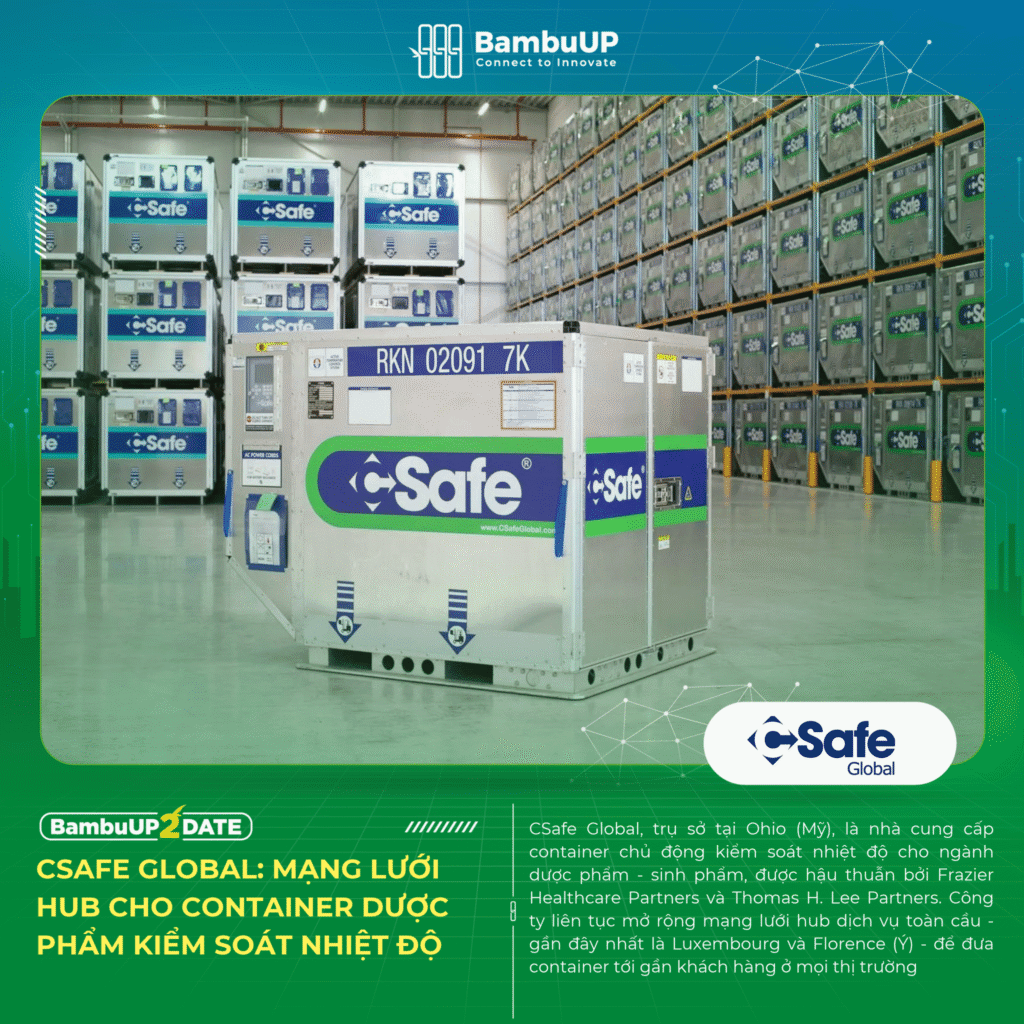
CSafe addresses a challenge in the international transport of temperature-sensitive pharmaceuticals and biologics. An actively temperature-controlled container, however precise, is not enough on its own without an on-the-ground hub network to inspect, sanitize, and dispatch containers quickly in each market.
Headquartered in Dayton/Monroe, Ohio, CSafe saw Frazier Healthcare Partners acquire a 50% stake from Thomas H. Lee Partners in January 2021, with both investment firms continuing to support the company through its next phase of growth. Later that year, CSafe Global acquired Softbox Systems from Great Point Partners, combining CSafe’s active container solutions with Softbox’s passive temperature-controlled packaging to create an end-to-end cold chain platform serving pharmaceutical, biotechnology, and logistics customers (Source: PrivSource).
CSafe offers the RKN and RAP series of active containers and continues to expand its regional service hub network to shorten the time it takes for containers to reach customers. The company previously established a presence in Mexico City, São Paulo, Taipei, Beijing, and Guangzhou (Source: Refindustry). Most recently, CSafe opened two new hubs in Luxembourg (in partnership with DB Schenker) and Florence, Italy (through an expanded partnership with BCube), making Europe the region with the largest number of CSafe operating facilities worldwide (Source: CSafe Global).
Vietnam is emerging as a new pharmaceutical and biologics manufacturing destination amid the wave of supply chain diversification away from China. However, most domestic pharmaceutical companies lack the scale to invest in a proprietary fleet of active containers. CSafe’s regional hub model, in which companies simply lease containers from the nearest hub rather than own them, offers Vietnamese pharmaceutical exporters a pathway into the global biologics supply chain without requiring substantial upfront capital investment.