📖 TABLE OF CONTENTS 📖
- 5 collaboration models: From “Dating” to “Marriage”
- Where are Vietnamese enterprises on the Open Innovation journey?
- The innovation challenge begins with getting the “right problem”
- The three “FIT” factors that determine partnership success
- When corporations and startups don’t speak the same language: 3 months, zero progress
- Case Study: VietLeap AI Accelerator - When you get the problem right, everything changes
Corporations and startups can connect after just a few pitching sessions, yet building real shared value is an entirely different journey. Differences in speed, mindset, and operational language can cause even the most promising efforts to stall right at the starting line.
So what are the truly effective collaboration models in the open innovation ecosystem? And what factors ultimately determine whether these partnerships succeed or fail?
Episode 2 of the series “Startups Growing by Solving Enterprise Challenges,” part of the Business Insights #72 podcast by Vietsuccess x BambuUP, featuring insights shared by Ms. Nguyễn Hương Quỳnh, CEO of BambuUP.
5 collaboration models: From “Dating” to “Marriage”
Host: In practice, what are the most common forms of co-creation between enterprises and startups today?
Mrs. Nguyễn Hương Quỳnh: Globally, there are many different forms, and the variety continues to grow. However, if we simplify them by level of complexity and by the objectives of each stage, we can categorize them into five clear models:
Model 1 - Exploration & Discovery (Hackathons, events, information platforms)
This is the stage where corporations begin to “open their eyes” to the external ecosystem. They sponsor or participate in hackathons, act as mentors, or stay updated on innovation trends through platforms like BambuUP.
At this point, the goal is not to find an immediate partner, but to become familiar with multiple solutions and startups at once. Think of it as expanding your social network — no commitment yet, but actively observing.
Model 2 - Small-Scale Testing (Proof of Concept - POC)
Once promising candidates are identified, the enterprise allows the startup to test its solution in a controlled, limited environment.
This is the true “dating” phase, where the two sides meet several times to assess compatibility before deciding whether to move forward.
Model 3 - Formal Co-Creation (Co-design & Co-create)
The relationship becomes serious. The enterprise begins sharing internal data and real business needs so the startup can refine its solution accordingly.
Both sides design, test, and iterate together; this is genuine co-design and co-creation. This stage requires clear trust and commitment from both parties.
Model 4 - Joint Venture & Ecosystem Integration (JV & Ecosystem Integration)
The two sides become strategically engaged: signing a joint venture or having the corporation integrate the startup into its own ecosystem to jointly access markets and expand the customer base. This is no longer experimentation - it is a long-term strategic commitment.
Model 5 - Investment, Acquisition & Merger (M&A)
The official “marriage” phase. The corporation invests in, acquires, or merges with the startup and fully integrates it into its ecosystem in a comprehensive and sustainable manner.
Where are Vietnamese enterprises on the Open Innovation journey?
Host: Looking at the reality in Vietnam, which of these models are most Vietnamese enterprises currently in?
Mrs. Nguyễn Hương Quỳnh: The majority are still at Model 1, participating in hackathons and sponsoring events. Model 2 (POC) is starting to appear more frequently.
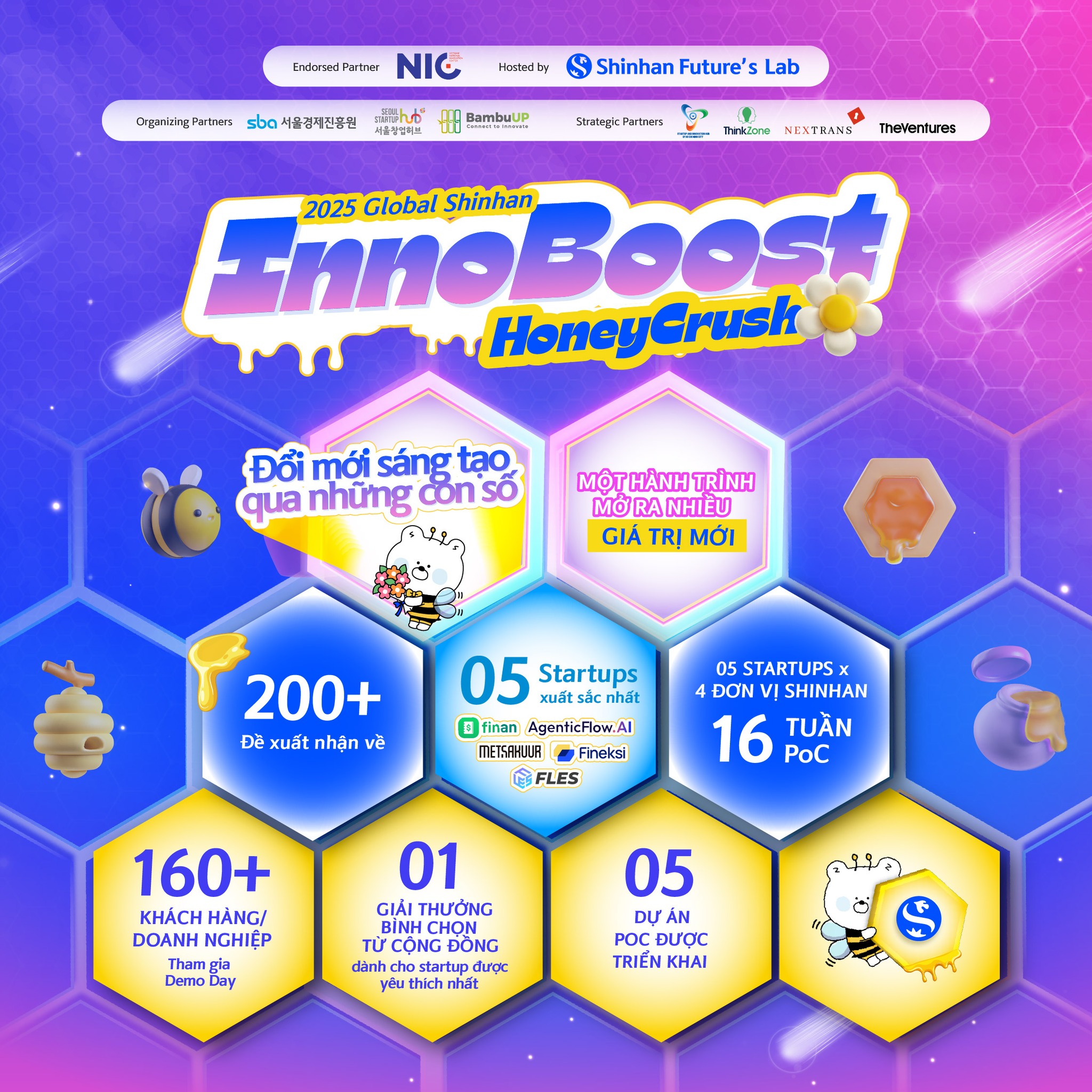
A notable example is the Global Shinhan InnoBoost Open Innovation program by Shinhan Finance Group, where they present real business challenges, startups submit solutions, and suitable ones are selected for POC testing inside the corporation. This represents a genuine step forward for the open innovation ecosystem in Vietnam.
 Global Shinhan InnoBoost 2025 - A typical corporate open innovation program
However, from Model 3 onward, the number of cases remains very limited. One critical “missing piece” in Vietnam’s ecosystem is Corporate VC - venture capital funds established and operated by the corporations themselves.
In Vietnam, most venture capital comes from independent professional funds. Corporate VC is almost non-existent. Corporate VC does more than provide capital, it invests with clear strategic direction aligned to the parent company’s goals and accelerates startup growth by leveraging the corporation’s existing ecosystem, resources, and customer base.
This is one of the most important missing pieces in Vietnam’s startup ecosystem today.
The innovation challenge begins with getting the “right problem”
Host: In practice, how does BambuUP support this connection process?
Mrs. Nguyễn Hương Quỳnh: We follow a structured process. It starts with providing information, reports on domestic and international innovation trends, so enterprises can see the full picture before taking action. Without information, there is no clear need. Without a clear need, there is no correct direction.
From there, we help enterprises define the right problem (the real business challenge they need to solve) and establish priorities for their innovation initiatives. The word “priority” is crucial: enterprises can want to do many things at once, but without clear prioritization, nothing gets done properly.
Only when the problem statement is correct do we move on to finding the right solution, and that is when a genuine connection begins.
The three “FIT” factors that determine partnership success
Host: It sounds like connecting the two sides is not simply about finding a startup whose solution matches the enterprise’s problem?
Mrs. Nguyễn Hương Quỳnh: Exactly. Connection is not just matchmaking. For a collaboration to be successfully implemented, three “FIT” factors must be present:
- Solution Fit: Does the startup’s solution truly solve the enterprise’s specific problem? This is necessary, but not sufficient.
- Mindset & Values Fit: Are the business values and mindset of the corporation aligned with those of the startup? Can both sides truly understand each other at the thinking level? Many partnerships fail not because the solution is weak, but because the two sides cannot find common ground in mindset and values.
- Operational Fit: Are the working styles and operational rhythms of both sides compatible? Even if they like each other and share the same vision, major differences in pace and working methods can still cause the partnership to collapse.
When corporations and startups don’t speak the same language: 3 months, zero progress
Host: Could you share a real-world example of these barriers?
Mrs. Nguyễn Hương Quỳnh: This is a true story. A multinational corporation in Vietnam, very open and willing to work with startups and tech companies, spent three full months collaborating with one tech firm.
The result? The project did not advance a single step.
When we investigated, the issue was not technical or budgetary. The real problem was that the two sides were literally speaking two completely different languages.
The corporation spoke the language of business - impact on business results, value to customers, economic outcomes. The tech company spoke the language of technology - features, system architecture, technical capabilities. The two languages never met, and neither side was willing to “translate” for the other.
In the end, the corporation had to hire a dedicated “interpreter” to convert between business language and technology language before the project could move forward.

Ms. Quỳnh shares insights on the “language mismatch” between corporates and startups when entering collaboration
Beyond the language barrier, there is another equally challenging issue: differing perceptions of time. For large corporations, implementing something new is measured in quarters or even years. For startups, a week without progress already feels too slow.
This impatience often causes startups to lose patience while waiting for the corporation, and the partnership collapses not due to lack of goodwill, but due to a lack of synchronization in rhythm.
Case Study: VietLeap AI Accelerator - When you get the problem right, everything changes
Host: When everything is connected correctly, what does success look like in reality?
Mrs. Nguyễn Hương Quỳnh: Most recently, BambuUP supported the VietLeap AI Accelerator program, initiated by the National Innovation Center (NIC) in collaboration with the Japan International Cooperation Agency (JICA). The program connects Vietnamese AI startups with real business challenges from corporations and enterprises.
Within this framework, we also partnered with Shinhan Financial Group to bring startups into POC testing directly inside the corporation.
The interesting part is that, after just a few working sessions, one startup completely changed its business model. Previously focused on e-commerce, it pivoted to a knowledge management platform after hearing the corporations’ real challenges, and immediately addressed a genuine market pain point.
As a result, out of 10 participating corporations and enterprises, 8 companies were ready to run POC with that startup.
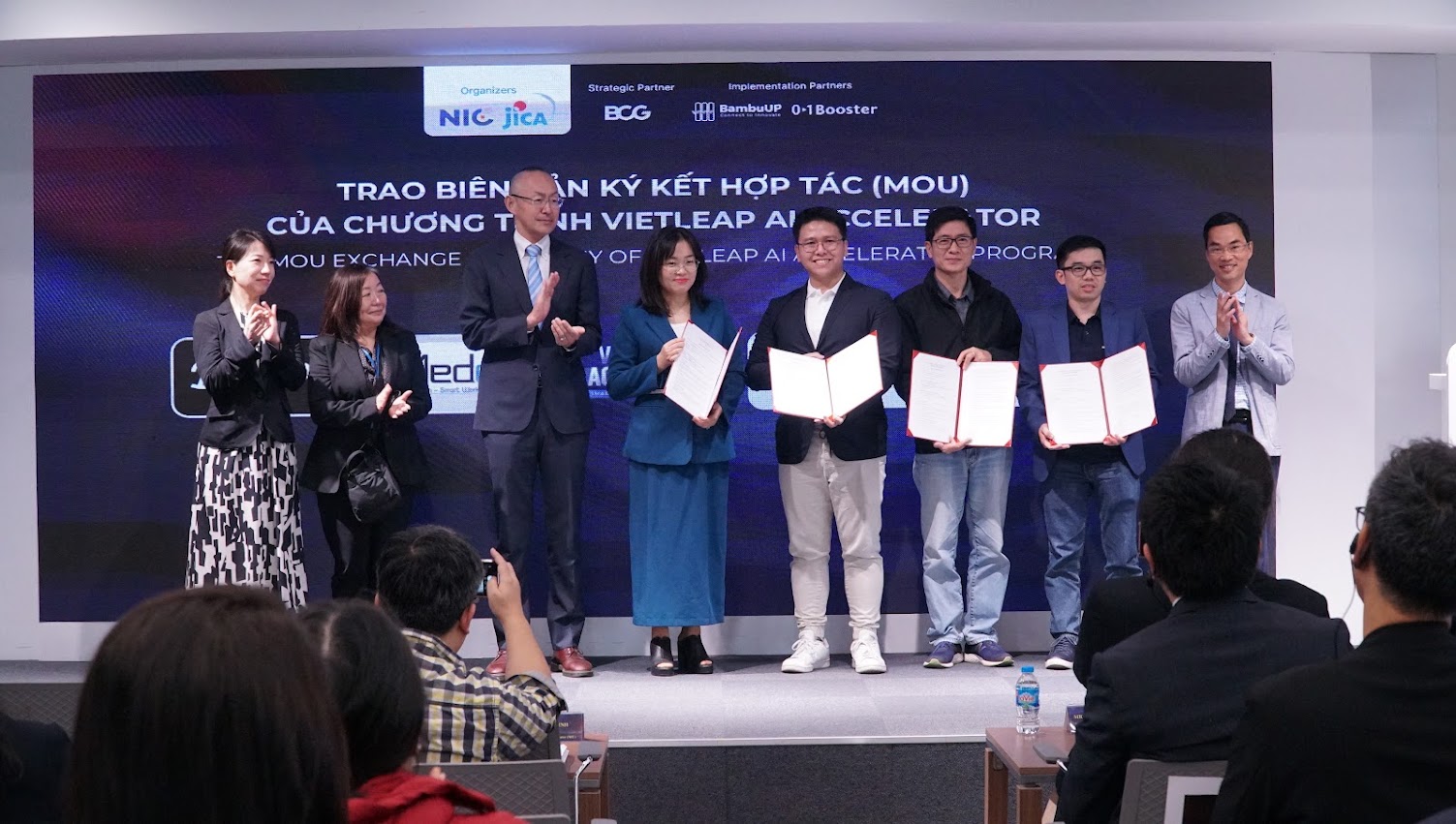
Vietleap AI Accelerator 2025 recorded 9 MOUs, demonstrating clear results when startups successfully address real market pain points
It wasn’t because the startup suddenly became more excellent - it succeeded because it had identified the right problem, at the right time, for the right audience.
“You must get the problem statement right before you can find the right solution. And even the right solution is not enough, it must also be the right partner, the right way of working, and the right timing for implementation.” _ Mrs. Nguyễn Hương Quỳnh, CEO BambuUP.
---
Next in the series - Episode 3: “Why ‘knowing’ is still not enough? The APAR model and the critical preparation before taking action”.
Many enterprises understand the importance of innovation but still fail during implementation, not because of lack of commitment from leadership, but because of insufficient preparation across the entire organization.
—
>>> Follow BambuUP for more practical, real-world insights on open innovation, designed for enterprises and corporations seeking transformation, and for startups looking for the right door to enter.
—--------
Phượng Lê.
BambuUP is an one-stop open innovation platform to facilitate meaningful connection between Innovation Seekers & Innovation Providers.
We have partnered with leading companies across multiple industries, such as Shinhan, EVN, Heineken Vietnam, FASLINK, DKSH, Smollan, Talentnet, and others, to launch open innovation challenges and connect suitable technology solutions to the operational needs of enterprises and corporations.
BambuUP is proud to be a trusted strategic partner, consistently supporting businesses in their innovation initiatives and driving strong green transformation efforts.
To stay updated with the latest weekly news on Innovation and Green Transformation in Vietnam and globally, you can:


