 One platform connecting startups, corporations, research institutions, regions and investors
 Southeast Asia Innovation Landscape 2026
 ESG Data-as-a-Service (DaaS) A game-changer for resource-constrained SMEs

4 development trends for Edtech in 2023

The strong development of technology and the context of the Covid-19 pandemic in recent years have fueled the strong growth of Edtech – the field of using technology to make learning easier. easily and allows individuals to access knowledge even without face-to-face learning.
Applying technology in education is inevitable to adapt to the previous pandemic context. Therefore, the educational technology market in Vietnam and in the world is also developing rapidly with large investment capital.
However, in fact, returning to normal after the COVID-19 pandemic has more or less hindered the development speed of Edtech, causing the industry to decline in both profits and capital. Yet venture capitalists continue to flock to Edtech as the educational community has become more familiar with this way of learning. In particular, the appearance of ChatGPT (OpenAI) at the end of 2022 has shown confidence in the future leaps of education. Artificial intelligence will soon become an integral part of classrooms and new methods and tools will appear to serve teaching and learning.

Some EdTech companies have also raised large amounts of capital from millions to tens of millions of dollars, such as Topica, ELSA, CoderSchool, Edmicro, Vuihoc or Educa. Domestic corporations also continue to invest and expand their online education ecosystem such as Viettel, FPT, VNPT.
EdTech platform Azota just raised $2.4 million in a Pre-Series A round led by GGV Capital.
Azota is the only local Edtech product certified by the Ministry of Education and Training for the national online teaching training program in 2021. It is also an app that provides teachers with assessment and lesson creation solutions. Automated testing, test monitoring tools, and real-time student performance tracking.
This one-year-old startup has more than 700,000 teachers and 10 million students as users. With the new funding, Azota plans to improve its system performance and introduce more features to better serve the needs of teachers. The company’s goal is to be a comprehensive teaching platform that can enhance blended learning in the post-Covid era.
Virtual Internships announced it has raised $14.3 million in a Series A funding round signed by European technology investor Hambro Perks.
Founded in 2018, Virtual Internships is partnering with universities, governments, foundations and businesses to provide students, graduates or their employees with a customized solution to their employment problem. how to get admission in a certain agency or business. Virtual Internships is also an edtech company that prioritizes remote work for most or all employees, providing training in all fields in more than 100 countries around the world.
Virtual Internships said its funding round also received backing from Sequoia India & Southeast Asia’s Surge program, Arsenal Growth, Kaplan, Ascend Vietnam Ventures and STIC Investments. The company said it will use the new funding to scale its education platform as it sees a growing need for remote learning and working.
Startup Vuihoc received an investment of 2 million USD from the latest funding round led by BAce Capital, an investment fund backed by Ant Group.
Startup Vuihoc founded in 2019 is currently a platform providing more than 400,000 learning materials in various forms, including online courses, video lectures, and lively quizzes. This educational technology startup is rolling out more than 1,000 classes with hundreds of thousands of students every day.
With the newly raised capital, Vuihoc will use it to accelerate growth to reach its goal of 1 million paying users by 2024. In addition, this startup will continue to invest in technology infrastructure, focusing on Adaptive learning helps improve student interaction and learning efficiency. The startup is expected to have another round of Series A funding later this year.
And here are 4 development trends for Edtech forecasted in 2023.
Hyper-personalized learning:
In 2023, hyper-personalized learning will help teachers improve the effectiveness of supporting their students. Artificial Intelligence (AI) and Machine Learning (ML) will provide a unique learning experience for each learner to improve on their weaknesses while developing their own strengths. This means that there will be new tools to help create personalized lesson plans, testing based on the knowledge gaps of each student or small groups of students instead of designing one-to-one programs. general way. Before that, many companies and startups have also successfully applied tools to support users in the process of learning and testing knowledge such as ELSA, Vuihoc, HOCMAI,…

Virtual Reality (VR) and Augmented Reality (AR):
The Market Research Future (MRFR) report shows a CAGR of 18.2% when it comes to the use of AR and VR in the education market from 2022-2027. This opens the door for learners to easily pick up on complex concepts and have hands-on learning experiences in a virtual environment. VR and AR will greatly contribute to the edtech space in terms of sharing information in new and more engaging ways. Universities are already present in the Metaverse and there may soon be a drastic transformation of the way institutions, allowing teachers and students/students access to participate and learn in an environment. virtual role-playing field.

Micro learning and nano learning:
Micro learning (explaining a topic in 3-5 minutes) and nano learning (explaining a topic in 1-2 minutes) can be designed by dividing topics into main lessons and sub-lessons , then use the simplest basic concepts and provide or suggest references that suit learners’ needs. This type of learning is offered to address immediate needs or to support the learning of dry concepts.

Blended learning model:
Blended learning will combine face-to-face and offline learning, making education more accessible. This method also helps to overcome the limitations that hinder learning, especially the flexibility of distance education which will be very convenient for many learners. Above all, the blended learning model will still ensure the quality of learning and the quality of graduate degrees.
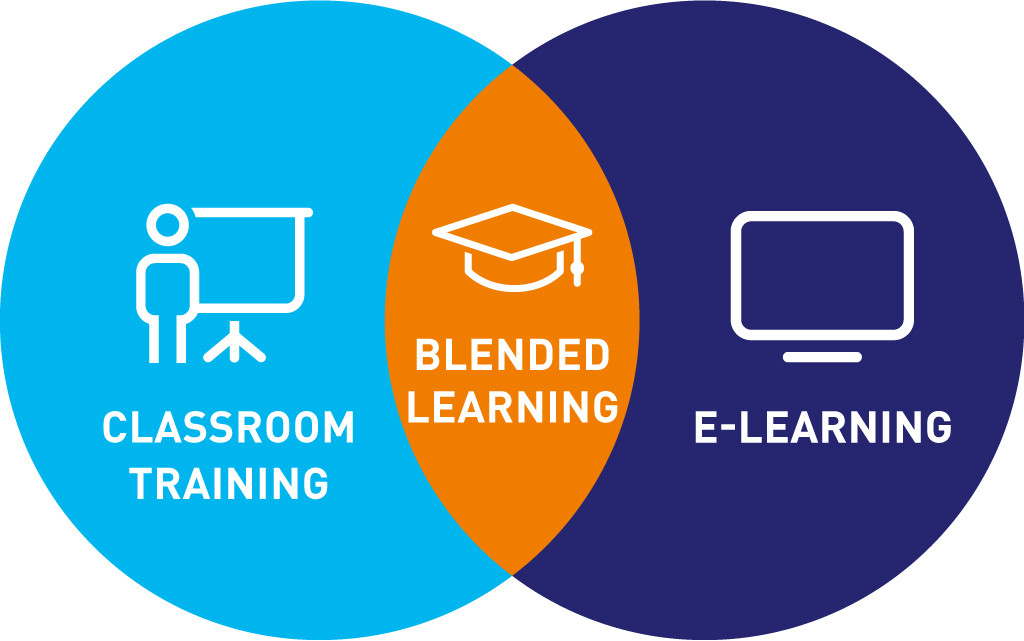
Especially with the previous appearance of the Covid-19 pandemic, this blended learning model is no longer strange to learners. Even after the pandemic, many companies still “suck” strongly the amount of investment capital in this field. In fact, on a global scale, education is still lagging behind in terms of technology investment and slow in digital transformation compared to other sectors. But we can completely put our trust in Edtech and the application of innovation in teaching and developing educational technology.
It can be seen that educational technology is leading and creating an ideological foundation in designing and building an open innovation ecosystem in education and promises to create a “promising land”, solving problems Education quality and post-pandemic psychology.
Together with BambuUp, continue to monitor trends in key areas: Smart Manufacturing, Fintech & Insurtech, Agtech & Foodtech, Martech & Salestech, Blockchain & Metaverse, etc. in Vietnam Open Innovation Ecosystem Report 2023: http://ldp.to/Eng-Launching01