
 One platform connecting startups, corporations, research institutions, regions and investors











 Playbook & Handbook · February 6, 2026
Winning Accelerator Playbook 2026 by BambuUP
 SHAPING THE FUTURE OF HEALTHTECH: 4 STARTUPS BRINGING SMART HEALTH MONITORING DEVICES TO MARKET

SHAPING THE FUTURE OF HEALTHTECH: 4 STARTUPS BRINGING SMART HEALTH MONITORING DEVICES TO MARKET
As demand grows for continuous health monitoring beyond clinical settings, a wave of HealthTech startups is turning point-in-time measurements into ongoing data that fits into everyday life. From a chest-worn sensor for respiratory monitoring and a needle-free skin-worn glucose sensor to a smart band tracking blood pressure day and night and a smart ring connecting biometric data, these devices are gaining regulatory recognition and scaling commercially. This article highlights four notable startups, Aevice Health, Biolinq, Hilo (Aktiia) and Oura, and how they are bringing sensing technology and data analytics from the lab to the market.
Aevice Health: A chest-worn sensor for at-home respiratory health monitoring
For individuals with chronic respiratory diseases such as asthma, breathlessness symptoms can appear unpredictably, particularly at night or between clinic visits. However, respiratory assessment still largely depends on observations by patients, caregivers, or periodic checks at healthcare facilities, making it difficult for physicians to fully capture changes occurring in daily life. This limitation is especially notable in young children, who cannot yet accurately describe their own respiratory condition. (Source: Cedars-Sinai)
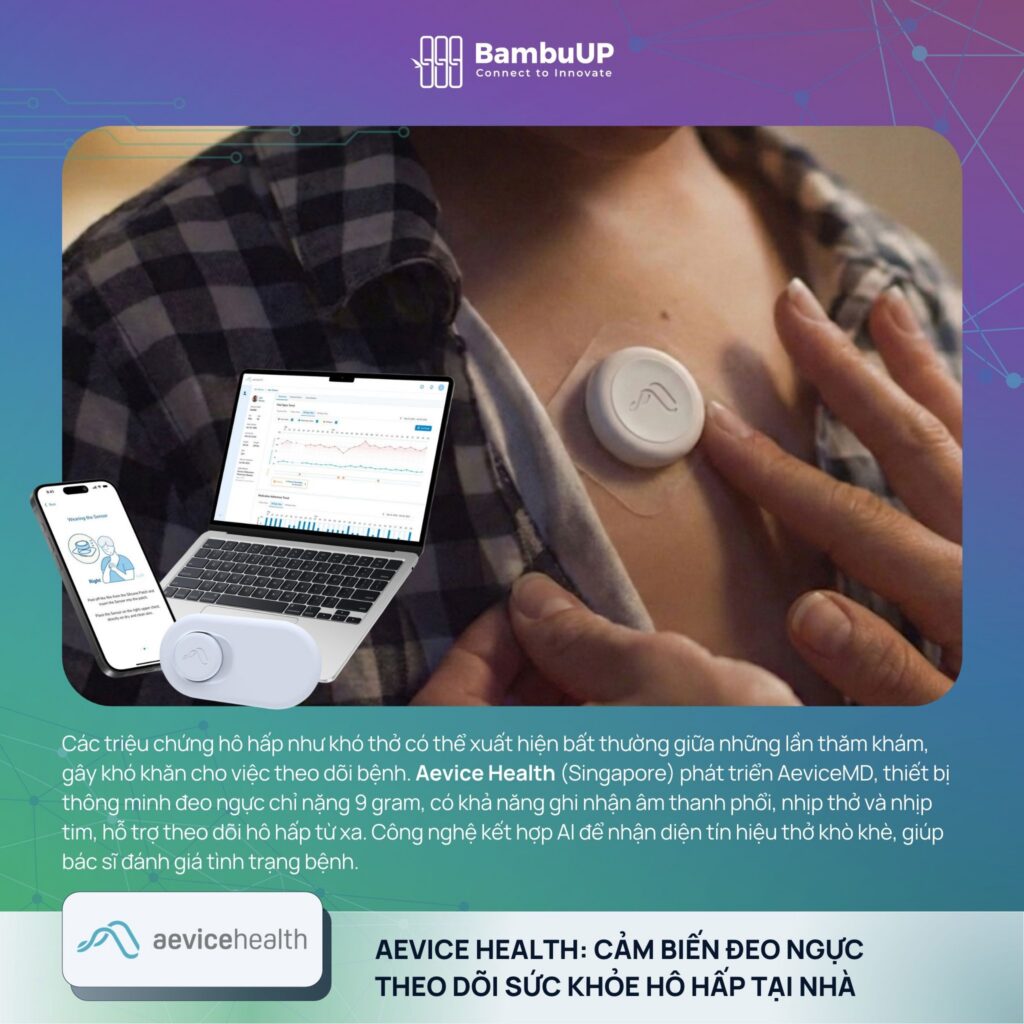
To address this challenge, Aevice Health, a Singapore-based healthtech startup, has developed AeviceMD, a smart electronic stethoscope system worn directly on the chest for at-home respiratory monitoring. The device weighs only about 9 grams, is roughly the size of a bottle cap, and is designed to be used even during sleep. Rather than recording lung sounds only during clinic visits as a traditional stethoscope does, AeviceMD can continuously collect respiratory signals throughout the wearing period, supporting the detection of wheezing and the monitoring of respiratory rate and heart rate. Data is transmitted to a monitoring platform where clinical teams can review and assess changes in the patient’s condition, supporting appropriate care decisions. (Source: Aevice Health; Cedars-Sinai)
Aevice Health’s technological differentiator lies in combining a compact wearable device with an AI-powered respiratory sound analysis system, converting signals that would otherwise require a physician to listen in person into data suitable for remote monitoring. On 1/10/2026, the startup announced that its Aevice Wheeze Detection module had received 510(k) clearance from the U.S. Food and Drug Administration (FDA). This standalone software uses AI to analyze lung sound recordings from compatible electronic stethoscopes and flags signals indicative of wheezing for healthcare professionals to evaluate. Notably, the module can be integrated with third-party device platforms that meet compatibility requirements, opening opportunities for collaboration with other respiratory monitoring solution providers. (Source: Aevice Health)
In terms of real-world application, in May 2026, Aevice Health partnered with Cedars-Sinai Guerin Children’s (U.S.) to launch an at-home respiratory monitoring program for children with asthma. This is the result of a collaboration spanning back to 2022, encompassing research, clinical trials, and technology refinement. In June 2026, the startup further partnered with Parkway MediCentre in Singapore to bring AeviceMD into a pediatric asthma care program, enabling physicians to monitor children’s respiratory symptoms between visits. (Source: Cedars-Sinai; Aevice Health)
In August 2026, Aevice Health also announced a collaboration with Nanyang Technological University (NTU Singapore) and Denka (Japan) on Project CALM (Cough Analysis Learning Model), aimed at developing AI that analyzes the acoustic characteristics of coughs to support the identification of signs associated with respiratory disease. The combination of a startup, a research institution, an industrial group, and a hospital system demonstrates the potential of the open innovation model in bringing sensing technologies and biological data analytics from research into real-world healthcare applications. (Source: Aevice Health – Project CALM)
Biolinq: A skin-worn sensor tracking glucose, sleep, and activity on a single device
Glucose monitoring plays an important role in managing metabolic health, particularly for individuals who need to control blood sugar fluctuations. However, individual point-in-time measurements cannot fully capture how glucose changes throughout the day, while many continuous monitoring systems require a sensor to be placed under the skin using a needle-based applicator and rely on a smartphone app to view results. These limitations create demand for compact, easy-to-use devices capable of providing continuous health information in everyday life.
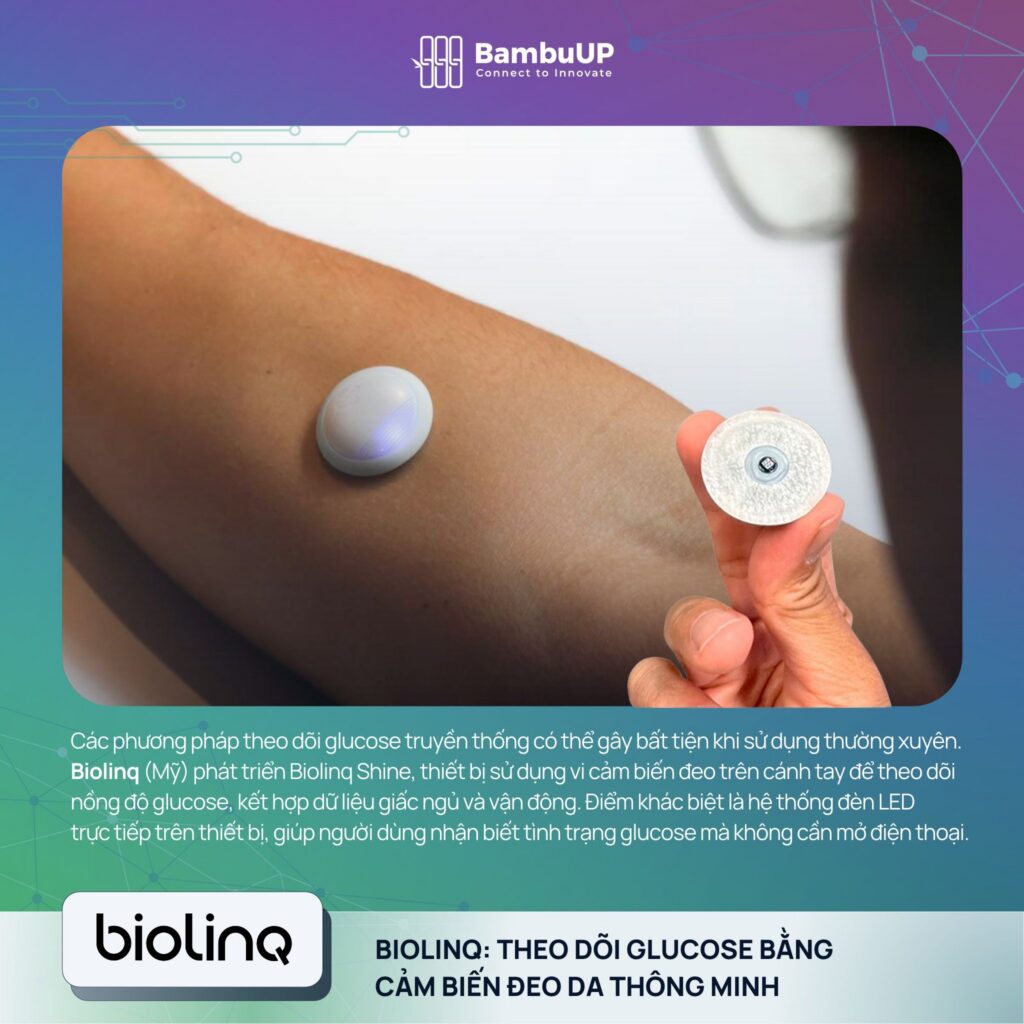
To address this challenge, Biolinq, a biomedical technology startup headquartered in San Diego (U.S.), has developed Biolinq Shine, a sensor worn on the forearm that combines glucose, physical activity, and sleep data in a single system. Unlike many continuous glucose monitoring devices that use a needle to insert a sensor filament under the skin, Biolinq applies semiconductor-based microsensor technology positioned just beneath the skin surface, with no needle required for application. A notable differentiator is the LED display integrated directly into the sensor, which changes color to indicate whether glucose is within, above, or below the target range, without the user needing to open a phone. The companion app provides more detailed information, allowing users to correlate glucose trends with meals, sleep, and activity levels, thereby helping them better understand how lifestyle habits affect metabolic health. (Source: Biolinq)
Beyond hardware innovation, Biolinq aims to simplify access to biological data by converting complex metrics into intuitive, real-time visual signals. Rather than providing only an isolated glucose value, the device focuses on tracking ranges and fluctuation trends, helping users identify changes related to lifestyle. However, Biolinq Shine is not designed to replace glucose measurement devices used for immediate treatment decisions, such as insulin dose adjustments. (Source: Biolinq)
In September 2025, Biolinq Shine received De Novo classification from the U.S. Food and Drug Administration (FDA), establishing a regulatory pathway for a new category of skin-worn glucose sensors. On 24/9/2026, the company further received FDA 510(k) clearance to offer the product over the counter to eligible users. This milestone expands access to the technology for adults aged 22 and older who do not use insulin, and demonstrates the potential of next-generation biosensors to connect health data with everyday lifestyle decisions. (Source: Biolinq – FDA Clearance)
Hilo (Aktiia): A smart band for continuous blood pressure trend monitoring, day and night
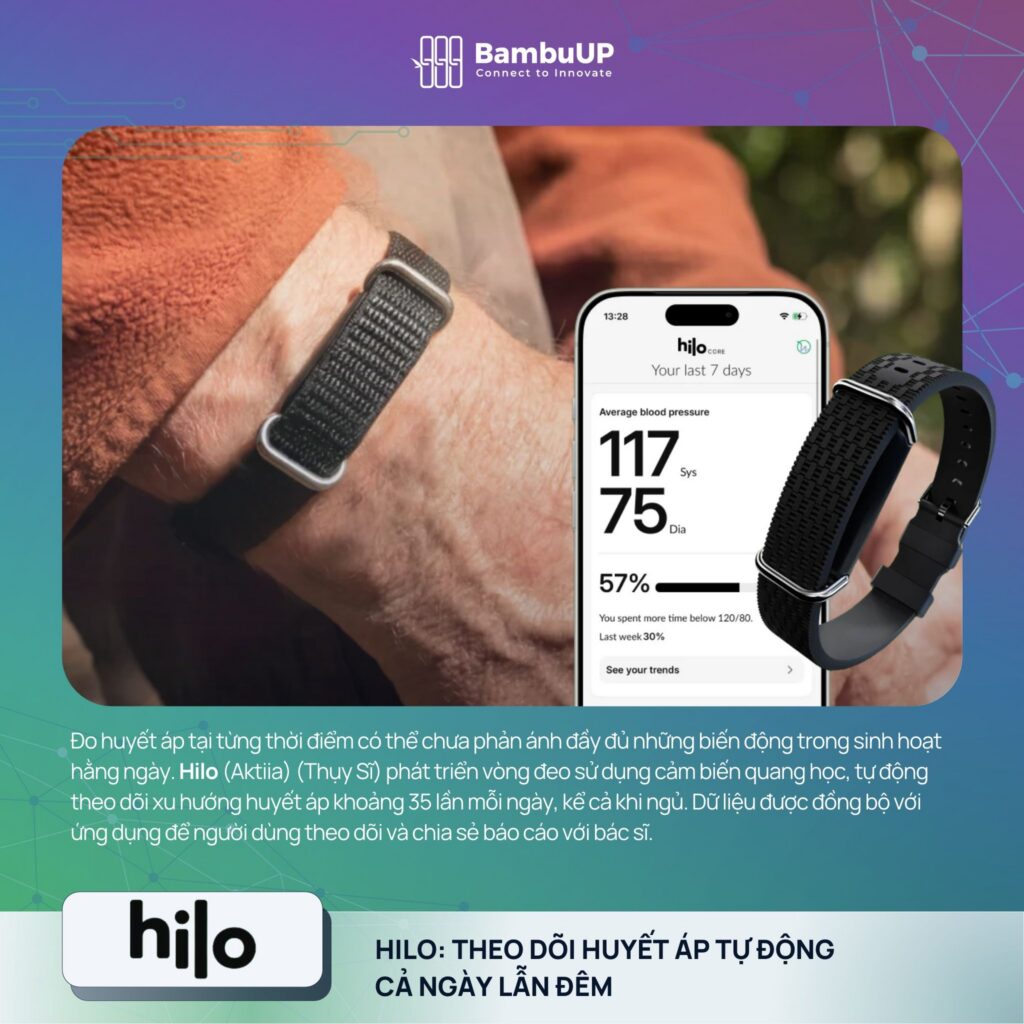
In cardiovascular health monitoring, blood pressure is typically measured at home or in healthcare facilities using a cuff-based device, reflecting the reading at a single point in time. However, blood pressure can vary with physical activity, sleep, and other daily factors, making isolated measurements insufficient for revealing fluctuation trends. Frequent monitoring, particularly at night, is also inconvenient if users must perform manual measurements repeatedly. This is among the challenges driving the development of automated blood pressure monitoring technologies that minimize disruption to daily life.
To address this limitation, Hilo, a health technology brand developed by Aktiia in Switzerland, has built a blood pressure monitoring system combining a smart wristband, a cuff-based reference device, and a mobile app. The technology uses optical sensors to capture vascular signals and estimate blood pressure variations while users are active or at rest. Unlike traditional measurement methods, the device can automatically perform approximately 35 measurements per day, including during sleep, helping to build a long-term picture of blood pressure trends rather than providing only isolated results. The data is then consolidated in the Hilo app in the form of charts, averages, and reports, helping users track changes over time and share information with healthcare professionals when needed. The system still requires periodic calibration using an upper-arm blood pressure monitor to account for each individual’s physiological characteristics. (Source: Hilo)
A notable aspect of Hilo’s approach is its shift from blood pressure measurement as an active, point-in-time action to an automated data collection process, enabling users to identify trends that may not appear in clinic-based readings. In addition, the platform combines blood pressure data with sleep and activity information, adding context for users to understand changes in their readings within daily life. In Europe, Hilo Band has been certified as a medical device, while the Hilo Core version launched in the U.S. is positioned as a general health monitoring product and is not an FDA-cleared medical device. (Source: Hilo – US Launch; Hilo Core)
Hilo reports that its technology has been used by more than 200,000 people worldwide to monitor blood pressure-related conditions or risks. On 21/7/2026, the company officially introduced Hilo Core in the U.S. market, marking a significant commercial expansion following its development in Europe. At the same time, Hilo raised an additional USD 19 million as an extension of its Series B round, with participation from Dell Family Office, to support product development and market expansion. These developments reflect growing demand for technologies that monitor cardiovascular indicators in everyday life, while opening up possibilities for connecting personal data with long-term health management. (Source: Hilo; Axios)
Oura: A smart ring connecting biometric data to personalize health monitoring
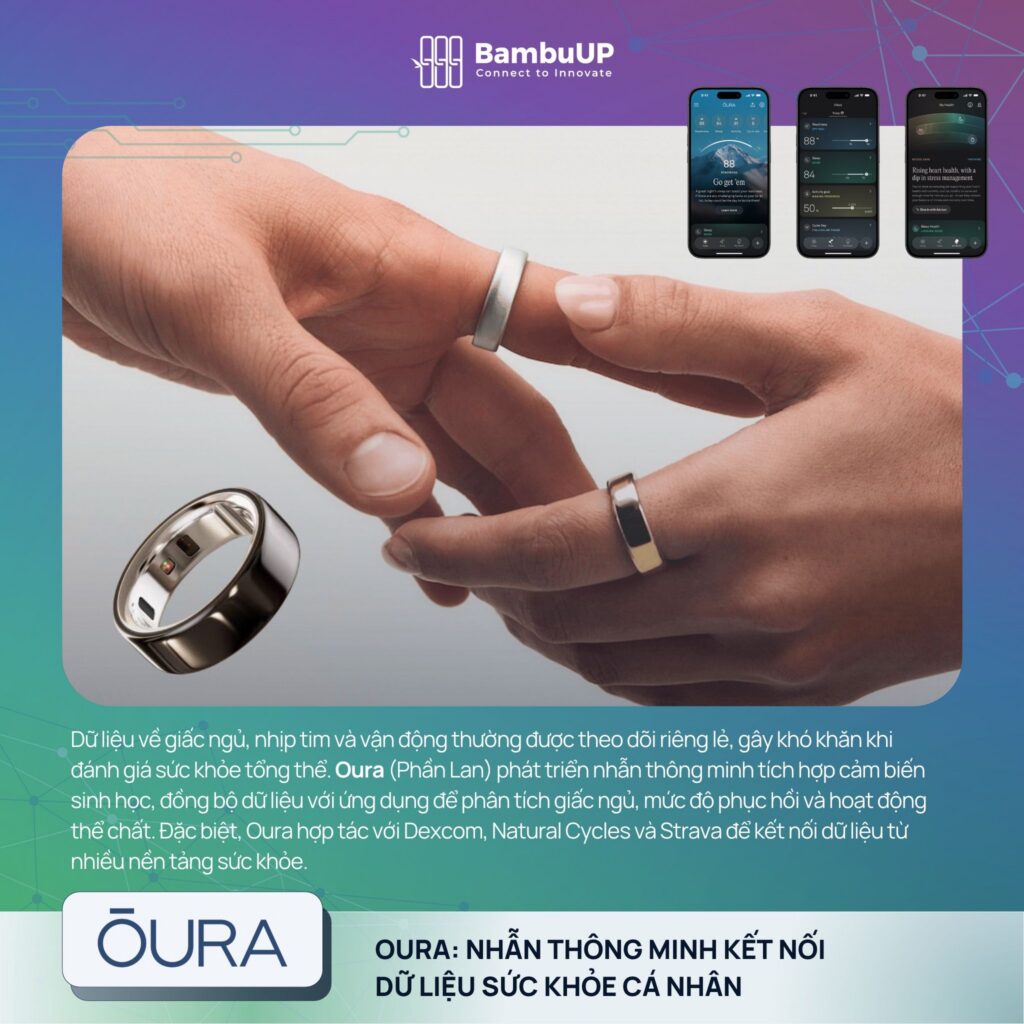
The proliferation of wearable devices gives users access to ever-increasing amounts of data on heart rate, sleep, and physical activity. However, these metrics are often tracked across separate devices or apps, making it difficult for users to recognize the relationships between lifestyle habits, recovery status, and changes in health. In addition, maintaining continuous monitoring, particularly during sleep, requires a compact and convenient design suitable for long-term use.
Driven by this need, Oura, a health technology company originating from Finland, has developed Oura Ring, a smart ring integrating optical, temperature, and motion sensors to capture biometric data in daily life. The device tracks metrics such as heart rate, heart rate variability, body temperature, sleep quality, and activity levels, then syncs with the Oura app to analyze health trends over time. Rather than simply displaying measurement data, the platform uses algorithms to consolidate information into scores for sleep, readiness, and recovery, helping users better understand the relationship between daily habits and the body’s physiological responses. (Source: Oura – SEC Filing)
What sets Oura’s development strategy apart is not only the miniaturization of a sensor system into a ring, but also its ability to connect data from multiple health platforms within a single app. In 2026, Oura expanded its glucose tracking capabilities through a partnership with Dexcom, allowing users in the U.S. to connect the Stelo sensor and view glucose data alongside sleep, activity, and other health metrics collected by Oura Ring. As a result, users can explore the relationship between meals, lifestyle habits, and glucose fluctuations without constantly switching between apps. Beyond Dexcom, Oura has also built a partner ecosystem with Natural Cycles in women’s health and Strava in physical activity tracking, reflecting an innovation approach grounded in data integration across multiple technology companies. (Source: Oura – Glucose Tracking; Oura – Partner Integrations)
According to its filing with the U.S. Securities and Exchange Commission (SEC), Oura recorded USD 907.9 million in revenue in fiscal year 2025, an increase of 123% over the prior fiscal year. The company also sold approximately 2.3 million rings in fiscal year 2025, reflecting the growth of the health-tracking wearables market. Notably, Oura is expanding partnerships with healthcare and medical service providers such as Maven Clinic, Essence Healthcare, and Lumeris, aiming to connect personal biometric data with care and health management programs. Oura’s case demonstrates the potential of the open innovation model, in which the value of a device derives not only from its measurement capabilities but also from the integration of technologies and data from multiple partners to build a digital health ecosystem. (Source: Oura – SEC Filing)