 One platform connecting startups, corporations, research institutions, regions and investors
 Southeast Asia Innovation Landscape 2026
 ESG Data-as-a-Service (DaaS) A game-changer for resource-constrained SMEs

5 technological applications changing the Retail industry
Similar to other sectors, retail is facing radical transformations in response to customers” changing behaviors. Technological developments empower retailers who are quick to grasp the trends. Here are major applications of technology that are expected to bring great advantages to retailers and attract attention.
1. Using AI in Inventory Management Systems
AI has control in checking and restocking inventory. It picks and relocates items by taking advantage of algorithms established in the system. A well-designed AI-based inventory management solution can automate the stocking process and increase the efficiency of distribution methods. Through Data Mining, retailers can easily track the fluctuation of customers’ interest, which is what helps them to make plans ahead accordingly. From there, predictive analytics can be provided to assist retailers in making better strategic decisions relating to pricing, supply, and many more.
For example, Coca-Cola uses artificial intelligence to manage inventory in retail stores’ refrigerators. The AI engine has been trained to recognize, identify and count the different Coca-Cola products in the cooler, combine this data with information received from the forecasted demand, and automatically calculate the additional order needed. Therefore, retailers can make decisions to adjust the number of goods imported to optimize sales.
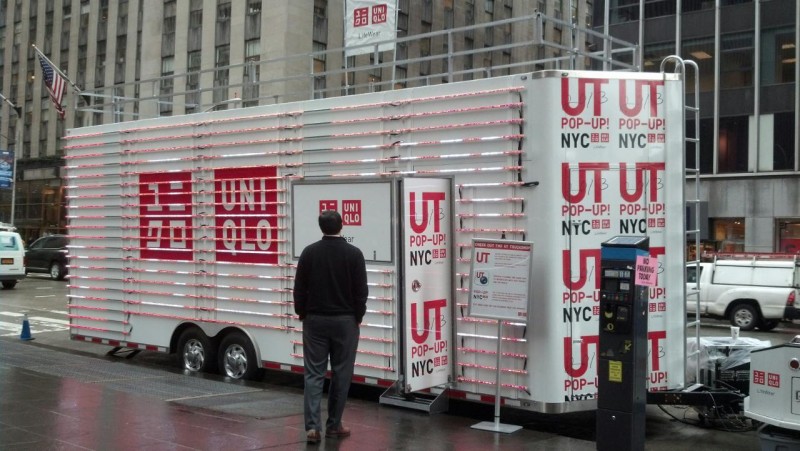
2. Pop-up stores for novel customer-experience
Pop-up stores are those that are available at temporary locations. This flexibility is important for brands, especially at the time of economic uncertainty. They help brands quickly and efficiently adapt their business strategies to the preferences of local customers. The attractiveness and profit potential of some locations can also be tested easily so that brands can decide whether to open full-fledged stores here or not. This can also be an opportunity for brands to examine customers’ responses to new technology that personalizes the customer experience before deciding to scale up.
On the other hand, physical retail stores should not only be seen as a sales channel but also as a marketing opportunity. With this mindset, pop-up stores that offer exceptional experiences (based on touch, scent, and sound, etc.) as well as apply expensive technologies, can make a hit in the media and consequently, boost sales.
3. Automation in the warehouse via robots
The use of robots in supply chain and logistics allows retailers to save a significant amount of costs. Retailers’ warehouses are experiencing a continued increase in investments related to automation as well as the supply chain’s integration. According to Global Warehouse Automation Market – Forecast to 2025 by LogisticIQ, Autonomous Guided Vehicles (AGV, AMR) and Picking systems are the two most potential applications in future automation.
Space is a decisive factor in logistics, especially for warehouses located in urban areas. Allocating space for new merchandise due to seasonal demand requires frequent reconfiguration of the warehouse, which is both time and money-consuming. Robots enable automation and flexibility so that retailers can optimize the floor space. It also gives retailers the flexibility to coordinate their personnel across departments to drive higher sales. Not to mention, Robots operate transparently, increase delivery speed and reduce human error through real-time tracking and automated inspection.
4. Cashierless stores
The pandemic has changed people’ shopping habits remarkably. Customers around the world tend to choose stores with contactless payment options or self-checkout mechanisms. A cashierless store allows customers to put what they want in their bags and walk out while the items are automatically scanned and debited from their bank accounts. This model would soon become commonplace. Amazon is the pioneer in the development of cashierless stores with its Just Walk Out system applied at Amazon Go stores. Furthermore, we can see customers scanning codes, not only to pay for products but also to get information shown right on their smartphone about the ingredients, process, provenance, and so on. This will both reassure customers of the product’s origin and simplify the product handling process.
5. Voice recognition shopping
Since the introduction of Apple’s voice assistant innovation Siri, this technology has exploded. Up till now, it has even begun to be applied on many devices of many other industries.
Walmart has leveraged voice assistant technology by integrating it in the Voice Ordering service. Customers can use any device supported by Google Assistant or Siri to add products to their cart. Shoppers only need to read the names of the products they want to buy, and then the items would be packaged and shipped in the way they want. Not going far behind the competitor, 7-Eleven Inc. also quickly launched the voice ordering service in its 7NOW delivery app. After being paid, the goods will be delivered to the customer within 30 minutes.