 One platform connecting startups, corporations, research institutions, regions and investors










 Playbook & Handbook · February 6, 2026
Winning Accelerator Playbook 2026 by BambuUP
 EDTECH: LEVERAGING AI-POWERED TECHNOLOGIES TO TRANSFORM THE LEARNING EXPERIENCE

AFTER THE PILOT, WHAT HELPS CIRCULAR SOLUTIONS SCALE? BAMBUUP’S PERSPECTIVE ON THE CIRCULAR SOLUTIONS IN VIETNAM REPORT
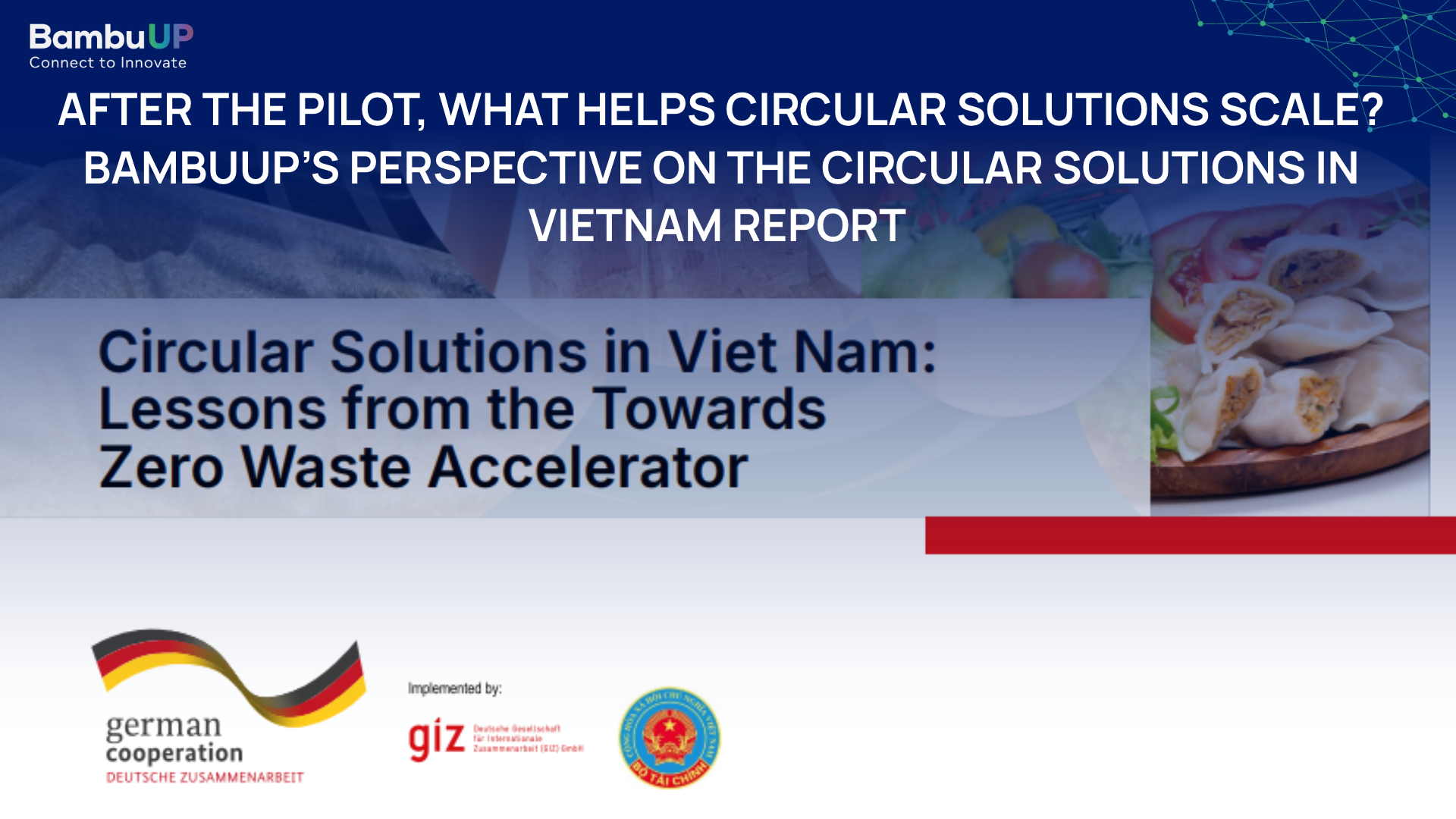
Published by GIZ, the report “Circular Solutions in Viet Nam: Lessons from the Towards Zero Waste Accelerator” profiles eight circular economy models in Viet Nam, spanning recycled materials, agriculture and aquaculture. Drawing on its experience implementing the Towards Zero Waste Accelerator with Schoolab, BambuUP explores a question that can shape whether a solution scales: once the pilot ends, who needs to make the next decision, and what evidence do they need?
A fabric sample made from pineapple leaves can demonstrate the potential of a new fibre. To turn that fibre into a product line, the company needs to understand how a textile manufacturer can process it and what application a fashion brand is willing to test. As a solution moves closer to market, the questions change, and so do the people who can answer them.
What have Vietnamese circular economy businesses tested?
As part of the Go Circular programme, the Towards Zero Waste Accelerator selected 10 solutions from more than 100 applications. Eight of those models are featured in GIZ’s Circular Solutions in Viet Nam report.
| Solution area | Models featured in the report |
| Materials, logistics and fashion | AirX Carbon develops pallets from agricultural residues and hard-to-recycle plastics. Ecosoi makes fibres and fabrics from pineapple leaves. KHAAR repurposes textile offcuts, uses 3D prototypes and has tested a pre-order concept. |
| Agriculture and food | Enfarm tests a soil nutrient management solution. Meron Farm improves warehouse management and traceability to reduce food waste. Nguyên Khôi Farm develops a circular approach to organic pig farming. Lemit Foods tests products that blend young jackfruit with meat. |
| Aquaculture | Wesolife develops a model for leasing and taking back equipment to extend its useful life. |
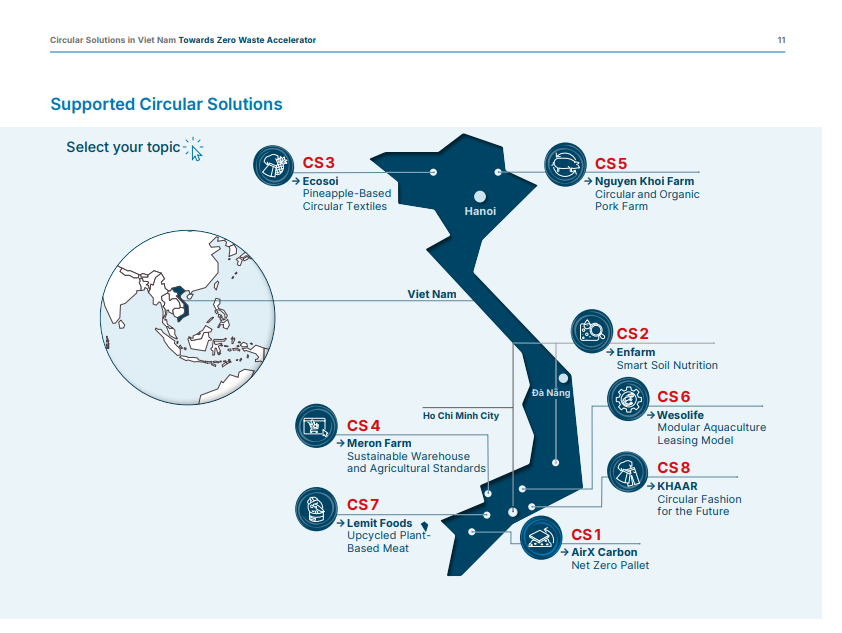
These cases show how some Vietnamese businesses have begun testing their solutions with customers and partners in real-world settings. Each team faces a different question as it moves towards scale, from whether a new material can fit into an existing production process to how much customers are willing to pay to try a solution.
How BambuUP helped businesses access the right support through the Towards Zero Waste Accelerator
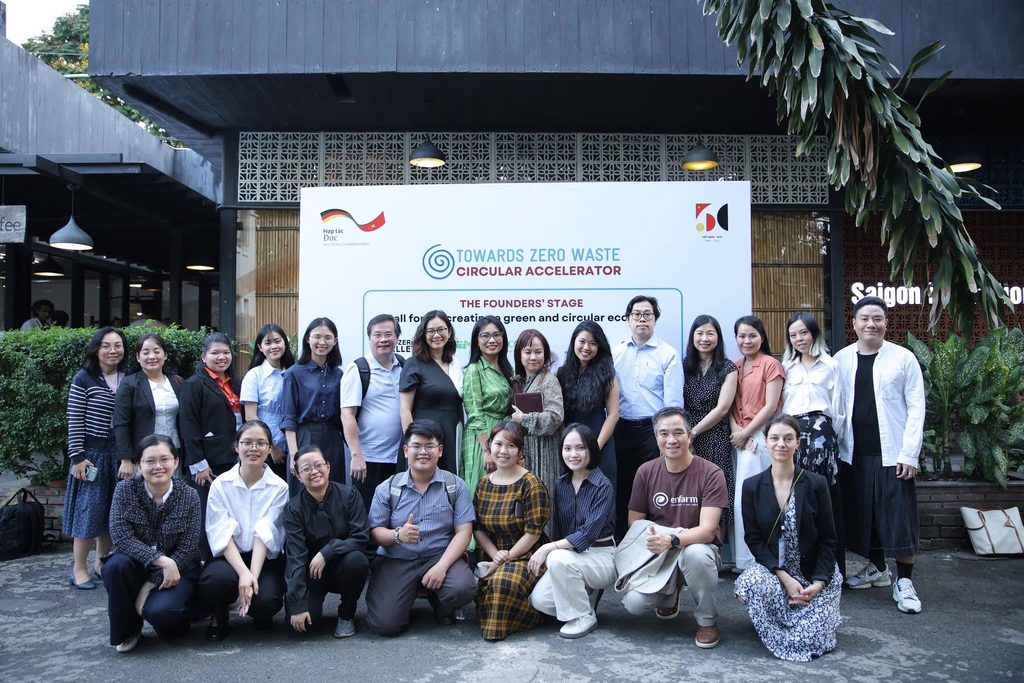
From September 2024 to April 2025, BambuUP and Schoolab implemented the Towards Zero Waste Accelerator, a programme for startups and small and medium-sized enterprises developing circular economy solutions in Viet Nam. Through site visits and direct conversations, the programme identified where each business was facing difficulties and tailored its mentoring, technical support and partner introductions accordingly.
For a business looking to validate market demand, the priority might be to find a customer willing to test the solution and agree on how to evaluate it. For a business that has seen early signs of demand but faces production constraints, the priority might be to find a partner with a suitable production line for a larger-scale trial. A connection is valuable when it helps a business test an assumption that informs its next decision.
Designing support around the decision after the pilot
From BambuUP’s perspective, an accelerator should start by identifying who will make the decision after the pilot and what information they still need. A procurement team, a manufacturing partner and a customer trying a solution each have different criteria. Understanding those criteria helps a business involve the right partners and design a trial that answers the questions they need resolved.
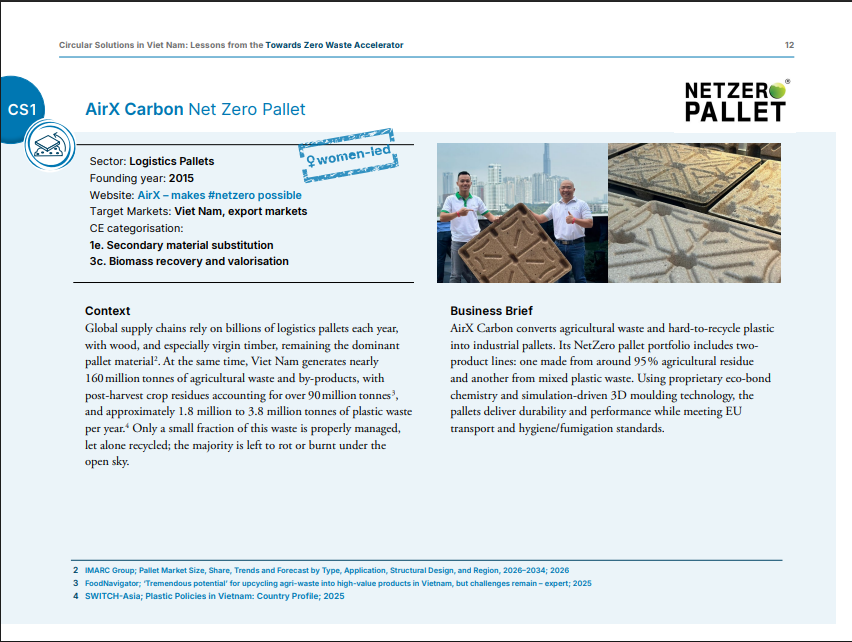
- When buyers need a basis for comparison, AirX Carbon assesses the carbon footprint of its pallets in line with ISO 14067 and compares it with that of wood and plastic alternatives. The data gives procurement teams additional evidence when considering a switch to a different material.
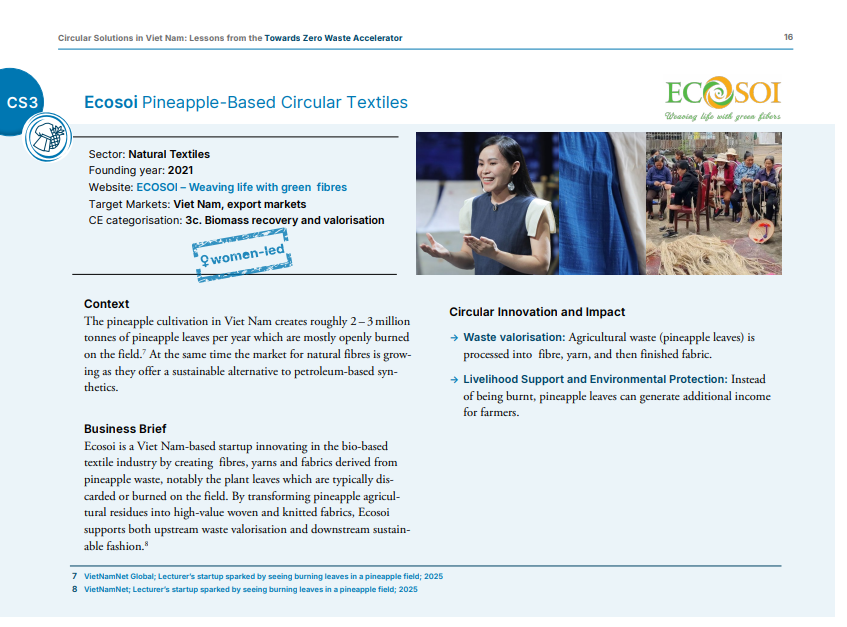
- When bringing a new material into use depends on several links in the supply chain, Ecosoi works with Faslink and Trung Quy to develop a pilot fashion line using pineapple leaf fibre. Working with a textile manufacturer and a fashion brand helps Ecosoi test how the material performs in an actual product.
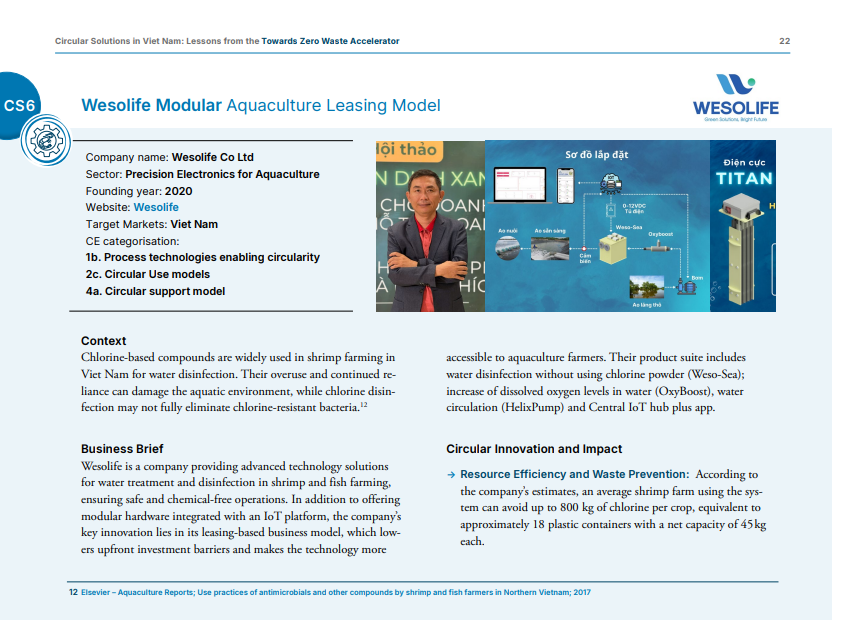
- When upfront costs affect whether customers are willing to try a solution, Wesolife offers equipment leasing. Farmers can use the equipment before deciding whether to invest, while Wesolife can take it back and manage it over its lifecycle.
These three cases suggest a practical way to design pilots. From the outset, businesses and the organisations supporting them can agree on who will review the results, what criteria need to be met for them to take the next step, and which partners need to be involved. That helps businesses decide whether to prioritise measurement, test an application with a partner, or change how customers access the product.
Scaling a circular solution across an industry depends on many such decisions, from what procurement teams choose to buy to what manufacturers can integrate into their processes and what end users are ready to adopt. An accelerator can help businesses test these conditions one by one, building the evidence needed for wider adoption.
Read the full report here: Circular Solutions in Viet Nam: Lessons from the Towards Zero Waste Accelerator
BambuUP – Connect to Innovate