
 One platform connecting startups, corporations, research institutions, regions and investors











 Playbook & Handbook · February 6, 2026
Winning Accelerator Playbook 2026 by BambuUP
 SHAPING THE FUTURE OF HEALTHTECH: 4 STARTUPS BRINGING SMART HEALTH MONITORING DEVICES TO MARKET

“Asia’s Silicon Valley”: Which Policies Helped Taiwan Nurture a Network of “Hidden Champions”?

Discover how Taiwan nurtures “Hidden Champions” through innovation policies, technology transfer, R&D funding, and SME support. Explore key lessons from ITRI, SBIR, and KMC Chain to help Vietnamese businesses strengthen competitiveness and drive sustainable growth through innovation. Learn more about Global Unlock Taiwan 2026 and connect with Taiwan’s innovation ecosystem.
An island nation of 23.4 million people, with an area less than one-tenth the size of Vietnam, is home to more than 200 small and medium-sized enterprises holding a top-three global market share in their own niche products, with revenues below USD 4-5 billion and almost invisible to the public. Management scholars call them “hidden champions” (Source: Taiwan Business TOPICS). Behind TSMC (Taiwan Semiconductor Manufacturing Company), the “giant” whose name the whole world knows, are hundreds of other quiet players dominating individual links of the global supply chain. Hermann Simon, the father of the concept, once described this as a remarkable density relative to population size, even though Taiwan has yet to surpass Germany, the traditional “home” of the world’s hidden champions (Source: CommonWealth Magazine). What turned an economy that once exported only low-cost textiles into one of Asia’s foremost incubators of these low-profile champions?
Taiwan’s Hidden Champions: When Deep Specialization Is a Survival Philosophy
The concept of “hidden champions” was introduced by German management scholar Hermann Simon in 1990 to describe companies that meet three stringent criteria:
- Market share: Ranking in the global top three (or number one on their continent) in their own niche segment.
- Revenue scale: Below USD 4-5 billion.
- Visibility: Low public recognition, almost “invisible” to end consumers. (Source: Taiwan Business TOPICS)
Taiwanese companies did not choose to build huge multi-sector conglomerates as South Korea did. Instead, they climbed up from the bottom of the value chain with a strategy of extreme specialization in a specific component or process, becoming an irreplaceable link in the global chain.
A representative example is Johnson Health Tech, which began in 1975 in Taichung with just a small machine shop and has since become one of the three largest fitness equipment manufacturers in the world, owning familiar brands such as Matrix, Vision, and Horizon (Source: Johnson Health Tech).
However, this concentration does not happen naturally. Without policy support in finance, Research & Development, and infrastructure from the government, small and medium-sized enterprises with limited resources would quickly be crushed by research costs and market risks.
Technology Transfer Policy: ITRI, from a State Research Institute to Builder of Private Industry
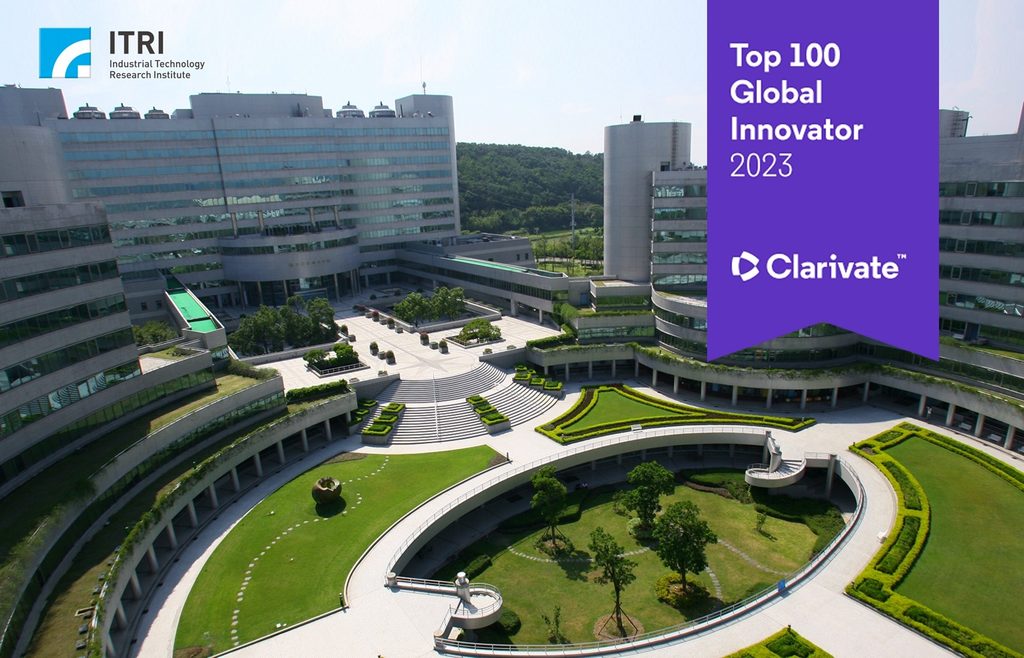
In 1973, when Taiwan’s GDP per capita was roughly comparable to that of present-day Bangladesh, the government established the Industrial Technology Research Institute (ITRI) (Source: Asterisk Magazine). ITRI’s role was not purely academic research, but to import, decode, and transfer technology to the private sector.
Practical Technology Transfer Mechanism: From a Research Institute to UMC and TSMC
- In 1976: ITRI sent 35-40 engineers to Radio Corporation of America (USA) to learn complementary metal-oxide-semiconductor technology over a period of 6-12 months (Source: Asianometry).
- In 1980: ITRI spun off a division of its own to establish United Microelectronics Corporation, Taiwan’s first semiconductor company (Source: Asterisk Magazine).
- In 1987: ITRI also spun off Taiwan Semiconductor Manufacturing Company (TSMC), transferring the entire pilot plant, equipment, technology, and 98 research specialists to the new company, with a 27.5% equity investment from Philips (Source: Taiwan Insight).
From the ITRI “cradle,” TSMC pioneered the “pure-play foundry” model, which only manufactures chips to customers’ designs rather than designing its own products. This model freed chip design companies from the cost of investing in multibillion-dollar fabs, while propelling the model to a dominant position across the global semiconductor industry (Source: Asterisk Magazine). ITRI was later also recognized among the Top 100 Global Innovators of 2023 (Source: ITRI).
Taiwan’s Three-Tier Financial and R&D Policy Framework: Removing Bottlenecks for Small and Medium-Sized Enterprises
The shortage of early-stage Research & Development funding (the “valley of death”) and the lack of collateral to borrow from banks are the two biggest bottlenecks preventing small and medium-sized enterprises from rising to become global champions. To resolve this problem thoroughly, Taiwan does not distribute budgets evenly but designs a specialized three-tier support system. This mechanism acts as a risk-sharing “companion,” helping businesses experiment with and commercialize products with confidence.
3.1. Early-Stage Risk Shared by the State: Small Business Innovation Research (SBIR) Program
Operating under the Ministry of Economic Affairs (MOEA), the SBIR program provides non-refundable grants as seed capital, encouraging small and medium-sized enterprises to boldly pursue new technology research. To manage risk and improve efficiency, SBIR structures disbursement to follow the development lifecycle of a project:
Phase 1 (Pre-feasibility research): Grants of up to NT$1 million over 6 months for companies to survey and conduct a preliminary assessment of their ideas.
Phase 2 (Product Research & Development): Grants of up to NT$10 million over 2 years to complete the core technology and prototype products (Source: Startup Island Taiwan).
3.2. Solving the Collateral Problem: Small and Medium Enterprise Credit Guarantee Fund (SMEG)
Technology SMEs often hold “intangible assets” such as patents or software, making it difficult for them to approach commercial banks because they lack factories or land to pledge as collateral.
To open up capital flows, the Taiwanese Government operates the SMEG Fund. Through this fund, the Government guarantees 80% to 95% of the credit risk for qualified enterprises. With SMEG’s “backing,” commercial banks are willing to open the credit tap, allowing businesses to access preferential loans of up to NT12millionforbasiccapitalexpenditure,anduptoNT80 million for in-depth innovation development projects (Source: Enterprise Ecosystem Portal, Ministry of Economic Affairs, Taiwan).
3.3. Taiwan Mittelstand Program: A Comprehensive Government Incubation and Support Framework
Directly inspired by Germany’s renowned “Hidden Champions” (Mittelstand) model, the Ministry of Economic Affairs launched the Taiwan Mittelstand program to identify, honor, and incubate small and medium-sized enterprises with outstanding capabilities in niche segments.
Going beyond awards, enterprises on the list of potential candidates receive a comprehensive support package from the Government, including talent training consulting, funding for global intellectual property protection, and international brand promotion. MOEA data shows that this mechanism delivers an enormous return on investment: for the 74 potential enterprises selected in the first phase alone, using more than NT302millioningovernmentsupportfunds,thegroupgeneratedleveragethatdroveuptoNT39 billion in new private-sector investment and provided more than 3,540 high-quality jobs (Source: Taiwan Review Publication, Taiwan Government).
Case Study: KMC Chain, Skillfully Leveraging Policy to Dominate the Global Market
Starting as a small bicycle chain workshop in Tainan in 1977, KMC Chain is now a quiet “giant” holding a major share of the global premium bicycle chain market. KMC’s breakthrough comes not only from its “choose a niche, dig deep” orientation, but also serves as a classic demonstration of how a small and medium-sized enterprise can make the most of Taiwanese Government policy resources to continuously upgrade its competitiveness.
An Outstanding “Seed” from the Mittelstand Program
KMC’s strong rise on the international brand map bears the strong imprint of the Ministry of Economic Affairs (MOEA)’s incubation policies. In 2015, KMC was officially honored by the Government with the Taiwan Mittelstand Award, a program that nurtures “hidden champions” (Source: KMC Chain Official).
As one of the outstanding enterprises honored at the Taiwan Mittelstand Award (the “champion replication” program) of the Ministry of Economic Affairs (MOEA), KMC received a solid launchpad for breakthrough growth. Through this program, the Government provided practical support mechanisms that helped the company develop core technology and promote in-depth brand marketing on an international scale (Source: American Chamber of Commerce in Taiwan, AmCham Taiwan). These accompanying resources helped KMC firmly consolidate its technical partnership with Shimano (which began in 1986), and bring its bicycle chain lines to become equipment trusted by racers and winners in the world’s most demanding competitions such as the Tour de France (Source: KMC Chain Official History).
Leveraging Research & Development Funding to Catch the Electric Bicycle Trend
Not resting on its laurels in traditional bicycles, KMC continuously leverages Taiwan’s policy corridors supporting innovation and R&D funding as seed capital for experimenting with new technologies.
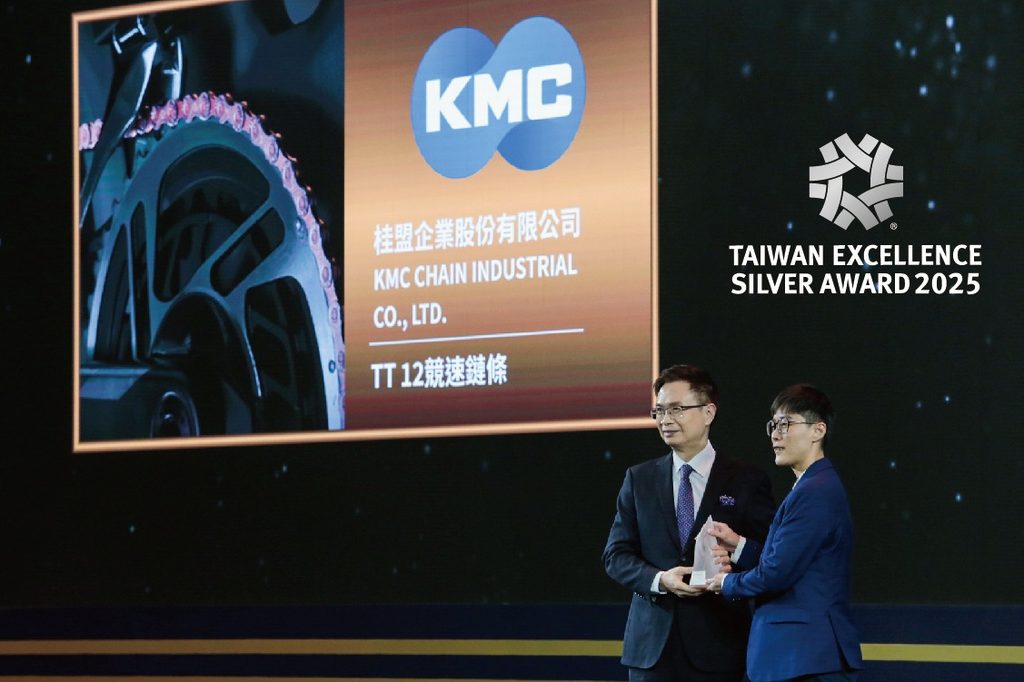
Thanks to timely financial support and technical consulting, KMC boldly invested in research and successfully caught the electric bicycle wave, developing specialized high-durability chains and sprockets that can withstand the superior torque of electric motors. This sustained Research & Development capability has earned KMC a series of prestigious awards, notably the TT 12 Racing chain, which recently won the Silver Award at Taiwan Excellence 2025 (Source: Taiwan Excellence Awards).
Leveraging the “Smart Manufacturing” Policy to Restructure
Under pressure from rising labor costs and global supply chain volatility, KMC made full use of the Government’s industrial upgrading incentives and “smart manufacturing” subsidies to shift its operating model.
To strengthen the resilience and recovery capacity of its supply chain amid global disruptions, KMC proactively reoriented its operations, stepping up investment in upgrading to a smart manufacturing model at its production facility in Tainan (Source: Taipei Times). Integrating automation into the production line not only helped the company optimize efficiency but also met stringent sustainable development requirements, as KMC is one of the world’s pioneers in obtaining international carbon footprint certifications for bicycle chain products (Source: KMC Chain Official). The results of this restructuring allow KMC to fully control output quality in the premium segment and maintain its leading position without depending on low-cost labor advantages.
Suggested Perspectives for the Business Community:
- Proactively embrace Open Innovation to optimize the R&D roadmap:
Rather than spreading investment thin and testing technology from scratch, businesses can consider collaborating and receiving knowledge transfer from the ecosystem (research institutes, universities, startups). Similar to how ITRI has accompanied Taiwanese enterprises, proactively connecting with technology partners can significantly shorten product commercialization time and reduce experimentation costs. - Flexibly structure R&D funding according to each project’s maturity level:
Allocating R&D budgets by stage, from experimentation to scale-up (in the spirit of the SBIR program’s design), helps businesses manage cash flow risk more effectively. In addition, businesses can explore green finance channels and credit guarantees based on operational capacity and ESG data to gradually reduce dependence on traditional collateral. - Focus resources on niche segments to establish sustainable competitive advantage:
To avoid price competition pressure in large-scale markets, persistently going deep into a specific component, solution, or process within the value chain (as in the lesson from KMC Chain) can be a suitable direction for SMEs. By becoming an important link in a niche segment, a business not only protects its profit margins but also builds a solid foundation for long-term technology reinvestment.
Conclusion: From Policy Lessons to Field Experience
The success of Taiwan’s network of hidden champions confirms a reality: a business’s long-term competitive advantage comes from steadfast strategic positioning and the ability to make effective use of the surrounding policy support ecosystem. For Vietnamese enterprises seeking direction amid the wave of global supply chain restructuring, directly observing how these models operate on the ground will offer more specific and practice-oriented insights.
Global Unlock Taiwan 2026 is a business study, learning, and networking program for Vietnamese CEOs, Founders, and business leaders who wish to explore advanced models in AI, Smart Manufacturing, and Green Transformation, and to expand collaboration with Taiwan’s technology, manufacturing, and innovation ecosystem.
Register to learn more about the program: https://docs.google.com/forms/d/e/1FAIpQLScBr06WhNQGrRm3FvFkr6VRDe6ALKfrYow7NEbRcQRdeTaMLQ/viewform