 One platform connecting startups, corporations, research institutions, regions and investors









 Playbook & Handbook · February 6, 2026
Winning Accelerator Playbook 2026 by BambuUP
 SHAPING THE FUTURE OF HEALTHTECH: 4 STARTUPS BRINGING SMART HEALTH MONITORING DEVICES TO MARKET

“Flying Supercar” Tesla Roadster: When Aerospace Technology Enters the Automotive Industry
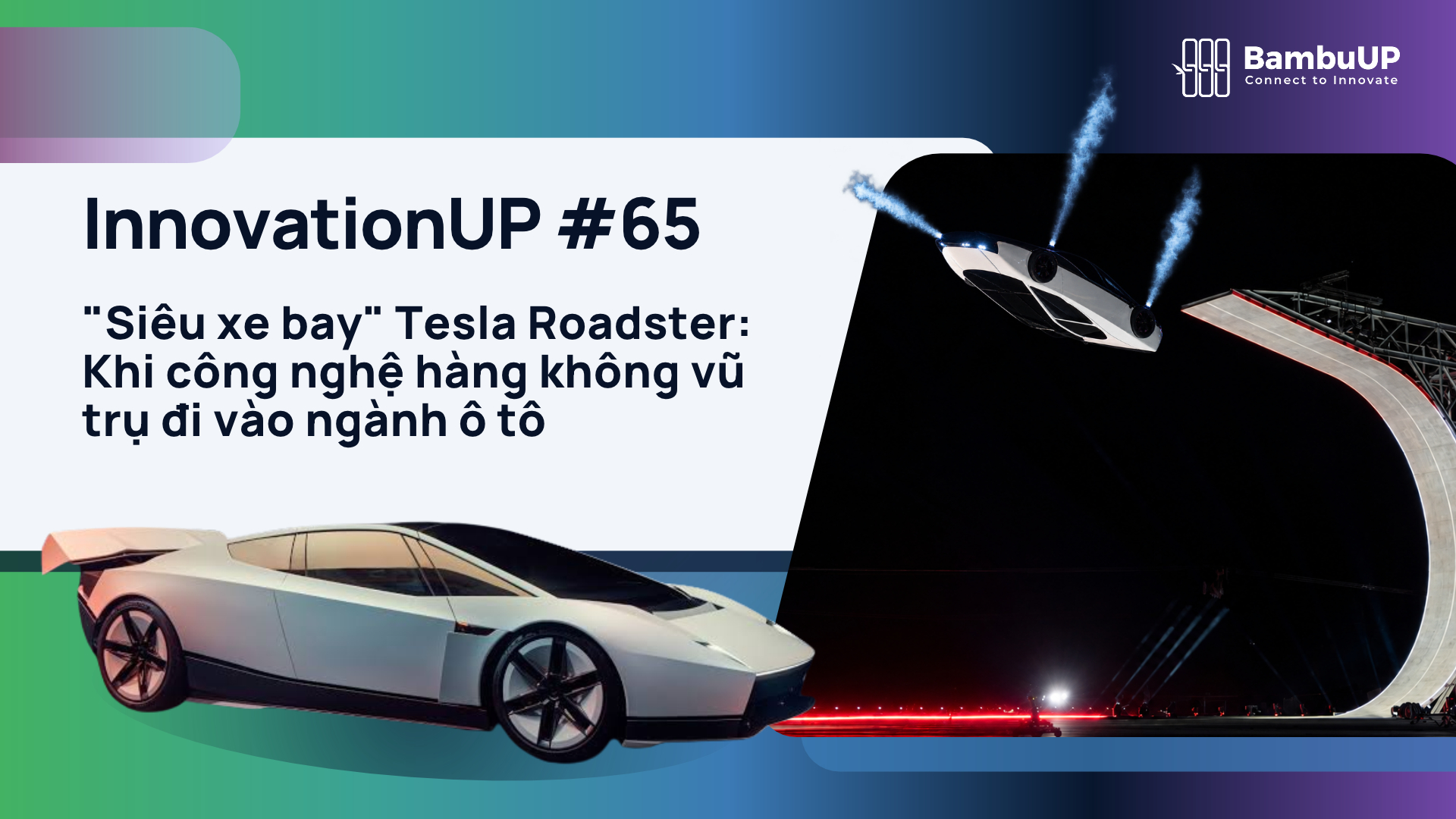
The new Tesla Roadster has left the ground, rotated in mid-air, and landed, thanks to a thrust system developed with SpaceX. Though still a prototype, the October 15, 2026 demonstration shows aerospace technology entering the automotive industry, and offers cross-industry innovation lessons for manufacturing and export businesses.
On October 15, 2026, Tesla drew attention by demonstrating a new-generation Roadster electric car capable of leaving the ground, rotating in mid-air, and landing, thanks to a thrust system developed with SpaceX. Although it is not yet a vehicle capable of sustained flight, the demonstration shows that technologies originally used in the aerospace sector are being integrated into automobiles and put into real operation. When an idea once considered science fiction can become a working prototype, where does the next limit of technology lie, and how can businesses make use of these advances?
Tesla Roadster “Takes Off”: From a 2017 Idea to a Real-World Demonstration
At SpaceX’s test facility in McGregor, Texas (USA), Tesla unveiled the second-generation Roadster with a demonstration unlike those of ordinary electric cars. The car moved along a curved ramp, clinging to the surface even when upside down, then left the road surface, rotated in mid-air, and landed on its wheels. In the next part of the demonstration, the Roadster used thrust to clear a row of parked Tesla vehicles (According to Reuters).
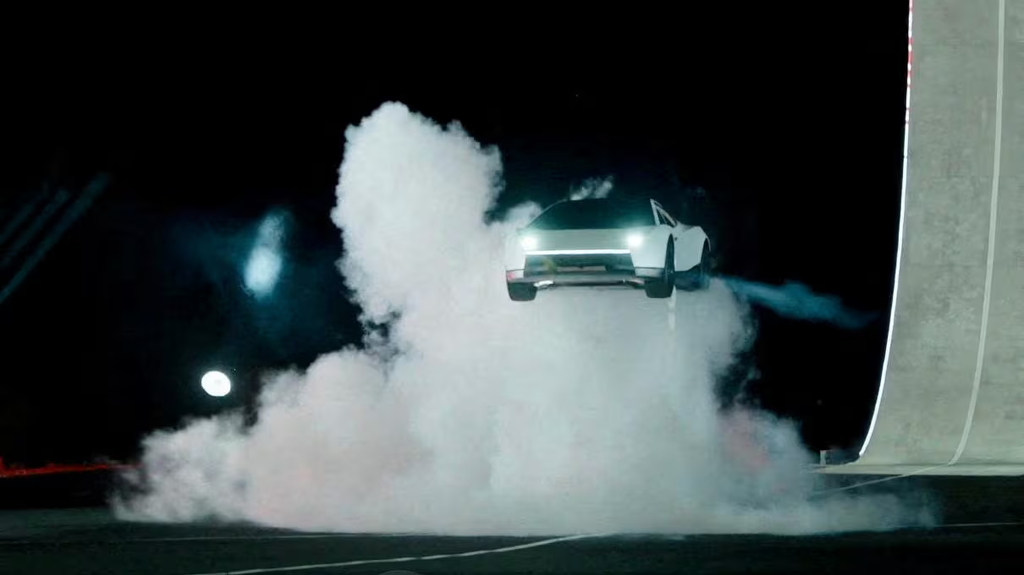
What makes it special is the combination of two technology systems. The first is the high-pressure cold-gas thrusters, which use gas released through nozzles to create reaction force, helping to accelerate and adjust movement. The second is the fan-based downforce system, which allows the car to maintain grip even when in an upside-down position.
According to Tesla, the prototype is equipped with 10 nozzles and two tanks holding approximately 600 liters of compressed gas, generating thrust that enables the car to perform short movements in the air. The company also announced a 0 to approximately 97 km/h acceleration time of 0.81 seconds under test conditions (According to Tesla Roadster Event). However, the Roadster remains an experimental prototype and has not yet demonstrated sustained flight or safe operation on public roads. Tesla plans to begin production in 2028, but has not given a firm delivery date.
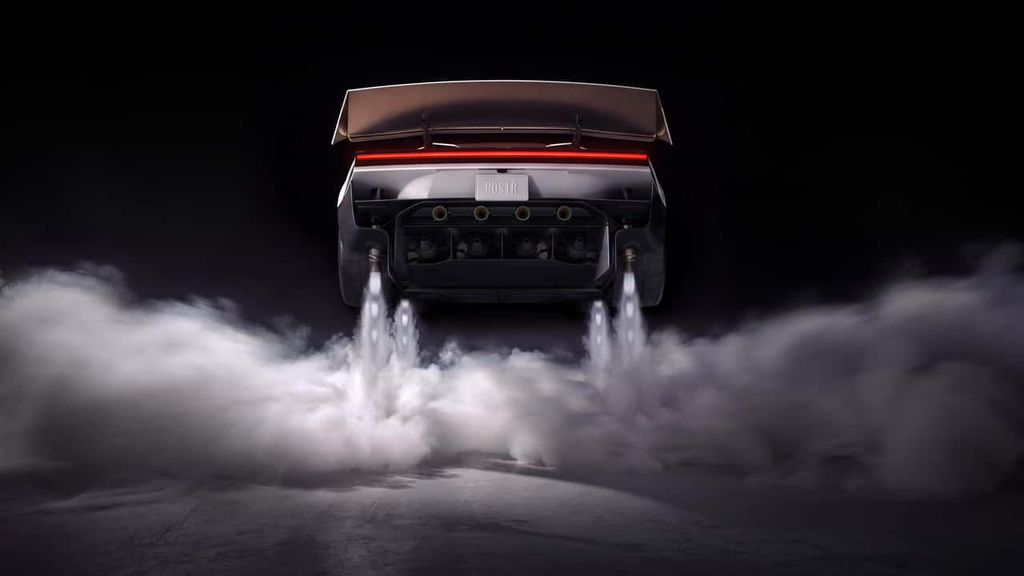
Although there is still a large gap before commercialization, the demonstration marks progress in technology integration: rather than merely upgrading electric motors or batteries, Tesla has used engineering principles from the aerospace industry to expand the operating capabilities of the car.
When Technology Goes Beyond Industry Boundaries: Innovation Does Not Necessarily Begin with a New Invention
According to NASA, cold-gas propulsion systems have long been used in aerospace, particularly in satellites and devices that need to adjust movement with high precision (According to NASA). The difference lies in how Tesla combines this technology with control systems, lightweight materials, and the structure of an electric car. When multiple solutions originally designed for different purposes are integrated into a unified system, they can create capabilities that none of the individual technologies could achieve on their own.
This is a notable example of cross-industry innovation, in which a company draws on knowledge and solutions from other fields to overcome the limitations of its current products.
The Tesla case also offers a broader perspective on technological development: the limits of an industry are not necessarily determined by the technologies that already exist within that industry. Combining precision mechanics, advanced materials, sensors, and control systems can open up new modes of operation for cars, robots, and industrial equipment.
For the manufacturing sector, this approach suggests opportunities to develop machine systems with more flexible motion control, the ability to self-adjust to operating conditions, or the integration of multiple functions within a single device. These are potential directions for application, not results that Tesla directly demonstrated at the event.
The Next Big Challenge for Technology
Despite its technical impressiveness, the Roadster demonstration still shows the gap between a successful working prototype and a product that can be deployed widely. High-pressure compressed gas systems demand strict requirements for safety, weight, energy, and stability. Meanwhile, bringing a vehicle capable of leaving the ground into real traffic environments also depends on legal regulations, technical standards, and the ability to control risk (According to AP News).
For the Roadster, the immediate value lies not only in vehicle sales. According to Reuters, the model also serves to showcase Tesla’s technical capabilities, helping reinforce the image of a company willing to experiment with highly difficult ideas.
More importantly, the process of developing products like the Roadster can generate knowledge, designs, and technical solutions that are useful for other projects. Technology tested for a product that may not succeed commercially can still contribute to future applications.
What Can Businesses Learn About Innovation from the Tesla Roadster?
The Tesla story suggests a noteworthy approach: innovation does not necessarily mean developing every technology from scratch, but can begin with finding new applications for solutions that already exist.
For manufacturing and export businesses, this can start with taking a fresh look at operational limitations: inflexible machinery, energy-intensive processes, difficulty controlling quality, or reliance on manual operations. Instead of looking for solutions only within their current industry, businesses can draw on technologies from robotics, aviation, smart sensors, or automation to solve specific problems.
The second lesson lies in the ability to experiment. Tesla has not yet commercialized the Roadster, but it has built a prototype integrating multiple complex systems and demonstrated some operating capabilities. For businesses, technology pilot projects (proof of concept) within a controlled scope can help assess feasibility before deciding to invest or deploy on a large scale.
The Roadster has not proven that flying cars will become a common means of transport, but it has shown that technical limits once considered hard to overcome can be challenged by combining technologies from multiple fields. For businesses, competitive advantage lies not only in owning the most advanced technology, but also in the ability to recognize new applications and turn them into solutions with practical value.
This is also why open innovation is becoming increasingly meaningful. Through collaboration with startups, research institutions, and technology providers, businesses can access solutions beyond their internal development capabilities, while shortening the process of testing and application.