
 One platform connecting startups, corporations, research institutions, regions and investors











 Playbook & Handbook · February 6, 2026
Winning Accelerator Playbook 2026 by BambuUP
 EDTECH: LEVERAGING AI-POWERED TECHNOLOGIES TO TRANSFORM THE LEARNING EXPERIENCE

REPURPOSED AIRCRAFT ENGINES EMERGE AS A NEW POWER SOLUTION FOR AI DATA CENTERS
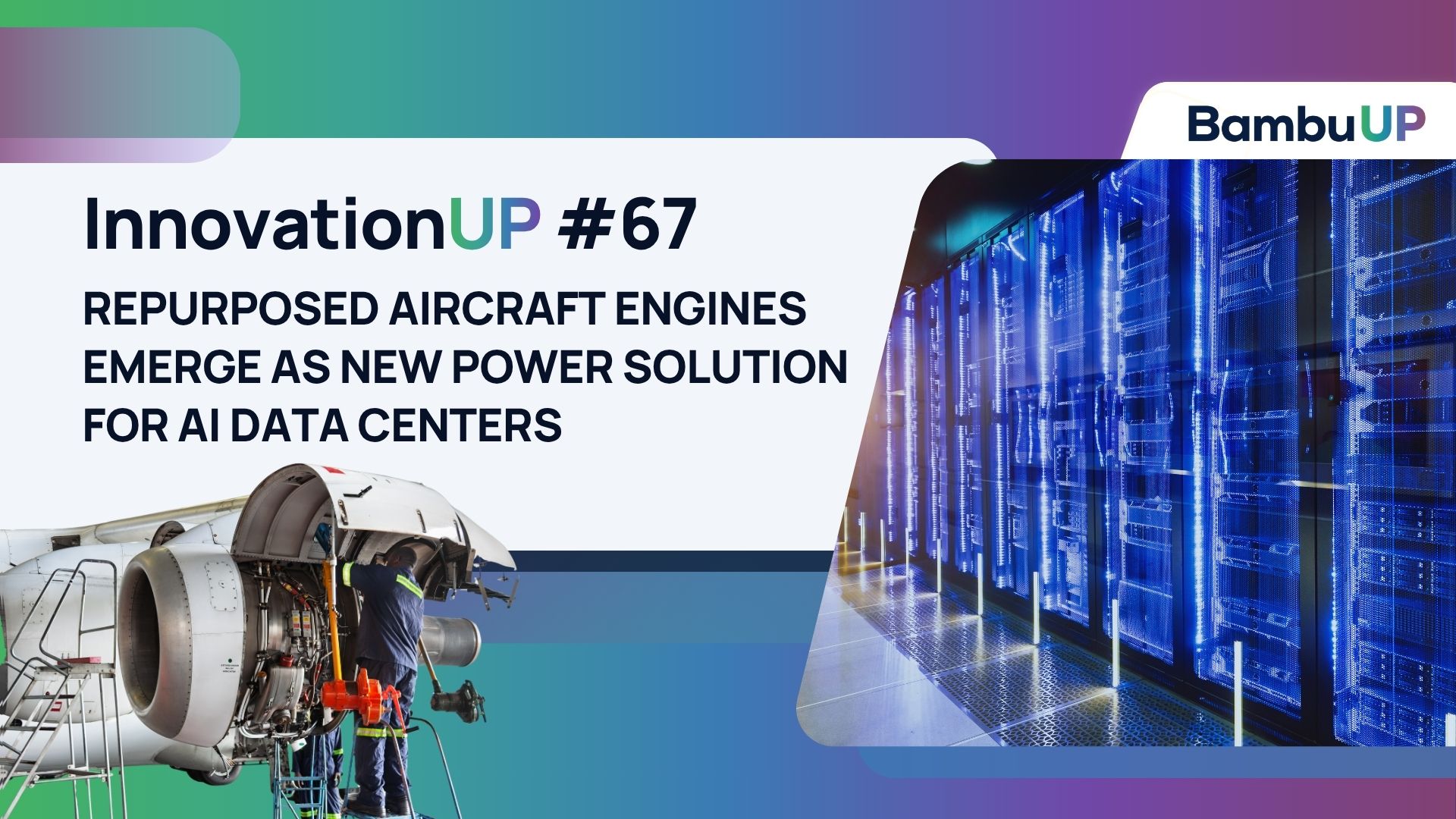
As electricity demand continues to rise, AI data centers in the US are turning to repurposed jet engines converted into gas turbines for power generation. This approach highlights the potential of adapting aviation technology while raising new questions about energy infrastructure, operational efficiency, and technological innovation in the artificial intelligence industry.
As technology giants continue to invest billions of dollars in artificial intelligence (AI), securing sufficient electricity to operate advanced computing systems has become a growing challenge. In the United States, some companies are turning to an unexpected solution: converting jet engines from retired aircraft into gas turbines to generate electricity for data centers. This development raises an important question: As AI advances faster than energy infrastructure can keep pace, how will businesses adapt and innovate to meet growing power demands?
AI Data Centers Turn to Retired Aircraft Engines to Address Power Shortages
On November 3, 2026, The New York Times reported that several companies in the United States are purchasing and converting jet engines from retired aircraft into natural gas-powered generators. This approach has emerged as data centers face years-long delays in connecting to the electrical grid or obtaining newly manufactured gas turbines (Source: The New York Times).
Electricity demand is rising rapidly alongside the expansion of AI infrastructure. The International Energy Agency (IEA) projects that global data center electricity consumption will increase from 485 TWh (terawatt-hour) in 2025 to approximately 950 TWh by 2030, accounting for nearly 3% of global electricity demand. Electricity consumption by AI-focused data centers alone is expected to triple over the same period (Source: IEA).
In response to these pressures, Elon Musk’s xAI has installed eight turbines converted from aircraft engines in Mississippi to help supply electricity to its Colossus 2 data center in Memphis. Supplied by ProEnergy, these systems use technology that adapts aviation engines for power generation (Source: TechCrunch).
Another company, Crusoe, has ordered 13 PE6000 turbine generator units from ProEnergy, each rated at 50 MW, representing a combined nominal capacity of 650 MW. The equipment is intended to support large-scale AI data center projects in the future (Source: ProEnergy).
These developments demonstrate how electricity availability is becoming a critical factor in determining the pace of AI infrastructure deployment, alongside access to advanced processors and investment capital.
Repurposing Existing Technology to Meet New Energy Demands
At the core of this approach is aeroderivative gas turbine technology, which adapts aircraft engine designs for industrial power generation.
Conventional jet engines compress air and burn fuel to produce high-energy exhaust gases that generate thrust. When adapted for electricity generation, thrust-producing components are removed or modified, combustion systems are adjusted to operate on natural gas, and the turbine’s rotational energy is used to drive an electrical generator.
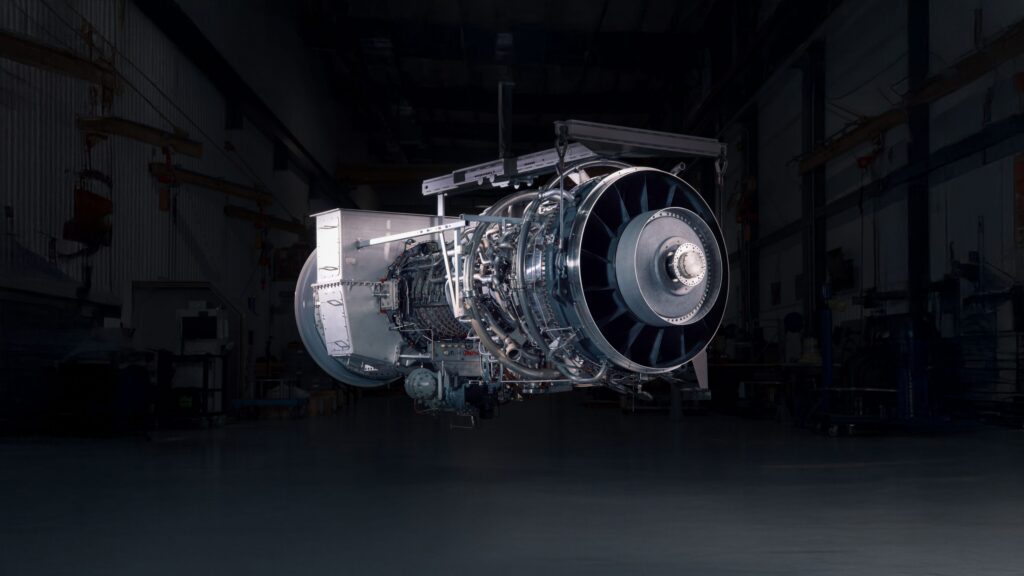
For example, ProEnergy’s PE6000 turbine uses the core of the CF6-80C2 aircraft engine, previously installed in aircraft such as the Boeing 747. Rather than developing an entirely new system, the company builds on existing engine technology while incorporating components designed for stationary power generation (Source: ProEnergy).
The primary advantage of this solution is its potential for faster deployment. Audun Martinsen, an expert at Rystad Energy, noted that aircraft engine-based power generation systems could enable a data center to become operational within approximately 24 months, reducing dependence on lengthy grid expansion timelines. However, actual deployment periods still vary depending on project-specific conditions (Source: TechCrunch).

Nevertheless, repurposing aircraft engines does not necessarily make them a sustainable energy solution. Compared with dedicated turbines used in modern natural gas power plants, converted systems may operate at lower efficiency, consume more fuel, and produce higher levels of air pollutants. Their deployment advantages must therefore be weighed against operating costs and environmental impacts (Source: The New York Times).
This case highlights an important approach to technological innovation: adapting and improving existing technologies to address emerging market needs, rather than always relying on entirely new inventions.
Energy Becomes a Decisive Factor in the Global AI Race
The use of repurposed aircraft engines to generate electricity for data centers reflects a shift in the global AI race. Beyond computing power, access to a reliable electricity supply and the ability to deploy infrastructure quickly are becoming increasingly important for technology companies.
In October 2026, Microsoft withdrew from an agreement to become a major customer of a data center project developed by Nscale in the United Kingdom. The decision was linked to delays in grid connectivity, which pushed the project’s expected power availability into the 2030s (Source: Reuters).
According to the International Energy Agency (IEA), constraints in electricity supply, equipment availability, and grid connections are affecting the pace of data center expansion worldwide. These challenges are encouraging technology companies to explore more flexible energy solutions, ranging from on-site power generation and energy storage systems to improvements in energy efficiency (Source: IEA).
Against this backdrop, competitive advantage increasingly depends on more than access to advanced AI chips or investment in large-scale models. It also requires the resources and infrastructure needed to operate these systems effectively. Energy infrastructure is becoming an integral part of technology companies’ AI development strategies.
Corporate Innovation Strategies Amid Growing Energy Pressures
Repurposed aircraft engines are unlikely to provide a long-term solution for the entire industry. While expanding fossil fuel-based power generation may help businesses meet immediate electricity needs, it also introduces additional challenges related to operating costs, emissions, and environmental compliance.
For businesses, the challenge extends beyond securing additional electricity supplies to integrating technological innovation with energy strategies. When deploying AI at scale, factors such as reliable power supply, equipment efficiency, energy storage capacity, and operating costs need to be considered from the earliest stages of investment planning.
The reuse of retired aircraft engines demonstrates that innovation does not necessarily begin with entirely new inventions. Instead, companies can adapt, improve, and combine existing technologies to address emerging challenges as their operations evolve.
For businesses investing in AI and digital transformation, this highlights the importance of aligning technology strategies with energy planning from the outset. Beyond ensuring a stable electricity supply, companies can explore solutions to improve equipment efficiency, optimize energy consumption, develop energy storage systems, and collaborate with energy technology providers to enhance operational performance.
The application of repurposed aircraft engines in AI data centers illustrates how the value of innovation lies not only in developing advanced technologies but also in adapting and making effective use of existing resources. As computing demand continues to grow, integrating technological innovation with energy management will play an increasingly important role in business competitiveness and sustainable development.
Conclusion
The conversion of retired aircraft engines into power generation systems for AI data centers demonstrates that innovation can emerge not only from entirely new technologies but also from adapting and combining existing solutions to meet practical needs. As energy infrastructure plays an increasingly important role in the development of AI, businesses need to proactively identify suitable technological solutions while balancing operational efficiency with long-term sustainability.
In this context, BambuUP continues to strengthen its role in connecting businesses with startups, experts, and innovation resources, facilitating technological collaboration and helping identify practical solutions to emerging market challenges.