 One platform connecting startups, corporations, research institutions, regions and investors











 Playbook & Handbook · February 6, 2026
Winning Accelerator Playbook 2026 by BambuUP
 RETAIL E-COMMERCE: AI AND REAL-TIME DATA ARE TRANSFORMING HOW RETAIL BUSINESSES OPERATE

AI ENHANCES FORECASTING CAPABILITIES AND RISK CONTROL IN UNDERGROUND CONSTRUCTION
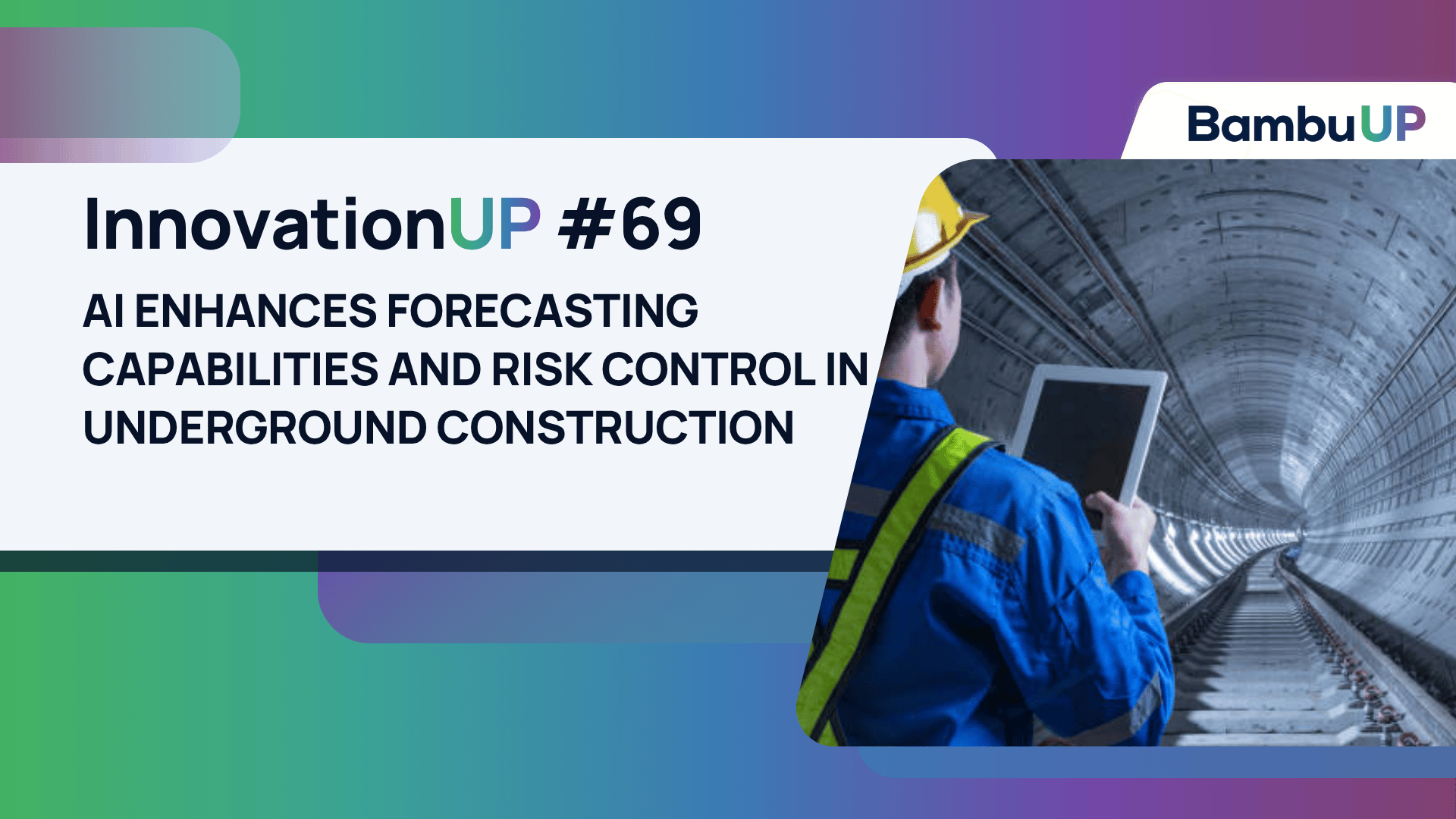
AI in construction is transforming metro and tunnel construction by enabling advanced geological data analysis, risk prediction, and real-time project monitoring. By integrating artificial intelligence, sensor technologies, and digital twins, these innovations are accelerating digital transformation in the construction industry, improving operational efficiency, and advancing safer, smarter infrastructure development.
In metro and tunnel construction, unpredictable geological conditions pose significant challenges to safety and operational efficiency. Advances in artificial intelligence (AI) are introducing new approaches to geological data analysis, risk prediction, and real-time construction monitoring. As digital transformation accelerates, could AI in construction become a driving force for innovation, reshaping how underground infrastructure projects are developed and managed?
AI Enhances Risk Management in Metro and Tunnel Construction
Unlike above-ground structures, tunnels, metro stations, and deep excavations are often built in complex geological conditions, close to existing buildings and operating infrastructure. Even minor ground movements can affect structural stability, cause settlement, or disrupt construction activities.
On November 19, 2026, VnExpress highlighted the growing adoption of AI in geotechnical engineering across several countries, from analyzing survey data to predicting ground deformation and supporting tunnel boring machine operations. These technologies are improving the ability to identify risks that are difficult to observe directly, providing engineers with additional insights to adjust construction methods (Source: VnExpress).
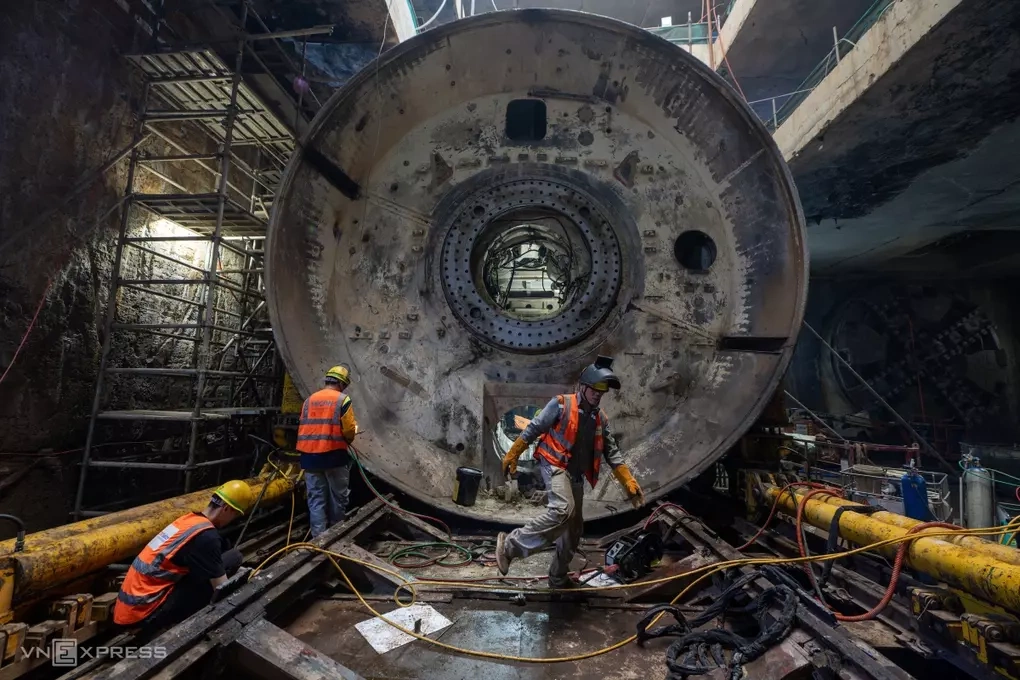
(Source: Giang Huy/VnExpress)
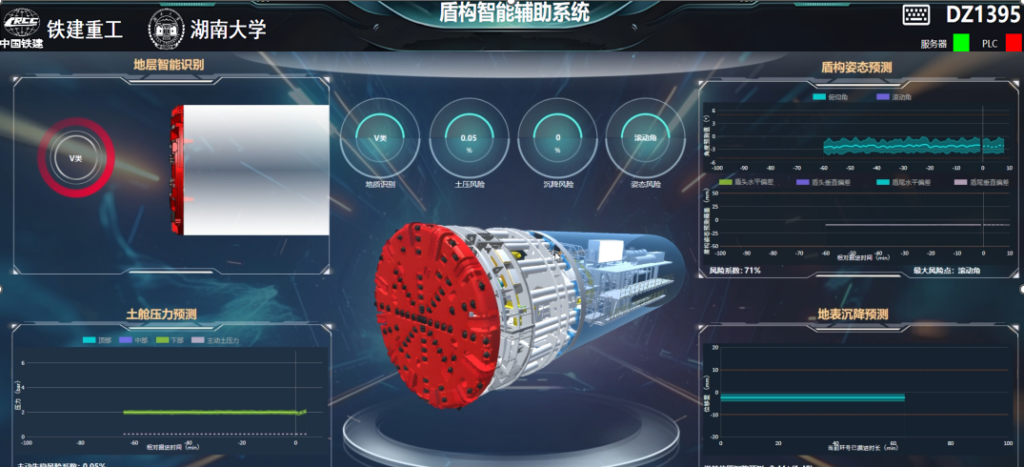
In China, Hunan University and China Railway Construction Heavy Industry introduced an AI-powered system for tunnel boring machines (TBMs) in January 2026. The system can analyze geological conditions, predict surface settlement, identify potential equipment jamming risks, and recommend suitable excavation parameters. According to the developers, the technology has been integrated into a large-diameter tunnel boring machine used in a real-world construction project (Source: Hunan University).
Another approach is being developed at Tianjin University, where a research team led by Professor Gang Zheng has combined AI, sensors, and digital models to actively control ground deformation.
At the Binhai Station construction project on the Tianjin-Weifang high-speed railway, the system was deployed to protect the nearby operating Haihe Tunnel during deep excavation. The technology uses pressure-control devices installed at critical underground locations, achieving ground deformation control accuracy of approximately 0.1 mm, according to the research team (Source: Tianjin University).
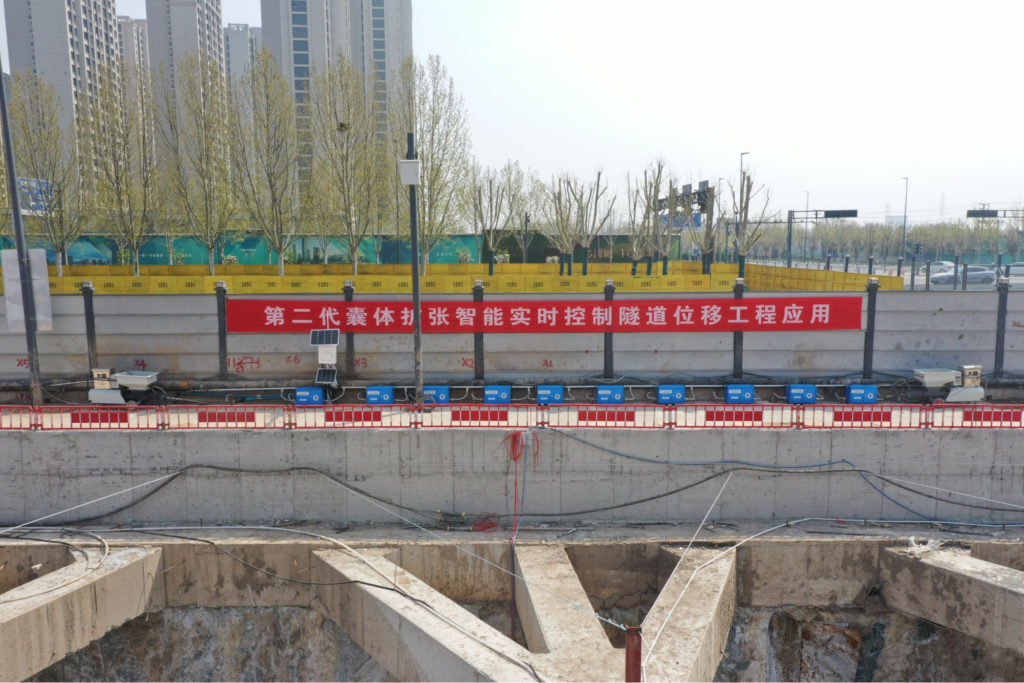
These applications demonstrate how AI is moving beyond information analysis to play a more active role in monitoring, predicting, and supporting risk management throughout the construction process.
From Geological Data to Digital Twins: How Technology Is Transforming Construction Processes
One of the greatest challenges in geotechnical engineering is the inability to directly observe the entire structure beneath the ground. Traditional geological investigations primarily rely on data collected from individual boreholes, while soil properties can vary significantly between locations.
AI expands analytical capabilities by processing multiple data sources simultaneously, identifying complex relationships, and helping predict geological conditions in areas that have not been directly surveyed.
In Japan, researchers at the Shibaura Institute of Technology used 13,926 geological borehole records to train an artificial neural network and develop three-dimensional maps of soil characteristics and liquefaction risks in Tokyo. Published in 2025, the research demonstrated how AI could help identify potentially hazardous areas and provide additional information for urban planning and foundation design (Source: Shibaura Institute of Technology).
During construction, AI applications can be further enhanced through integration with sensors and digital twin technology.
Rather than relying solely on initial design models, digital twins can continuously incorporate real-world construction data, including ground displacement, water pressure, thrust force, and tunnel boring machine operating speeds. AI analyzes these data streams to identify abnormalities, predict potential changes, and support engineers in selecting appropriate responses.
For example, the system developed at Tianjin University uses monitoring data to update its digital model, calculate the required interventions, and adjust ground deformation control devices at the construction site. This creates a continuous process of data collection, prediction, decision-making, and physical control (Source: Tianjin University).
The significance of these technologies extends beyond improving prediction accuracy. They represent a shift from construction management based primarily on initial calculations toward continuous, data-driven risk management that can adapt to changing site conditions.
AI Opens New Opportunities for the Global Construction Industry
The integration of AI, sensors, and digital twins is accelerating digital transformation in the construction industry, particularly for large-scale infrastructure projects that demand high levels of safety and precise project management.
According to the UK Government’s Future of Tunnelling report, AI and automation technologies are being researched and applied across various stages of underground construction, from geological surveys and design to excavation, monitoring, and maintenance. Real-time data analytics is identified as an important development area for improving equipment performance and supporting risk management (Source: UK Government).
This trend is also changing how construction companies approach technological innovation. Rather than focusing exclusively on investing in more powerful machinery, contractors can enhance their construction capabilities through integrated data systems, optimized operating parameters, and early detection of potential risks.
In the long term, these systems could help reduce operational disruptions, improve equipment utilization, and strengthen coordination among stakeholders involved in infrastructure projects.
However, AI cannot entirely eliminate the uncertainties associated with geological conditions. The reliability of predictive models still depends on data quality, their suitability for specific construction environments, and the ability to validate their predictions. Human oversight and engineering judgment remain essential, particularly when decisions involve structural safety.
The transformation of the construction industry therefore extends beyond machinery automation toward developing intelligent construction systems capable of analyzing, predicting, and adapting more effectively to real-world conditions.
What Do Construction Companies Need to Adopt AI Effectively?
In Vietnam, growing investment in metro networks, underground transportation systems, and urban infrastructure is creating opportunities for the adoption of advanced construction technologies.
On April 13, 2026, the second tunnel boring machine on Hanoi’s Nhon-Hanoi Station metro line completed its journey to Station S12, marking the completion of excavation for two tunnel sections approximately 4 km long. The construction process required continuous geotechnical monitoring to control ground deformation and ensure the safety of surrounding structures (Source: FECON).
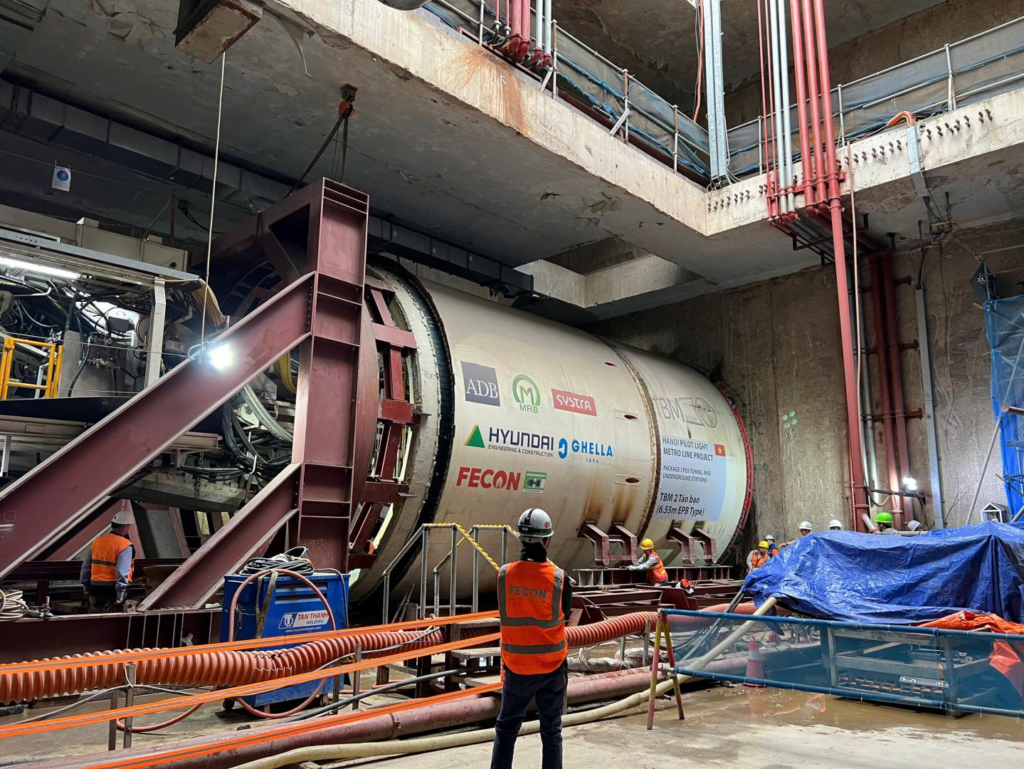
According to a FECON representative, AI has the potential to support geotechnical data analysis, risk prediction, and construction management. These applications are among the technological directions the company is exploring for future implementation, rather than solutions already confirmed to have been comprehensively deployed in the metro project (Source: VnExpress).
For construction companies, effective AI adoption begins with establishing a reliable data infrastructure. Digitizing geological survey records, connecting sensor networks, and standardizing project data are essential steps toward developing predictive models suited to practical construction conditions.
Businesses also need to strengthen collaboration with research institutions, technology startups, and equipment providers to test solutions in controlled environments. The effectiveness of enterprise AI adoption should be assessed using measurable indicators such as prediction accuracy, anomaly detection capabilities, incident response times, and operating costs.
Importantly, corporate innovation in the construction industry must also involve strengthening the capabilities of technical teams, ensuring that engineers can understand, validate, and effectively apply AI-generated insights when making decisions.
Conclusion
From predicting underground geological conditions to supporting ground deformation control during construction, AI is opening new opportunities for underground infrastructure development. These advancements demonstrate that innovation is not limited to developing more advanced equipment but also involves leveraging data and integrating multiple technologies to address practical industry challenges.
For Vietnamese businesses, digital transformation and AI adoption in construction will require a suitable implementation roadmap that combines technical expertise, reliable data, and technological collaboration. In this context, BambuUP continues to strengthen its role in connecting businesses with startups, experts, and innovation resources, helping foster collaboration and identify technology solutions that address the evolving needs of different industries.