 One platform connecting startups, corporations, research institutions, regions and investors










 Playbook & Handbook · February 6, 2026
Winning Accelerator Playbook 2026 by BambuUP
 SHAPING THE FUTURE OF HEALTHTECH: 4 STARTUPS BRINGING SMART HEALTH MONITORING DEVICES TO MARKET

Waymo Accelerates Self-Driving Commercialization: From Driverless Taxis to the Corporate Innovation Race
Waymo is accelerating autonomous vehicle commercialization, creating opportunities in transportation, manufacturing, and logistics while raising safety, regulatory, and operational challenges. Its journey offers Vietnamese businesses lessons in open innovation, technology partnerships, and turning emerging technologies into competitive advantages.
Driverless vehicles are moving beyond technology demonstrations and into everyday life, as Waymo continues to expand its services across the United States and prepares to enter Asian markets. But the accelerating pace of commercialization is also raising increasingly important questions about safety, regulation, and the ability to put a new technology into operation at scale.
Waymo, an autonomous vehicle technology company under Alphabet (Google’s parent company), has developed the “Waymo Driver” autonomous system and operates driverless robotaxi services in multiple U.S. cities. In November 2025, Waymo began allowing passengers to use robotaxis (self-driving electric vehicles) on highways in the San Francisco Bay Area, Phoenix and Los Angeles, after years in which the vehicles had largely been restricted to urban roads (According to Waymo).
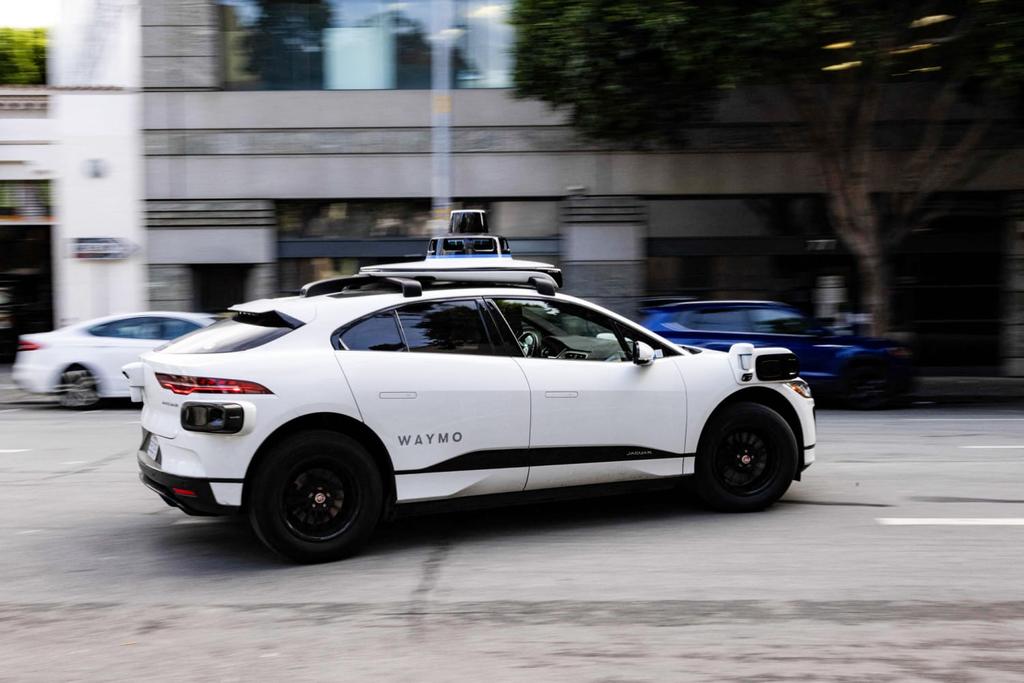
(Photo: Jason Henry / AFP – Getty Images)
By September 2026, Waymo said it had completed more than 20 million fully autonomous rides and driven more than 300 million kilometers without a human driver. After the United States, the company is preparing to enter Singapore, with plans to launch commercial services in 2028, marking a significant expansion into Asia (According to The Straits Times).
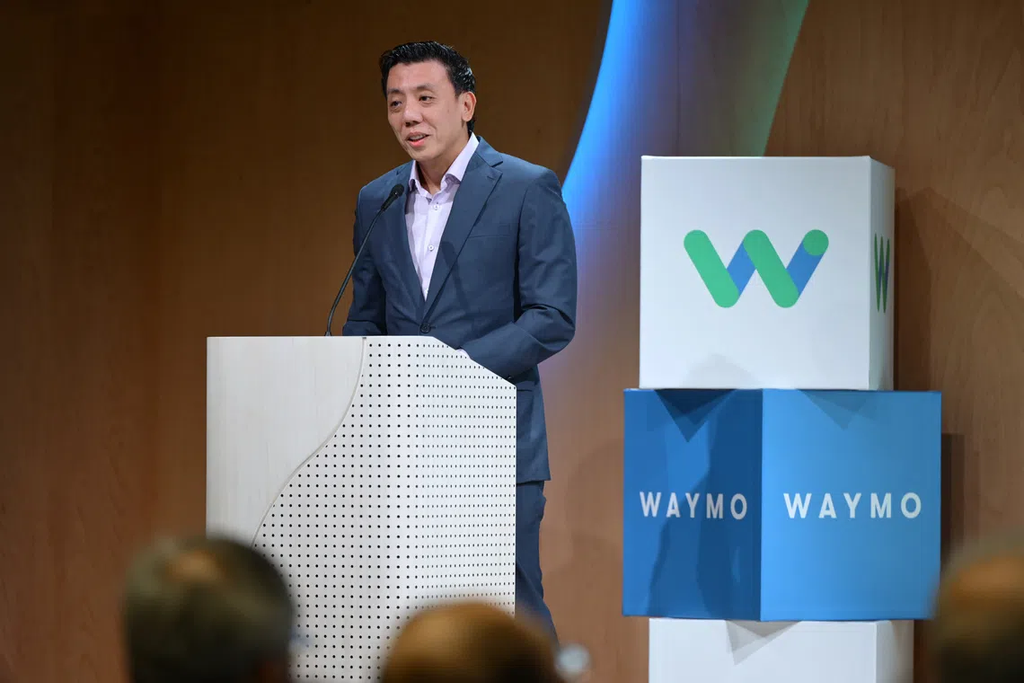
This pace of expansion shows that self-driving vehicles are crossing an important threshold: from experimental technology to a transportation system with real customers, infrastructure, partners and operating models. For businesses, the story behind a driverless taxi is bigger than the vehicle itself. It is about the process of taking a new technology from the research lab into commercial operation, while simultaneously reshaping the automotive industry, logistics and manufacturing supply chains.
For that reason, the Waymo story is no longer simply about the race to develop self-driving vehicles. It is becoming a test of a much broader challenge in corporate innovation: how can a company move a new technology from the research lab into real-world operations without allowing the pace of development to outstrip its ability to manage risk, people and systems?
Self-Driving Vehicles Leave the Test Lab as the Market Begins a Race for Scale
As of September 2026, Zoox – Amazon’s self-driving vehicle company – was operating around 100 autonomous vehicles, while Waymo had nearly 4,000 vehicles operating across 15 cities. Waymo was completing more than 500,000 rides a week, compared with around 10,000 for Zoox, which was still mainly offering free rides in San Francisco while waiting for approval to charge fares (According to The New York Times).
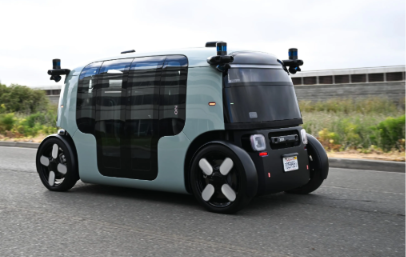
The large gap in scale has not stopped Zoox from taking a different approach. Rather than adapting a conventional car, as Waymo does, Zoox designed its vehicle from the ground up for autonomous operation, with no steering wheel or pedals. The company has also opened experience spaces, hosted events, and offered rides to restaurants and tourist attractions to make the concept of robotaxis (self-driving electric vehicles) more familiar to users (According to The New York Times). This suggests the competition is entering a new phase.
When technology is still in the test lab, companies compete on algorithmic accuracy and the ability to handle different situations. Once the technology enters the market, the competition broadens to vehicle costs, manufacturing capacity, service coverage, customer experience, brand and the ability to win over regulators.
In Arizona, Waymo is working with Magna to operate a facility that integrates the Waymo Driver system. The plant is designed to be capable of completing tens of thousands of autonomous vehicles each year when it reaches full capacity (According to Waymo).
Waymo also does not build every component itself. Its computing system is developed with a network of partners including AMD, Micron, NVIDIA, Samsung, SanDisk, Socionext, and Taiwan Semiconductor Manufacturing Company, while Hyundai provides a new vehicle platform through the IONIQ 5 (According to Waymo).
A self-driving taxi is therefore no longer simply the product of an AI company. Behind it is an entire value chain comprising automakers, semiconductor companies, sensor and software providers, fleet operators, maintenance facilities and ride-hailing platforms.
This is a clear sign of open innovation: instead of spending years building every capability in-house, companies combine technologies from multiple partners to shorten the path from research to commercialization.
While Zoox illustrates how companies are competing through different product approaches, and Waymo’s partnership with Magna reflects the need to scale up manufacturing capabilities, its plans in Singapore highlight another layer of challenges: adapting the same technology to different operating conditions and markets. Waymo will deploy Jaguar I-PACE vehicles equipped with the Waymo Driver system for testing in 2027, allowing the technology to adapt to local road conditions, traffic patterns, and weather ahead of the planned launch of a fully autonomous commercial service in 2028. (According to The Straits Times and Singapore’s Land Transport Authority).
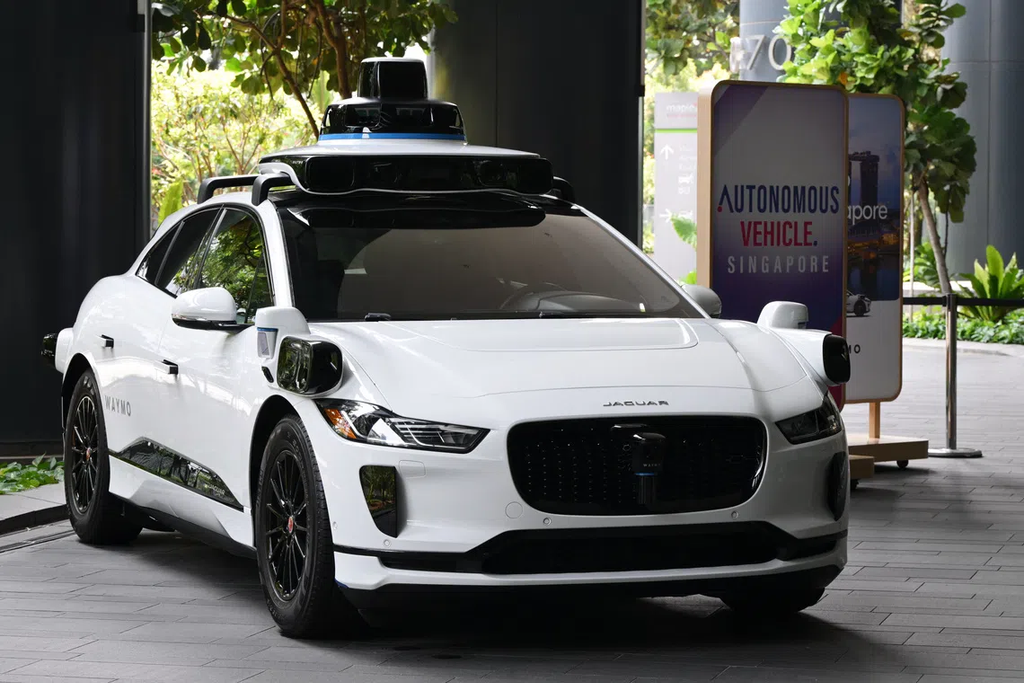
Commercializing technology, therefore, is not a leap straight from the research lab to the market, but a step-by-step process of testing, adjustment, and building operational capability.
Speeding Up, but Not Without Braking: Safety and Regulation Become New Bottlenecks
In June 2026, CNN said that after reviewing police records, calls for assistance, and minutes from local government meetings, it identified hundreds of cases in which Waymo vehicles struggled with ordinary traffic situations. Cases documented by CNN included vehicles crossing into oncoming traffic, driving onto rail tracks, running red lights, or obstructing emergency response vehicles (According to CNN). Waymo responded that no technology is perfect, while noting that its system completes more than half a million rides each week and that company data shows a lower rate of crashes involving serious injuries than conventional human driving (According to CNN).
In June 2026, Waymo recalled nearly 3,900 robotaxis (self-driving electric vehicles) in the United States for a software update after vehicles entered closed highway construction zones. It was the company’s second recall in just over a month (According to Reuters).
These incidents highlight a key difference when AI moves from the digital environment into the physical world. A software system that gives a wrong answer can be corrected in the next update. But an AI system controlling a vehicle, robot, or factory machine creates direct risks to people, property, and operations.
Scalability therefore depends not only on how good the technology is, but also on public trust and regulatory approval.
One of the clearest examples is Waymo’s eight-vehicle test program in New York, which ended on March 31, 2026, after its permit expired. The city government subsequently gave no indication that it intended to restart or expand the program in the near term (According to Bloomberg and the New York City Department of Transportation).
At the state level, a proposal that would have opened the door to robotaxis (self-driving electric vehicles) in New York was also withdrawn after opposition from organizations representing drivers. Similar developments in Illinois and Washington suggest that the barriers facing autonomous vehicles are increasingly social and policy-related rather than purely technical (According to The New York Times).
Singapore has taken a different approach: adopting the technology while rolling it out in stages and preparing workers at the same time. Singapore’s Minister for Transport Jeffrey Siow said the number of autonomous passenger vehicles in the country could rise from 16 today to several hundred within the next two years. The government is also implementing worker retraining programs, helping drivers move into roles such as fleet management, remote operations, system maintenance, and data analysis (According to The Straits Times). Singapore’s Land Transport Authority has also said that autonomous vehicle deployment will not be allowed to outpace the country’s ability to retrain and support affected workers (According to LTA Singapore).
The important point is that innovation is not treated as a standalone technology project. It also involves risk management, process change, and workforce transition.
From Waymo to Manufacturers: The Advantage Lies in the Ability to Put Technology into Operation
What is happening with robotaxis (self-driving electric vehicles) may seem far removed from a manufacturing plant or an export business. Yet the same challenge is emerging across many other industries. Autonomous vehicles are only one part of the wave of physical AI – where artificial intelligence moves beyond processing text or images on a screen and begins controlling machines and assets in the physical world. In manufacturing, this can include robots that adjust their actions to different objects, computer vision systems that detect product defects, digital twins that simulate production lines, or autonomous vehicles that transport materials within a factory.
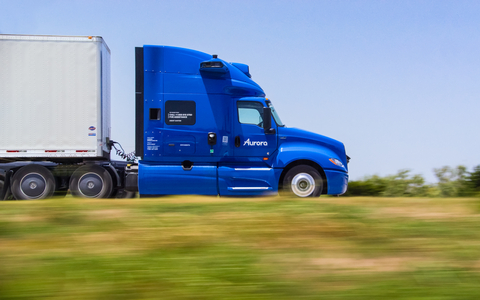
The shift is even more visible in logistics. Aurora has put driverless heavy-duty trucks into commercial operation in the United States and is expanding partnerships with manufacturers such as Volvo and PACCAR. By mid-2026, Aurora’s network had 10 routes across the southern United States, while partner Roush was scaling production capacity to the equivalent of around 1,000 vehicles per year (According to Aurora Innovation)
In China, Pony.ai said its new generation of autonomous trucks, developed in partnership with GAC, has a hardware package that costs around 70% less than the previous generation. The company also expects to reduce transportation costs per tonne-kilometer by about 30% (According to Pony.ai).
If these technologies continue to be commercialized, the impact on manufacturing and export businesses will extend beyond the question of whether they ‘have self-driving vehicles or not.’ They could change delivery times, transportation costs, asset utilization, and the way supply chains are organized.
The U.S. National Institute of Standards and Technology also identifies autonomous systems, robotics, advanced sensors, digital twins, and supply chain optimization as important areas of AI application in smart manufacturing. However, the agency notes that a significant gap remains between technology demonstrated in research and a system that is safe and stable enough for factory deployment (According to NIST).
Businesses do not gain an advantage simply by purchasing new technology. Waymo spent years testing before putting its vehicles on highways; built a vehicle integration facility to scale its fleet; partnered with automakers and semiconductor companies; and continued negotiating with authorities in each market. In other words, technology is only the starting point for innovation.
The harder part is integrating technology into existing processes, controlling risk, training people, and proving that the solution can create value when scaled up. This also helps explain why open innovation is becoming increasingly important for businesses. Not every organization has enough time, people, or capital to develop AI, robotics, or automation systems from scratch. Working with startups, technology providers, and partners across the value chain allows companies to test faster while keeping resources focused on their core capabilities.
But choosing the right technology only solves half the problem. A company can bring AI into a factory while its data remains fragmented, its workforce is untrained, and its processes unchanged – leaving it with new technology but old ways of operating. By contrast, companies that can identify the right problem, test within a controlled scope, and build a path to scale from the outset will have a better chance of turning technology into a practical advantage.
That is also where the Waymo story intersects with the broader challenge of corporate innovation. As robotaxis, physical AI and autonomous systems move ever closer to day-to-day production, the competitive gap may no longer be about who learns about a technology first, but about who has the organizational capability to put that technology into operation first.
The lesson from the 2026 self-driving ‘race’ is becoming increasingly clear: a technology can attract attention, but only innovation capability determines whether it becomes a competitive advantage. An AI model that performs well in most situations is still not enough in an environment where the remaining edge cases directly affect high-value assets, operational continuity, and human safety.
Therefore, as AI moves deeper into factories and supply chains, competitive advantage will depend not only on who has the most advanced AI model, but also on who can reliably integrate AI with data, machinery, people, and operating processes.
From Buying Technology to Building Innovation Capabilities: What Should Businesses Prepare For?
Cases such as Waymo show that new technology is rarely commercialized through the resources of a single company alone. Behind the expansion of robotaxis (self-driving electric vehicles) is a network of automakers, semiconductor companies, fleet operators, infrastructure providers, and regulators. Each contributes part of the capability needed to move the technology from testing into real-world operation.
For manufacturing and export businesses, this logic is becoming increasingly important as well. When AI, robotics, and automation systems evolve so quickly, building every capability in-house can take more time and cost more than working with partners that already have the right technology. The key is not how many new technologies a business can access, but whether it can select the right solution for the right problem and create the conditions for that solution to be deployed at scale.
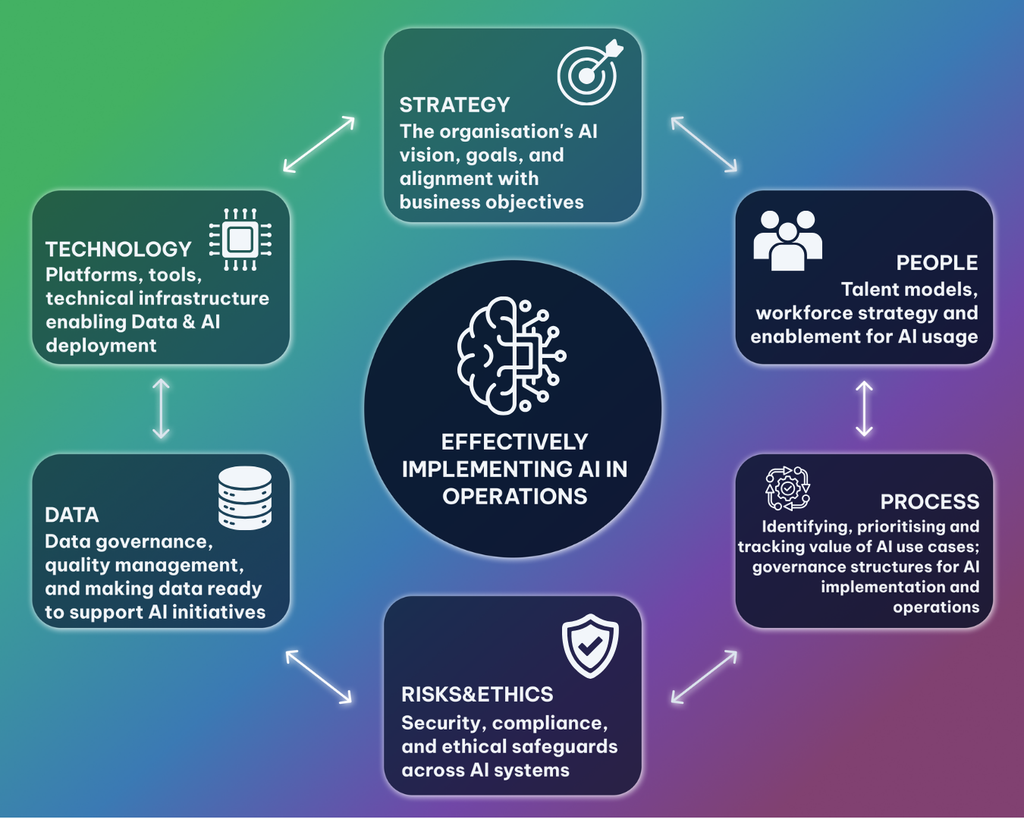
(Infographic by BambuUp, Compiled from the Deloitte AI Maturity Framework).
This is where open innovation ecosystems such as BambuUP can play a role: helping businesses identify the right problem, connect with suitable startups and technology providers, and then gradually test and bring solutions into real-world use.
The Waymo story shows that new technologies are appearing more frequently and becoming easier to access. But the competitive gap between businesses will still come down to their ability to turn technology into operational and business value.