
 One platform connecting startups, corporations, research institutions, regions and investors










 Playbook & Handbook · February 6, 2026
Winning Accelerator Playbook 2026 by BambuUP
 4 CLIMATE TECH STARTUPS RESHAPING THE GLOBAL RACE TO DECARBONIZE

Cathay Pacific and Google Use AI to Green Aviation: From Contrails at 12,000 Meters to the Race for Standards

Green aviation AI is proving something unexpected: just 2–3% of global flights cause 80% of the heat impact from contrails. Cathay Pacific and Google have just expanded their AI-powered contrail avoidance trials across the entire flight network, cutting climate impact by 40% with almost no added cost. With CORSIA taking effect in Vietnam from 2026, this is a noteworthy green transition lesson for exporters looking for a carbon reduction strategy that fits their own supply chain operations.
If you have ever looked up at the sky on a clear, sunny day, you have most likely spotted thin white trails stretching behind an aircraft, cutting across the sky like a brushstroke. To most people, it is merely a harmless optical phenomenon or a pleasing decorative detail. Through the lens of risk management, however, it is an environmental “blind spot” that carries enormous financial and operational costs.
These condensation trails, if they persist in the atmosphere, may account for roughly one-third of the entire aviation industry’s total global warming impact, according to a report released by Cathay Pacific and Google on September 7, 2026 (Source: South China Morning Post).

However, the solution to this challenge does not lie in grounding flights, but in the uneven distribution of risk: the two companies point out that only about 2–3% of all flights are responsible for roughly 80% of the heat trapped by these clouds (according to Google Research / Breakthrough Energy). This discovery has completely reshaped how the aviation industry approaches emissions reduction, shifting from changing the entire operational structure to using technology to precisely isolate and address the group of “problematic” flights.
Solving the Capital Expenditure (CapEx) Challenge with Data
Under the traditional approach, to reduce climate impact, airlines often have to make enormous investments: purchasing new-generation fleets or using sustainable aviation fuel at a steep price. However, the quiet trial conducted by Cathay Pacific and Google since late 2025 has demonstrated a different proposition for the green transition: data can fully replace physical assets.
Google applied artificial intelligence to analyze large volumes of satellite data and meteorological information. From this, the model accurately forecasts cold, humid air “blind spots”, the conditions in which water vapor from engines condenses. The forecast results are integrated directly into Cathay Pacific’s operating system. Based on them, pilots proactively adjust flight altitude within a very narrow margin to “avoid” these air zones, while remaining in strict compliance with aviation safety (Source: Cathay Pacific Newsroom).
Across more than 100 test flights, the system helped reduce the estimated climate warming impact by around 40% (Source: AsiaOne). By changing flight altitude by just a few hundred meters, Cathay Pacific cut one-third of its climate impact with almost no new operating costs.
Open Innovation: Turning Experiments into Global Operating Standards
Cathay Pacific did not build a complex weather algorithm on its own; it chose to partner with a technology giant. This collaboration is a clear demonstration of the power of open innovation, where industry-specific data is combined with core technology to shorten Research & Development time.
However, technology leaders understand the gap between a small-scale trial and a commercial operating standard. That is why, on September 7, 2026, the two parties officially expanded the project to cover the entire intra-Asia and trans-Pacific network, including ultra-long-haul routes (Source: AsiaOne).
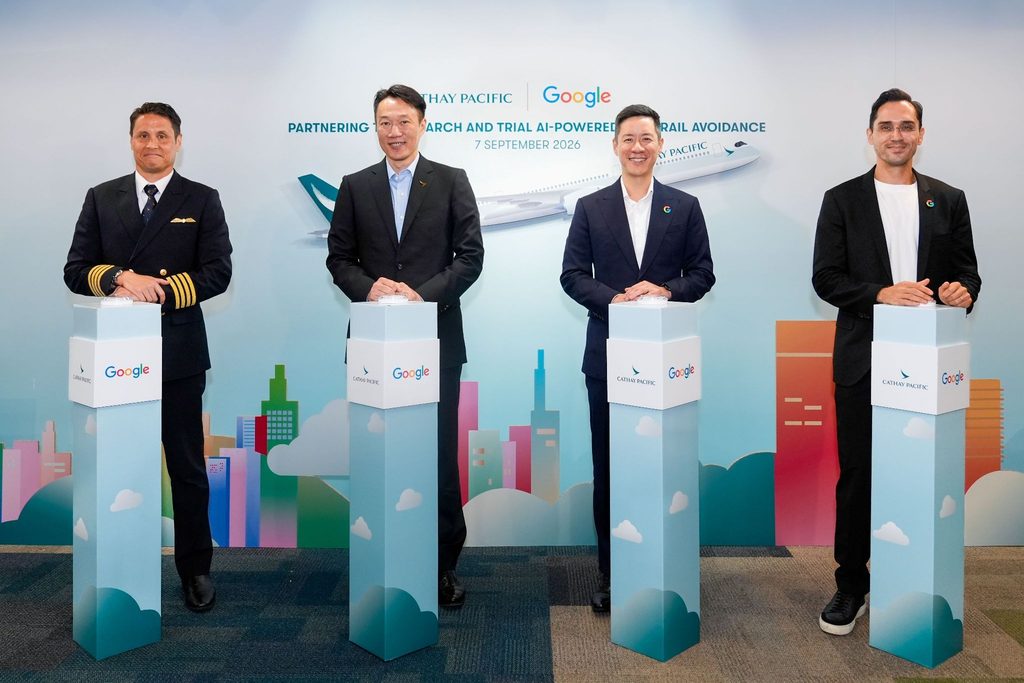
Sharing this vision, Michael Yue, Managing Director of Google Hong Kong, emphasized that the core goal is to apply AI directly to the climate challenge on today’s existing aircraft fleet and fuel, rather than passively waiting for engine revolutions (Source: AsiaOne). Sharing this view, Lawrence Fong, Director of Digital and IT at Cathay Pacific, affirmed that the aviation industry needs immediate solutions, and that AI is the “catalyst” accelerating the process (Source: AsiaOne).
Notably, to turn the 40% reduction figure into an accurate benchmark for the entire industry, Kemal Armada, who leads climate research at Google, said the alliance will partner with the nonprofit organization Contrails.org. They will implement large-scale randomized controlled trials (Source: South China Morning Post). At this point, the strategic question is no longer “Is this technology scientifically feasible?” but “How can it be integrated into the flight coordination system for thousands of flights every day without disrupting schedules?”
The CORSIA Domino Effect: Vietnam’s Supply Chain Faces New Cost Pressure
The determination of the aviation giants stems not only from environmental responsibility, but also from imminent financial regulations. From January 1, 2026, Vietnam officially entered the voluntary phase of CORSIA (the Carbon Offsetting and Reduction Scheme for International Aviation). The Civil Aviation Authority of Vietnam, under the direction of the Ministry of Transport, has completed the procedures to join this scheme (Source: Người Lao Động).
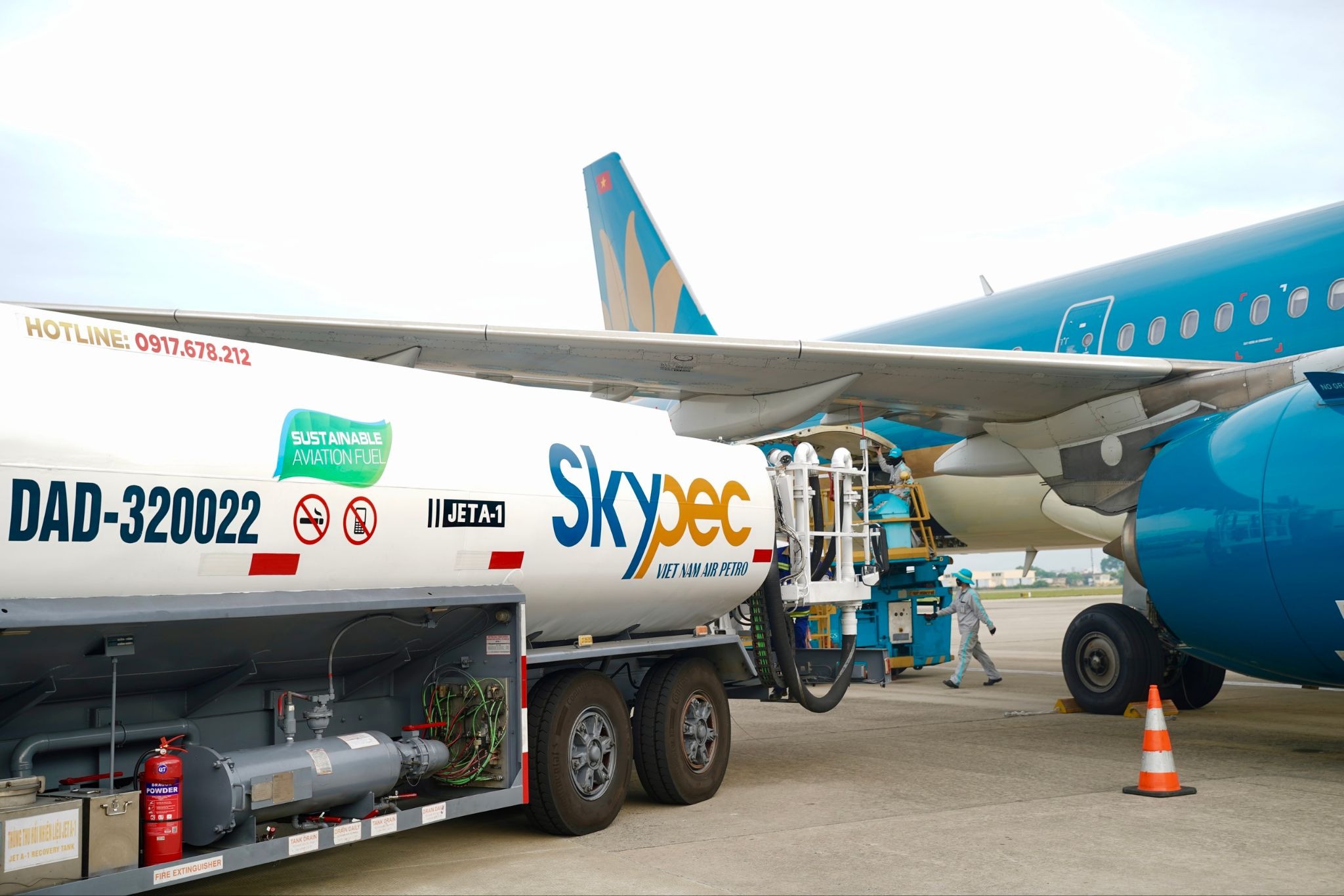
For airlines, CORSIA represents a harsh financial cost challenge. As the supply of high-quality carbon credits becomes increasingly scarce, the cost of compliance is set to surge (Source: Nhân Dân). Because airlines operate on a business-to-business (B2B) service model, any new compliance cost incurred in transportation is passed directly into service rates for institutional customers. In other words, the financial pressure of airlines’ carbon credits will quickly translate into higher freight rates for shippers and logistics companies.
This is a fateful point of intersection with Vietnamese manufacturing and logistics enterprises. For businesses exporting air-dependent goods (such as electronic components, pharmaceuticals, and premium textiles), logistics costs will rise considerably. Moreover, multinational corporations today require their contract manufacturing partners to be fully transparent about the emissions generated during transportation. A CO2 reduction strategy is no longer a communications bonus for a business, but a mandatory passport for retaining international orders.
A Borderless Vision: Unlocking Global Opportunities with a New-Generation Innovation Platform
Vietnam is not alone: manufacturing and transport groups around the world are also facing unprecedented pressure to transform. In Europe and North America, strict regulations on sustainability reporting and supply chain accountability, notably the European Union’s Corporate Sustainability Reporting Directive (CSRD) and Corporate Sustainability Due Diligence Directive (CSDDD) (Source: European Commission), together with the Carbon Border Adjustment Mechanism (CBAM) (Source: European Commission’s Taxation and Customs Union), are turning green standards into a prerequisite for commercial survival.
For international brands, the biggest challenge lies not at headquarters but in the network of tier-2 and tier-3 suppliers worldwide. Global retail and technology giants cannot reach carbon neutrality on their own if the transport and logistics partners in their value chains stand on the sidelines. As a result, finding Climate tech solutions capable of cross-border integration is becoming a top priority. Cathay Pacific’s partnership with Google reflects this trend: global enterprises are proactively joining forces with technology giants to protect their profit margins and maintain their competitive edge before legal sanctions tighten.
Building Competitive Advantage from “Coordinates at 12,000 Meters”
From the Cathay Pacific and Google case study, businesses and leaders can draw a practical mindset framework:
- Make data transparent across the entire chain: You cannot optimize what you cannot see. Businesses need tools to break down which shipments and which transport routes generate the highest carbon costs, creating a basis for negotiating freight rates or restructuring delivery methods.
- Leverage the 80/20 rule in operations: Just as 2–3% of flights cause 80% of the heat impact, every supply chain has inefficient “hot spots.” Instead of upgrading across the board, use data to “diagnose the problem accurately” and resolve it decisively.
- Make use of partners’ technology: Do not try to write emissions measurement software yourself. Connect with the ecosystem of Climate tech startups to immediately apply ready-made platforms, turning compliance pressure into a head start over competitors.
Conclusion: Green Innovation Is No Longer a Cost, It Is a Business’s Capacity to Survive
The story of Cathay Pacific and Google “dodging” climate-warming contrails delivers a clear message to business leaders: the pressure to reduce emissions does not have to come with massive capital expenditure (CapEx). By making the most of data, artificial intelligence, and the spirit of open innovation, businesses can turn compliance barriers into a superior operational advantage.
As standards such as CORSIA and CBAM begin to directly affect logistics freight rates and profit margins, the gap between enterprises ready to transform and those that remain passive will keep widening. Those that tackle the green challenge early will protect their supply chains, optimize costs, and hold the upper hand at the international negotiating table.
The green transition journey has never been one to take alone. Through innovation-connecting platforms such as BambuUP, businesses can quickly access a network of Climate Tech and AI solutions and a global startup ecosystem. Starting in the right direction with the right technology partners is the shortest key to turning green transformation pressure into long-term competitive advantage.