 One platform connecting startups, corporations, research institutions, regions and investors










 Playbook & Handbook · February 6, 2026
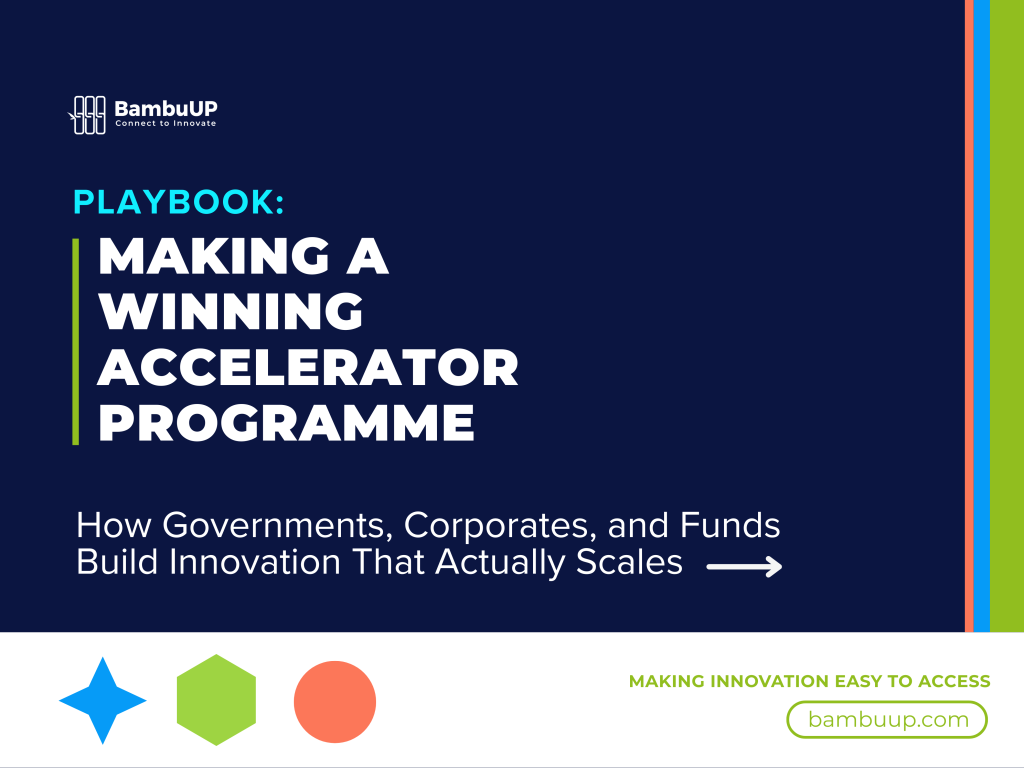
Winning Accelerator Playbook 2026 by BambuUP
 4 CLIMATE TECH STARTUPS RESHAPING THE GLOBAL RACE TO DECARBONIZE

Tesla Officially Enters Vietnam: How the EV Race Is Opening a New Value Chain for Vietnamese Businesses
Tesla’s establishment of a legal entity in Vietnam signals new possibilities for the electric vehicle market and the broader technology value chain. Beyond brand competition, electrification creates opportunities for Vietnamese businesses in electronics, batteries, software, automation, and energy. What capabilities must local businesses develop to seize these opportunities and become part of global supply chains?
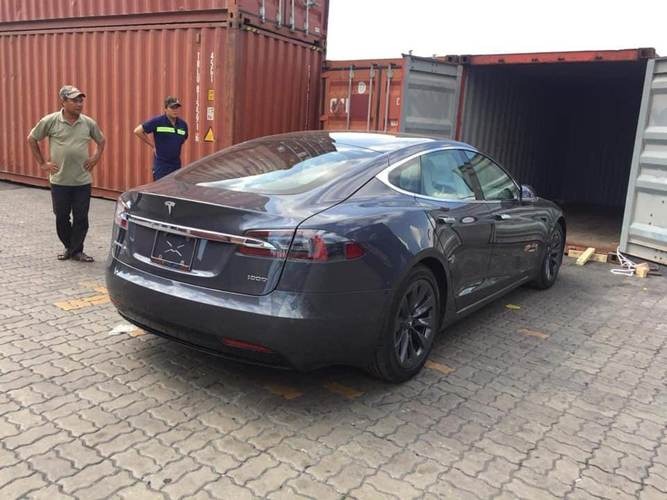
On September 11, 2026, Tesla Motors Vietnam Limited Liability Company was officially established in Ho Chi Minh City with charter capital of VND 77.667 billion, equivalent to roughly USD 3 million. According to the business registration filing cited by Reuters, the new entity is licensed to operate in the wholesale and retail of automobiles, spare parts, and machinery and equipment, along with import-export and distribution activities. Tesla has not yet issued an official comment on the move. (Source: Reuters)
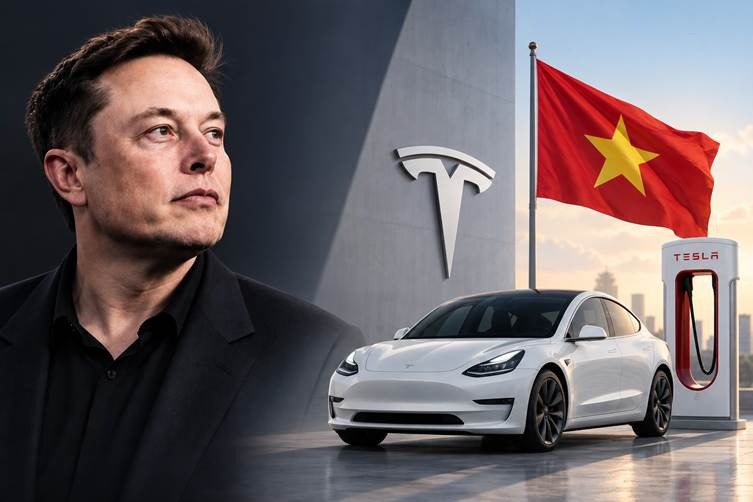
At this stage, there is no official information indicating that Tesla will build a factory, open a network of showrooms, or roll out a Supercharger network in Vietnam. The establishment of the legal entity should therefore first be read for what it is: a step to set up legal and commercial presence, not evidence of a large-scale manufacturing investment.
Yet the timing of Tesla’s arrival is particularly notable. Vietnam is no longer an electric vehicle market that is just beginning to experiment.
Tesla Sets Up a Legal Entity in Vietnam: A Small Step, a Big Market Signal
According to the International Energy Agency’s (IEA) Global EV Outlook 2026, electric vehicle sales in Southeast Asia more than doubled in 2025, surpassing half a million units and accounting for nearly 20% of total new car sales in the region. Vietnam, Indonesia, and Thailand led that growth (Source: IEA, Global EV Outlook 2026)
In Vietnam specifically, EV sales more than doubled in 2025, making the domestic market the largest electric vehicle market in Southeast Asia, with EVs accounting for nearly 40% of total new car sales. The IEA also noted that VinFast holds almost the entire domestic EV market, with small, affordably priced models playing a key role in driving adoption (Source: IEA, Global EV Outlook 2026)
This is a very different backdrop from just a few years ago. Tesla is not entering an empty market. It is entering one that already has a strong domestic player, proven consumer demand, and an EV ecosystem beginning to take shape at a larger scale.
Globally, electrification also continues to accelerate. In 2025, more than 100 countries recorded growth in EV sales, while emerging markets outside China accounted for an increasingly larger share of global EV demand. The IEA forecasts that, if current policies hold, the share of EVs in total new car sales in Southeast Asia could keep rising sharply through 2035 (Source: IEA)
The significance of Tesla’s new entity, then, is not just that Vietnam may gain another international EV brand. The move is also notable when placed within a broader pattern of presence by Elon Musk-led technology companies in Vietnam. To read this signal more clearly, it helps to revisit the steps SpaceX took earlier with Starlink.
From Starlink to Tesla: Vietnam Emerges More Clearly on the Expansion Map of Elon Musk’s Businesses
Starlink is a satellite internet service developed and operated by SpaceX. In March 2025, the Vietnamese Government allowed SpaceX to pilot investment in, and provision of, telecommunications services using low-earth-orbit satellite technology. The pilot runs for five years and must conclude before January 1, 2031 (Source: Vietnam Government Portal)
By February 2026, Starlink Services Vietnam Co., Ltd., the entity operating Starlink’s service in Vietnam, was officially granted a satellite telecommunications service license and a frequency-use license. In its initial phase, Starlink is permitted to deploy 4 gateway stations and up to 600,000 terminal devices in Vietnam (Source: Vietnam Government Portal)
In August 2026, Starlink began accepting service registrations in Vietnam, making it the sixth market in Southeast Asia the satellite internet service has entered. Just a month later, Tesla set up its own legal presence by establishing an entity in Ho Chi Minh City, forming a notable sequence of moves by Elon Musk-led companies in Vietnam (Source: Reuters)

Viewed along this timeline, two major technology companies linked to Elon Musk have successively established a presence in Vietnam, but at two very different infrastructure layers: SpaceX in satellite connectivity, Tesla in electric vehicles and smart mobility.
That is not enough to conclude Elon Musk is pursuing an overarching investment strategy in Vietnam. There is no official information indicating that SpaceX and Tesla are coordinating on a joint plan for the market. Still, the sequence of moves points to a signal worth watching: Vietnam is becoming a more interesting market for new technology models, from connectivity infrastructure to electric vehicles and energy.
In Tesla’s case, this matters especially because electric vehicles are not just a story about one product. Behind the car sits an entire value chain that is changing fast.
When the EV Race Is No Longer About the Car Itself
In the traditional automotive industry, most of the competitive advantage sat in engines, precision mechanics, manufacturing scale, and distribution networks. Electric vehicles are reshaping that structure: the battery has become one of the product’s most critical components. Software increasingly controls more of the vehicle’s functions. Charging infrastructure directly shapes the user experience. Power electronics, sensors, thermal management systems, and operational data are all becoming more important capabilities.
The scale of growth in the battery industry alone shows how far this shift has gone. According to the IEA, global battery deployment for electric vehicles reached approximately 1.2 TWh in 2025, up nearly 30% year on year and more than seven times higher than in 2020. By 2030, this demand is forecast to approach 3 TWh under current policy scenarios (Source: IEA, Global EV Outlook 2026)
Yet the supply chain remains heavily concentrated. China currently accounts for more than 80% of global lithium-ion battery manufacturing capacity, while markets outside China are only beginning to accelerate investment (Source: IEA)
Charging infrastructure is expanding at a similar pace. By the end of 2025, the world had more than 7 million public charging points, up more than 33% in a single year, alongside more than 43 million private charging points for light-duty electric vehicles (Source: IEA)
These figures show an EV industry that increasingly resembles a cross-sector technology ecosystem more than a purely automotive manufacturing business. A modern vehicle sits at the intersection of multiple layers of value: batteries, electronics, software, charging infrastructure, energy, data, and services.
As a result, when an EV market grows, economic value is not created solely at the company assembling the final vehicle. Demand flows back to component makers, industrial equipment providers, software firms, automation companies, and the energy and service businesses behind them.
This is exactly what makes Tesla’s new legal entity in Vietnam worth watching from a business standpoint. Not because every Vietnamese company has a shot at becoming a Tesla supplier, but because the market is opening up a new value chain that a wide range of domestic capabilities may find ways to join.
An Expanding EV Value Chain: Where Can Vietnamese Businesses Fit In?
At this point, there is no basis to say Tesla is looking for suppliers in Vietnam. But looking beyond a single brand, electrification is making a wide range of capabilities more valuable, including areas where Vietnam already has a manufacturing base and continues to prioritize development.
Unlike vehicles with internal combustion engines, EVs shed many complex mechanical parts but depend far more on electrical and electronic systems. Wiring, connectors, sensors, circuit boards, control modules, power electronics, thermal management systems, and testing equipment have all become higher-value links in the chain.
This is also the group of capabilities Vietnam is promoting at the policy level. On May 25, 2026, the Government approved the Supporting Industry Development Program for 2026-2035, prioritizing smart electronics, energy equipment, automotive, mechanical engineering and automation, and high-tech industries. By 2030, the program targets a localization rate of 25-30% for electronics, 40% for mechanical manufacturing, and 22-30% for automotive. It is also expected to support around 600 supporting-industry enterprises on corporate governance and production to international standards, and around 80 enterprises on research, development, innovation, and technology adoption by 2030 (Source: Ministry of Industry and Trade)
This creates a notable overlap between market trends and industrial policy. For small and medium enterprises, the opportunity does not necessarily mean manufacturing a complete battery pack or joining vehicle assembly directly. In a highly specialized supply chain, mastering a single component, material, piece of equipment, or process, deeply enough and to the right standard, can still carve out a valuable position.
Beyond hardware, the growth of EVs is also driving greater demand for charging infrastructure and energy management. As EV density rises, the challenge is no longer just installing more charging stations; it shifts toward capacity management, load balancing, network operations, payments, and data connectivity.
At a deeper level, software and data are increasingly embedded directly in the value structure of mobility. The IEA’s Global EV Outlook 2026 devotes a full section to automotive technology trends tied to software and artificial intelligence, reflecting a clear shift from mechanical vehicles toward platforms defined by software and data (Source: IEA)
That widens the field of opportunity well beyond car manufacturing. A company working in artificial intelligence (AI), the Internet of Things (IoT), cybersecurity, fleet management, energy management software, or factory automation can still become part of the ecosystem if it solves a specific enough problem.
The question for Vietnamese businesses, then, should not simply be “Is Tesla looking for suppliers in Vietnam?” It should be: “If these technology value chains keep expanding in Vietnam, is my business ready to join the supply chain and meet the requirements of global technology corporations?”
Perspectives for the Business Community
1. Specialize in the Link Where You Hold a Real Advantage
The EV value chain spans thousands of components, technologies, and services. For small and medium enterprises, advantage does not have to come from scale. It can come from specializing deeply in one specific component. Rather than spreading thin, businesses need to pinpoint exactly which product, technology, or process they can turn into a durable competitive edge.
2. Raise Standards Before the Orders Arrive
The ability to join automotive and high-tech supply chains depends heavily on quality, traceability, production stability, data governance, and delivery capability. Digitizing factories, automating operations, and standardizing processes does more than cut costs; it also builds the foundation needed to meet the requirements of future global customers.
3. Proactively Pursue Open Innovation
Not every technology has to be developed in-house from scratch. Connecting with startups, research institutes, universities, or international partners can help businesses adopt technology faster, cut testing costs, and shorten product development timelines. In fast-moving fields such as electric vehicles, AI, or energy, finding the right partner can matter just as much as building the technology alone.
Conclusion: Don’t Just Ask What Tesla Will Do in Vietnam
At this stage, only one fact is confirmed: Tesla has established a legal entity in Vietnam. The company’s next steps still depend on official information yet to come.
But set Tesla alongside Starlink’s step-by-step entry into the market, add in the fact that Vietnam has become Southeast Asia’s largest EV market and is actively upgrading its supporting-industry capabilities, and the story starts to extend well beyond a single brand.
Vietnam is entering a phase in which more and more new technology value chains, from satellite connectivity and electric vehicles to batteries, software, and energy, are moving closer to the domestic market.
The strategic question for businesses should not simply be “Which Tesla models will be sold in Vietnam?” or “What will Elon Musk invest in next?” A more lasting question is: “As global technology value chains keep moving closer to Vietnam, is my business ready to become a link in them?”
In major industrial shifts, opportunity does not automatically belong to businesses simply because they sit in the same market. It belongs to those that identify precisely where they can participate, build capabilities early enough, and proactively connect with the ecosystem before the opportunity turns into mass-scale competition.
Through the BambuUP ecosystem, businesses can access a network of startups, solution providers, research institutes, and technology partners in Vietnam and abroad, helping them find the right capabilities to upgrade their products and production, and to engage more deeply, step by step, in these new technology value chains.