📖 TABLE OF CONTENTS 📖
- 1. The seismic shift: When Resilience replaces Cost advantage
- 1.2. Cost pressure and the rise of flexibility
- 1.3. FDI Shift and Pressure to Reposition in the Value Chain
- 2. Key Technology & Innovation Trends in Manufacturing and Export for 2026
- 2.1. Agentic AI: From support tool to independent operating agent
- 2.2. Digital Twins & IIoT: Virtual factories running in parallel with physical ones
- 2.3. Blockchain & digital product passports: Supply chain transparency as a commercial asset
- 2.4. Additive manufacturing & Smart materials: Ending the trade-off between cost and customization
- 3. The "stability trap" & human capital challenge: Why technology is not the biggest barrier
- 3.1. When stable growth becomes a trap
- 3.2. Workforce: The often underestimated variable
- 4. Self-Audit: 3 vital questions to measure your business's innovation operating system
Entering 2026, the low-cost advantage has officially given way to resilience and ecosystem connectivity. As supply chain volatility becomes the new normal, innovation capability is the weapon that helps businesses transform from "contract manufacturers" into "industry leaders."
>>> Download:
- [EBOOK] 50 Góc nhìn về Đổi mới sáng tạo & Chuyển đổi xanh cho Doanh nghiệp
- Winning Accelerator Playbook 2026 by BambuUP
1. The seismic shift: When Resilience replaces Cost advantage
For many years, the global manufacturing and export industry operated on a core principle: optimize costs to achieve competitive advantage. However, the current context shows that this model is no longer sufficient to ensure sustainable growth.
Successive disruptions, from the pandemic and geopolitical tensions to logistics breakdowns, have forced businesses to re-examine their supply chain operations. Three major trends are reshaping the game:
1.1. Regionalization and the "Power-of-Two" Strategy
The single-pole supply chain model, which relied on concentrating production in a few low-cost centers, is revealing significant risks under increasing carbon costs and geopolitical disruptions.
According to StartUs Insights [1], to cope with this situation, businesses are redesigning their entire system architecture rather than applying short-term defensive measures.
This shift is clearly reflected in two strategic actions:
Strong push for regionalization: By 2026, 85% of manufacturers aim to produce and consume products within the same geographic region, while 65% plan to source essential raw materials from suppliers within the region.
Risk diversification with "Power-of-Two": Instead of relying on a single complex global supply network, two-thirds (2/3) of manufacturers are splitting their supply sources into two completely independent regions.
>>> Read more: Green Logistics - A Strategic Lever for Market Expansion

Businesses are gradually redesigning their entire supply system architecture (Source: Internet)
This transition shows that supply chains are moving from "global cost optimization" to regional optimization of control and resilience. This is no longer a defensive reaction but a long-term architectural change.
1.2. Cost pressure and the rise of flexibility
The 2025 survey by the National Association of Manufacturers shows that 78% of manufacturers rank trade uncertainty as their top concern, with raw material and other input costs expected to rise by an average of 5.4% over the next 12 months [2].
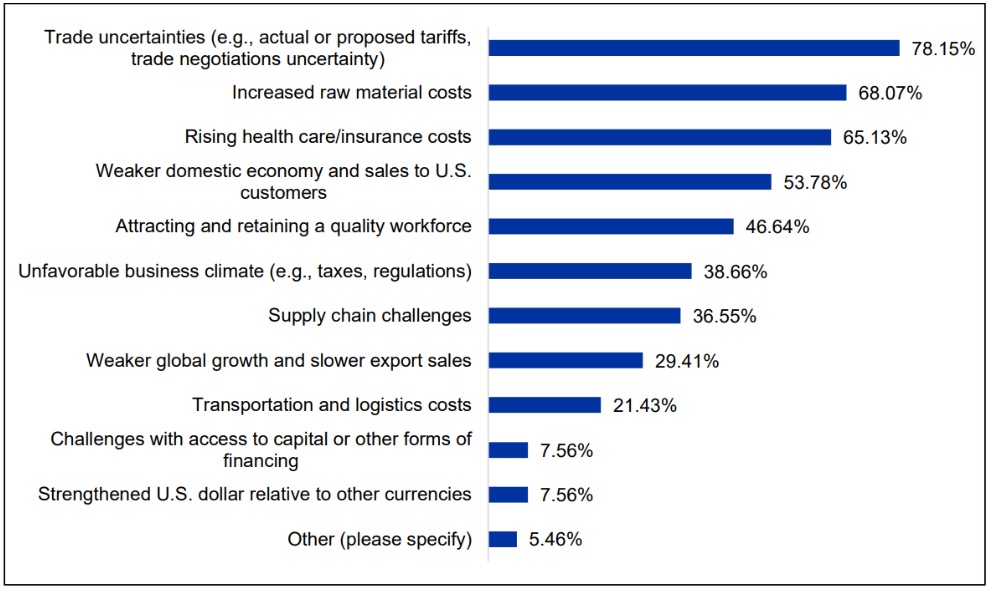
Main business challenges – as of Q3 2025 (Source: National Association of Manufacturers)
Globally, 94% of companies report that their revenue has been affected by supply chain disruptions, prompting 97% of businesses to actively reconfigure their networks to enhance resilience.
Even more notable is that 72% of manufacturing leaders are using on-demand manufacturing models to overcome innovation barriers and scale [3].
This is clear evidence that operational flexibility has become a competitive advantage, on par with price or product quality.
>>> Read more: “Greening” manufacturing enterprises, it doesn't start with money, but with data
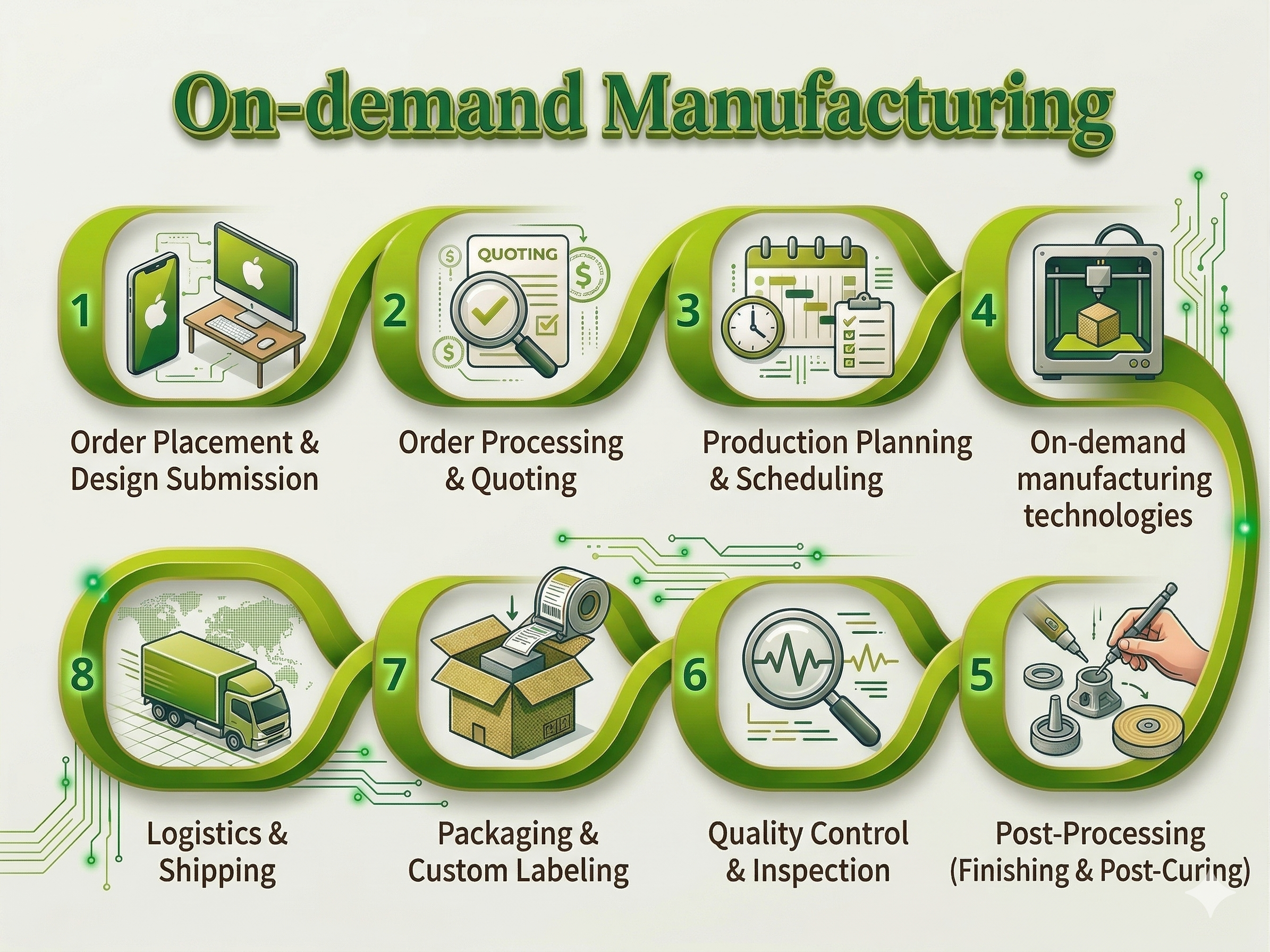
On-demand manufacturing model (Source: BambuUP)
1.3. FDI Shift and Pressure to Reposition in the Value Chain
Changes in supply chain structure are also driving shifts in foreign direct investment flows.
"Adapter" countries that compete on low costs, such as Brazil and India, are seeing their FDI attractiveness decline by about 15%. In contrast, "connector" countries with strong regional supply chain integration, such as Mexico and Bangladesh, are recording an increase of about 14% [1] .
This shows that the criteria for choosing manufacturing locations are changing: from low cost to connectivity, flexibility, and ecosystem integration.
For economies like Vietnam, this is both an opportunity to upgrade their position in the value chain and pressure to transform faster. If Vietnam fails to move beyond the role of a "low-cost workshop," its competitive advantage will gradually erode in the wave of global restructuring.
2. Key Technology & Innovation Trends in Manufacturing and Export for 2026
2.1. Agentic AI: From support tool to independent operating agent
For many years, AI in manufacturing was primarily understood as an analytical tool to help humans make better decisions. In 2026, that definition is outdated.
The emergence of Agentic AI marks the birth of an entirely new generation of artificial intelligence: capable of reasoning, planning autonomously, and taking proactive actions without waiting for commands or continuous human intervention.
According to Deloitte’s 2026 Manufacturing Industry Outlook [4], the process of moving Agentic AI from small-scale pilots (2024-2025) to full enterprise-wide deployment is expected to accelerate strongly this year, requiring synchronized restructuring across data, talent, technology, and process governance.
Imagine this: when a sensor detects a risk of failure, the system does not just issue an alert, it automatically reschedules production, coordinates spare parts, and updates delivery plans, all within minutes, before humans even have time to meet and discuss.
This is the shift from AI as a tool to AI as an operator, forcing businesses to rethink their entire operational architecture, not just "buy another piece of software."
>>> Read more: Green Building Materials: How Japan rebuilds and confronts natural disasters
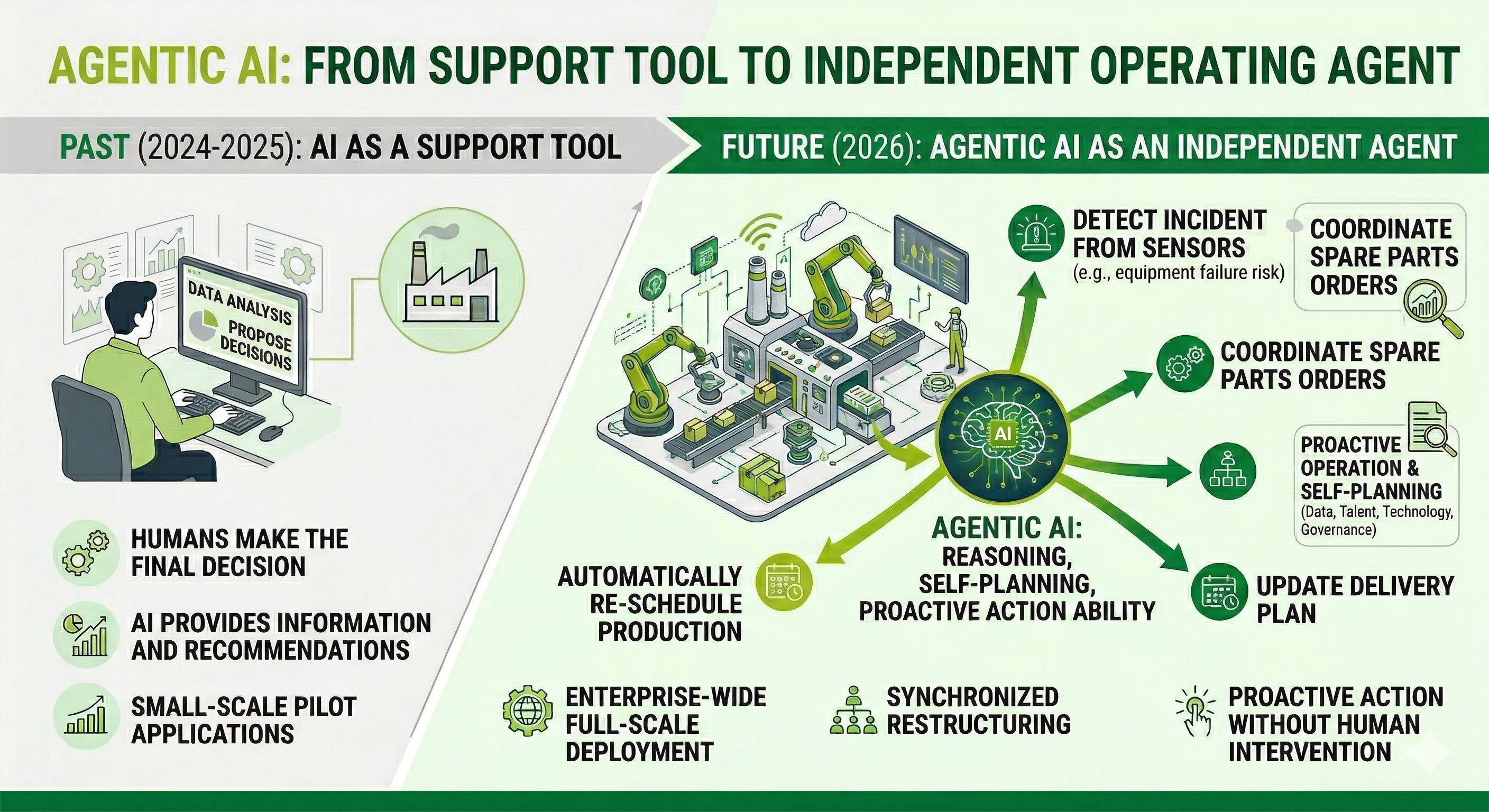
Application trends of Agentic AI in manufacturing and export businesses (Source: BambuUP)
2.2. Digital Twins & IIoT: Virtual factories running in parallel with physical ones
Imagine a factory with two versions existing simultaneously: one physical version running on the production floor and one completely identical digital version, updated in real time. That is the essence of a Digital Twin.
This technology allows testing of every change, from production line layout and machine parameters to failure scenarios, in a virtual environment without causing any disruption to actual production.
Combined with the Industrial Internet of Things (IIoT), factories create a digital thread: a continuous data flow connecting every stage of the product lifecycle, from raw materials to the end consumer.
Practical significance for export businesses: instead of detecting quality issues at the end of the line (or worse, after goods reach customers), Digital Twins and IIoT enable detection and resolution of anomalies at the point of origin.
This is also the foundation for predictive maintenance, one of the largest cost-saving sources in modern manufacturing, as unplanned machine downtime can cost millions of dollars per hour.
>>> Read more: Carbon: Dual benefits for businesses in the race to net-zero emissions
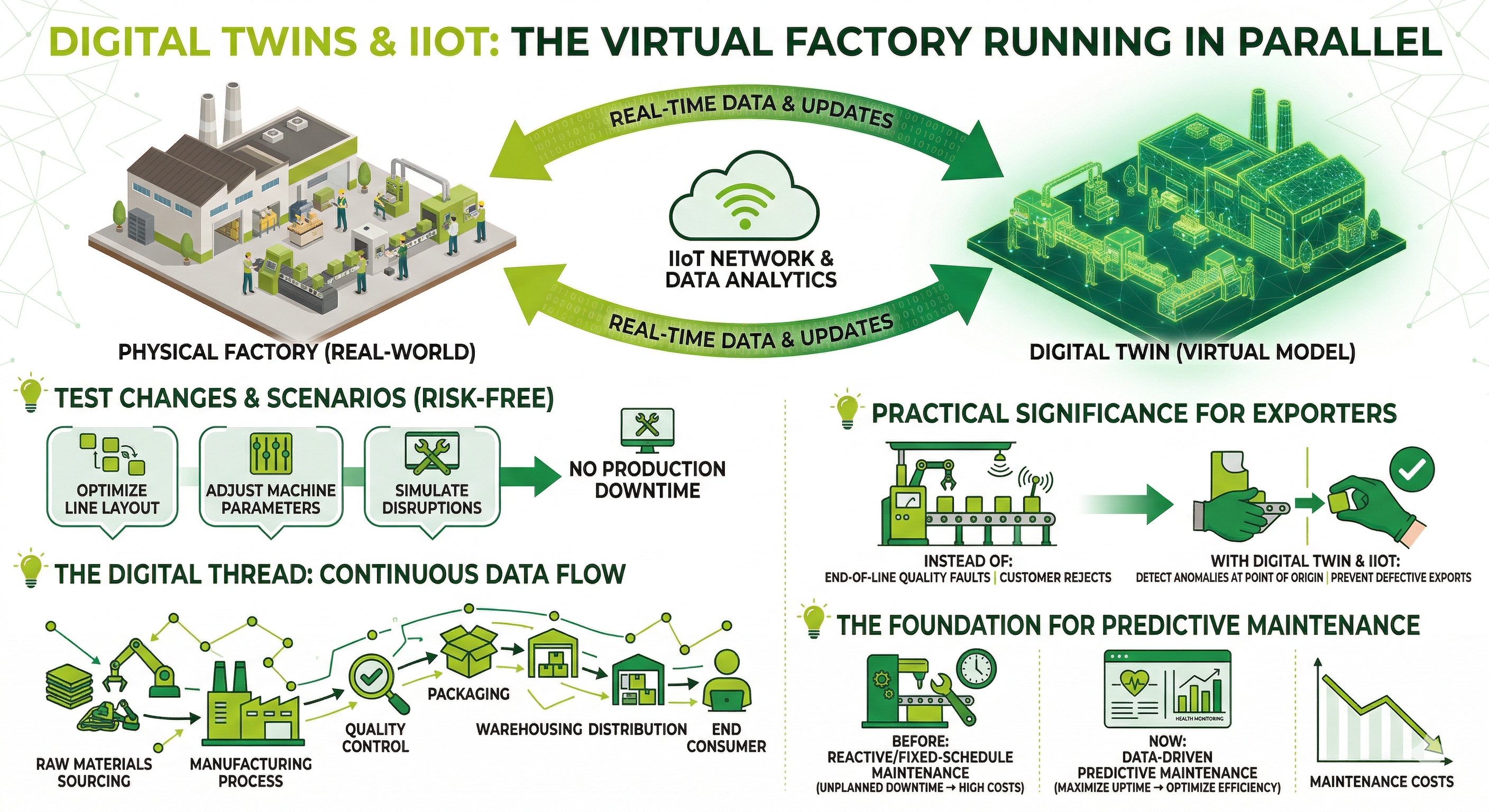
Benefits of applying Digital Twins & IIoT in manufacturing plants (Source: BambuUP)
2.3. Blockchain & digital product passports: Supply chain transparency as a commercial asset
In international trade, the question “Where does this product come from, how was it made, and with what materials?” is shifting from optional to mandatory, especially in major export markets like the EU, with increasingly stringent ESG and traceability regulations.
The blockchain market in manufacturing is approaching $30 billion [5]. The most strategic application today is Digital Product Passports (DPPs) - permanent digital passports attached to each product, storing the entire journey: raw material origins, processing processes, carbon footprint, maintenance history, and end-of-life recycling instructions.
What businesses must realize: this is no longer purely a compliance issue. As B2B buyers and end consumers increasingly value transparency, DPPs are becoming a commercial positioning advantage, a factor that distinguishes verifiable and trustworthy products from those that only make claims.
For exporters, this is an opportunity to convert investments in quality and sustainability into measurable market signals.
>>> Read more: Is AI the GPS guiding green investment, unlocking 40 trillion dollars in ESG?
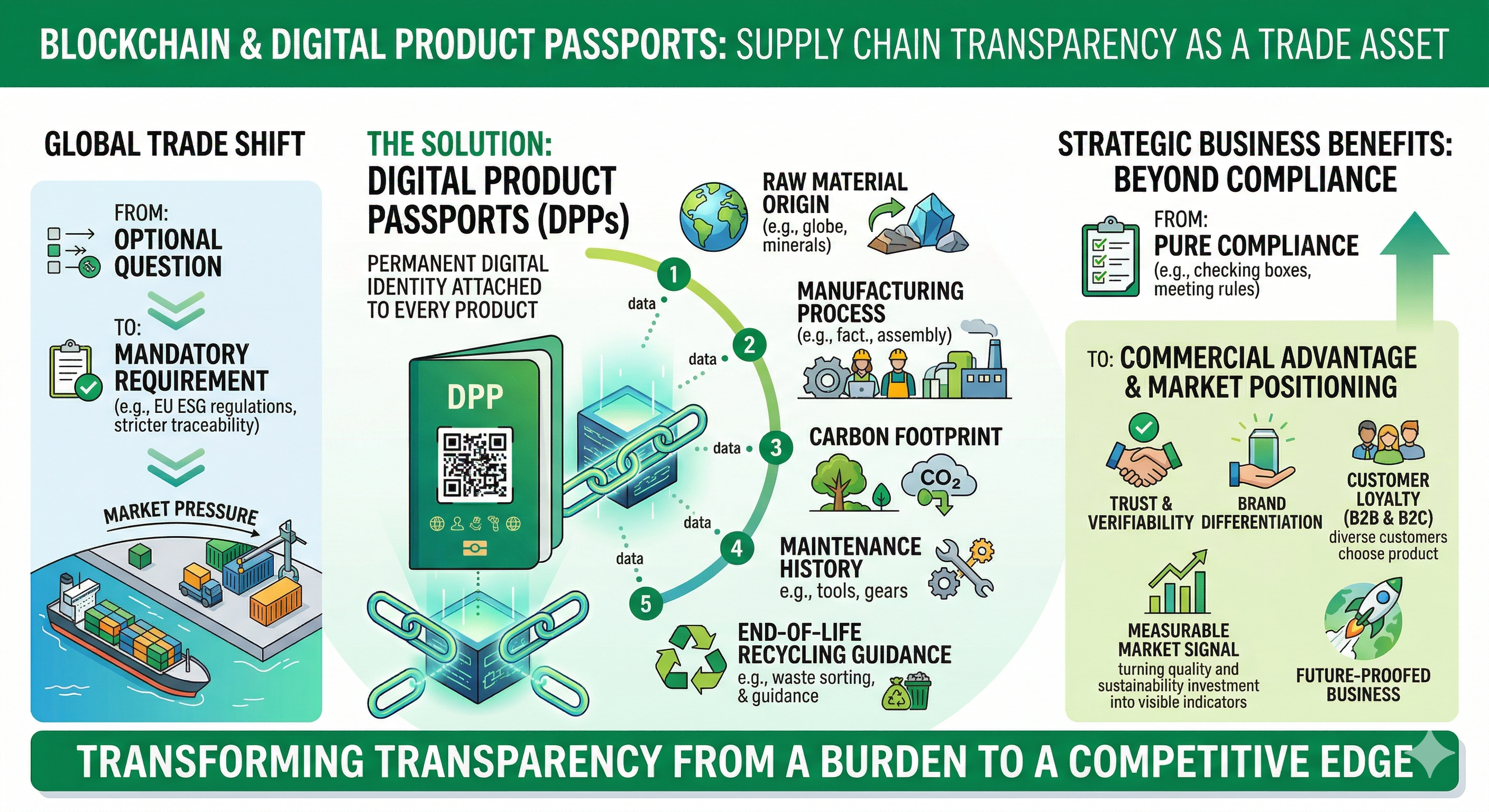
Blockchain application as digital passports for supply chain transparency (Source: BambuUP)
2.4. Additive manufacturing & Smart materials: Ending the trade-off between cost and customization
For decades, manufacturing operated under an unavoidable logic: to achieve low unit costs, production volumes must be large. To achieve high customization, costs must rise sharply. Additive Manufacturing (3D printing) is breaking this logic.
In 2026, 3D printing technology has significantly expanded its material portfolio: from engineering plastics to high-performance metal powders, advanced composites, and smart materials, next-generation materials that can change properties (shape, hardness, thermal conductivity) in response to temperature, pressure, or light. The smart materials market is projected to grow at 8% per year in the coming period [6].
Strategic significance: manufacturers can fulfill small-batch orders at reasonable costs, shorten new product development cycles, and enable customers to co-design products according to real needs. This forms the foundation of the Consumer-to-Manufacturer (C2M) model, where the boundary between "buyer" and "designer" becomes increasingly blurred.
For exporters, this is a lever to escape pure price competition and move into higher value-added segments.
>>> Read more:
- The comprehensive view of Japan’s artificial intelligence (AI) ecosystem
- Vietnam’s Artificial Intelligence (AI): Shaping a distinct identity in the digital Era
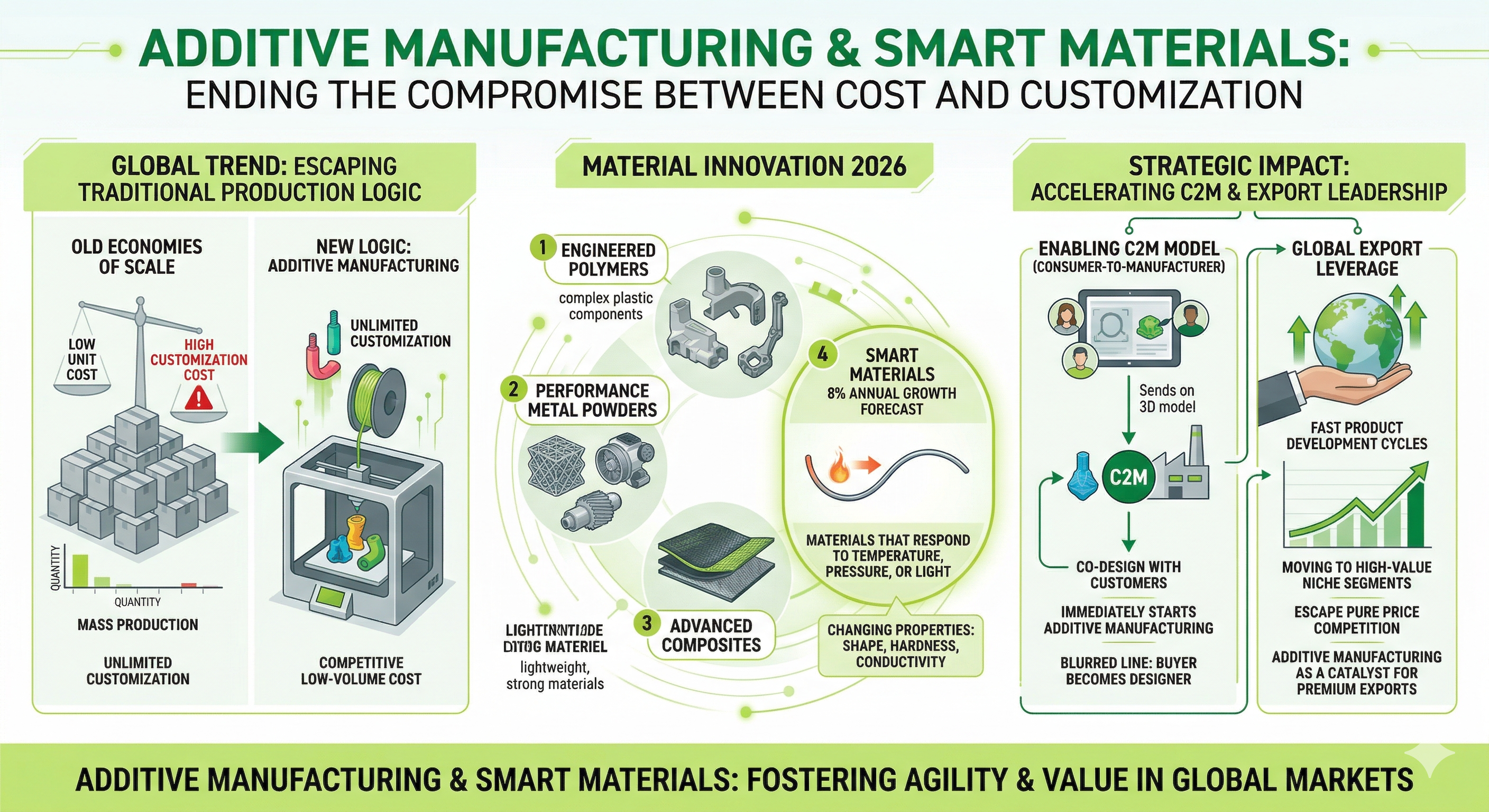
Additive Manufacturing/ 3D Printing helps businesses produce small orders at reasonable costs (Source: BambuUP)
3. The "stability trap" & human capital challenge: Why technology is not the biggest barrier
3.1. When stable growth becomes a trap
When listening to manufacturing leaders talk about innovation, one recurring pattern emerges: the barrier is not technology, but the organization’s ability to absorb and transform innovation. The most stable, optimized, and efficient operations often face the strongest organizational resistance to change.
Worse still, short-term revenue growth can mask long-term warning signals. Many manufacturing businesses are currently benefiting from global supply chain restructuring, with rising orders, full capacity, and stable margins, without realizing that this advantage is cyclical, not structural.
When that wave stabilizes and manufacturers from many countries compete in the same market, the competition will no longer be decided by price but by speed of new product launches, customization capability, supply chain transparency, and process sustainability.
This is exactly when the gap between businesses that have built an innovation operating system and those that have not will become clear and increasingly difficult to close.
>>> Read more: Why Open Innovation is key to implementing resolution 68-NQ/TW in the digital age
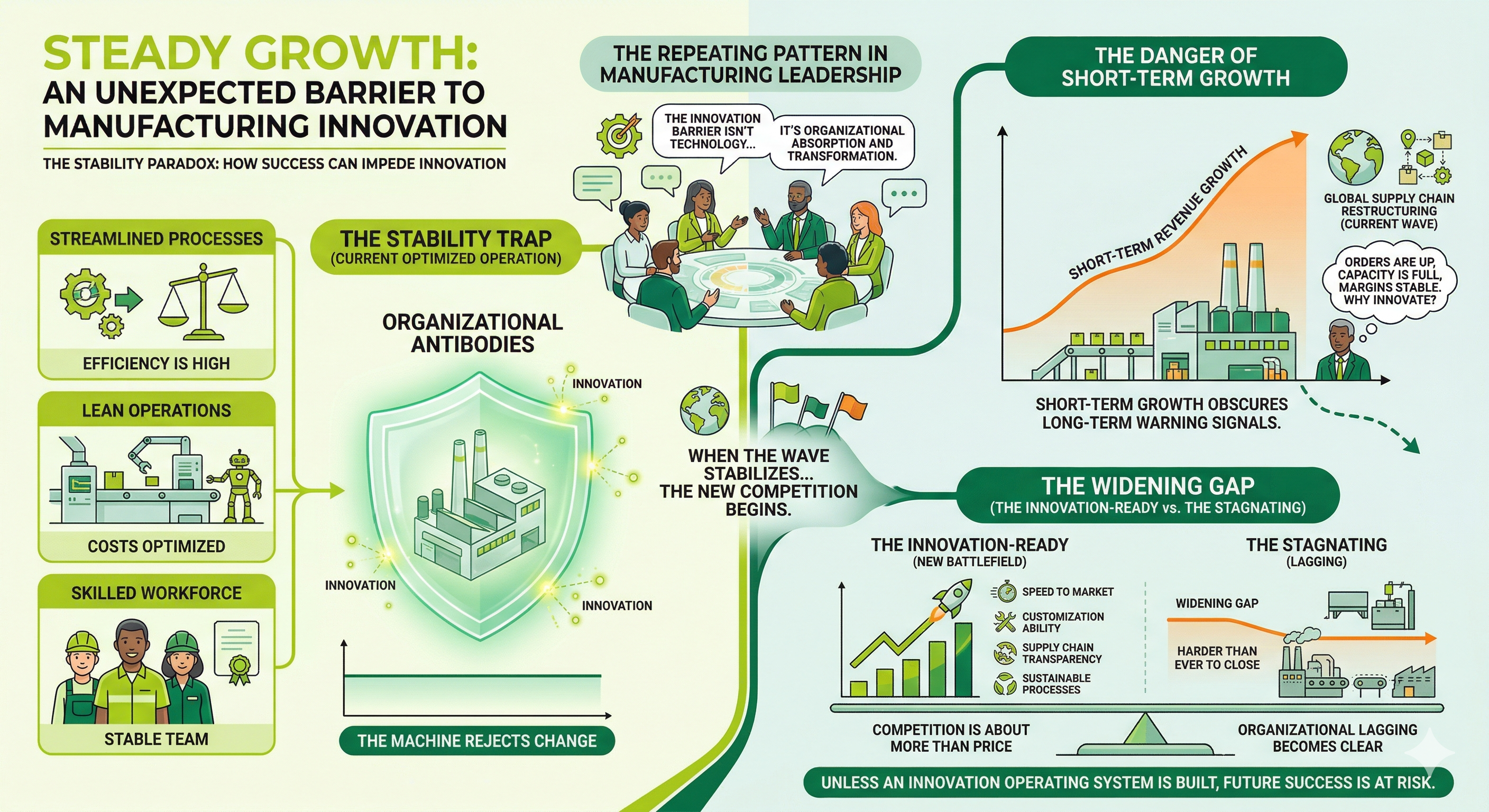
Stable growth can become a trap for businesses seeking innovation (Source: BambuUP)
3.2. Workforce: The often underestimated variable
Cross-industry research from McKinsey and Deloitte in 2025 agrees on one point: technology only scales when skills, processes, and governance develop in parallel.
You cannot buy an Agentic AI system and expect teams to operate it with old reflexes. You cannot deploy Digital Twins and let data sit idle because no one knows how to ask the right questions.
Entering 2026, Data, Technology, and AI skills have officially surpassed FP&A (Financial Planning & Analysis) to become the top priority in workforce development strategies [7]. This does not mean every employee must become a data engineer or programmer.
The essence of this shift is role redesign and comprehensive upskilling. Every link in the factory, from line operators and quality controllers to production planners, needs "digital capability" to collaborate effectively with machines.
More importantly, in an AI- and data-driven environment, workers must use their deep domain expertise and institutional knowledge to validate data, challenge anomalies in AI analysis, and guide technology toward the most accurate decisions.
Machines provide speed and data, but it is humans who ultimately shape the real value of digital solutions.
Leading businesses do not separate "digital transformation projects" from "workforce development programs." They invest in upskilling and reskilling with the same strategic discipline as investing in machinery and systems. This is why the gap between companies investing in people alongside technology and those that do not will only continue to widen.
>>> Read more: Silver Economy: A new growth driver in the era of aging
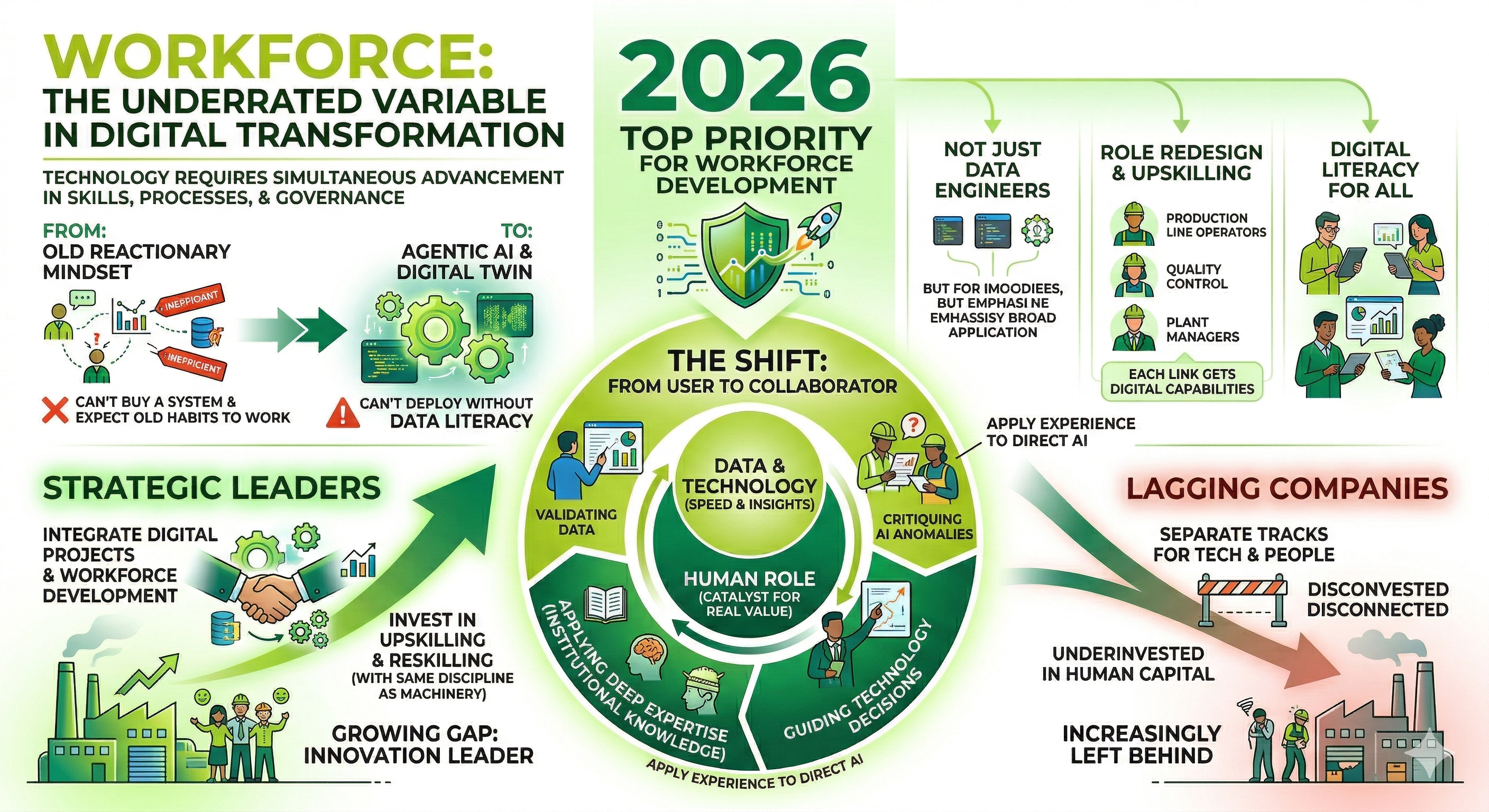
Technology only scales when skills, processes, and governance develop in parallel (Source: BambuUP)
4. Self-Audit: 3 vital questions to measure your business's innovation operating system
Rather than a theoretical framework, here are three practical questions for businesses to self-assess where they stand on the innovation journey and what the next steps should be.
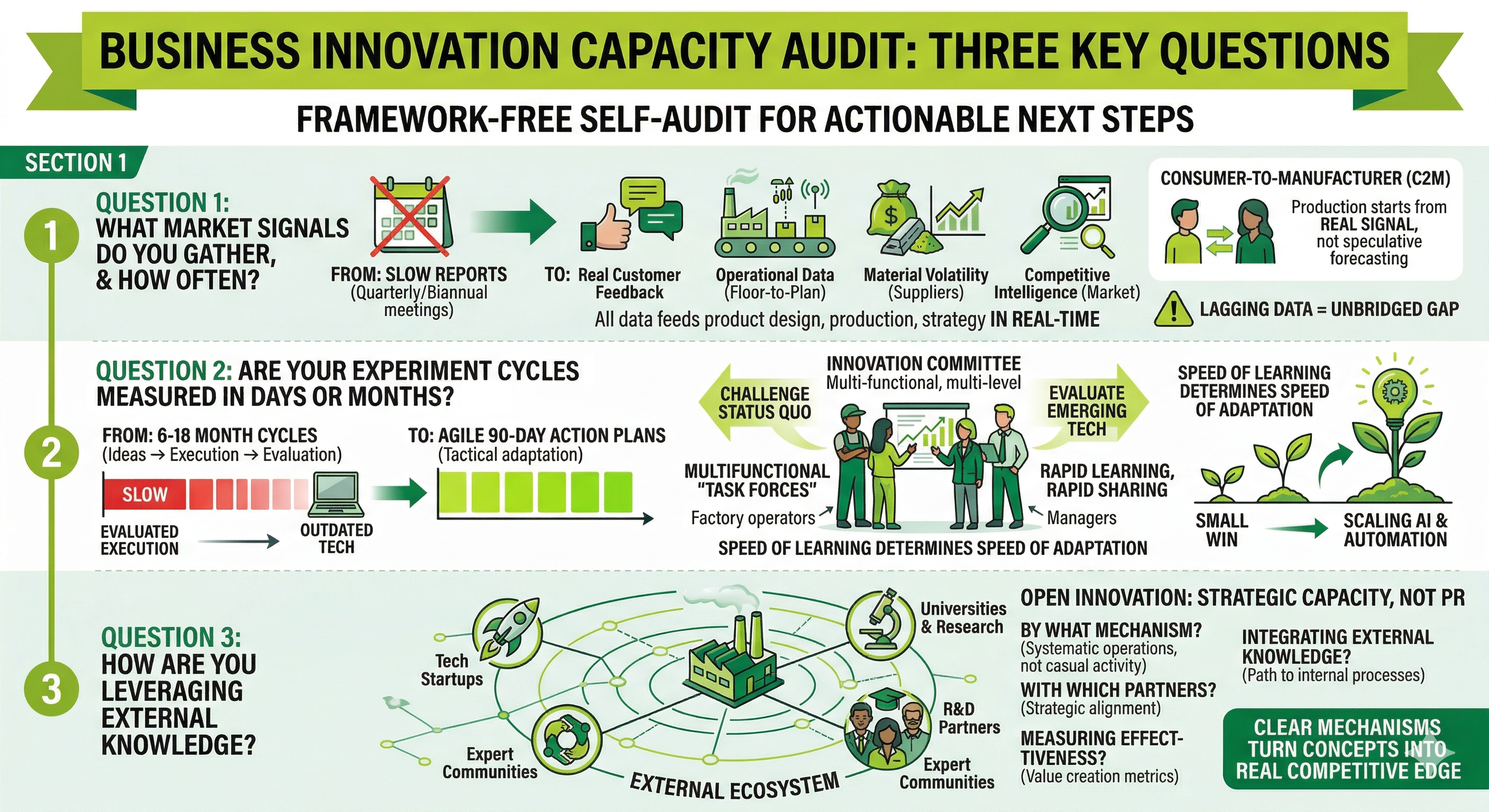
Question 1: How early and how often does the business capture market signals?
Leading manufacturers do not wait for quarterly reports or semi-annual strategy meetings. They build systems to continuously capture signals from multiple sources simultaneously: real customer feedback, operational data from production, raw material fluctuations from suppliers, competitive intelligence, and turn all of it into inputs for product design, production planning, and real-time strategic decisions.
The Consumer-to-Manufacturer (C2M) model is the most mature expression of this capability: production no longer starts from marketing forecasts but from real market signals. Businesses that have not built this feedback loop are making strategic decisions based on lagging data, and in 2026 manufacturing, lagging by even one quarter can create an unbridgeable gap.
Question 2: Is your experimentation cycle measured in days or months?
One of the biggest barriers to innovation in manufacturing is excessively long experimentation cycles, from idea to execution to results evaluation, often lasting 6, 12, or even 18 months. In that time, the market changes, technology updates, and competitors complete multiple cycles of their own.
According to Forvis Mazars, instead of struggling with massive digital transformation roadmaps, pioneering manufacturers are solving the adaptation challenge with a more practical tactic: establishing Innovation Committees [8].
These are not closed-door leadership groups. They are cross-functional, multi-level "task forces" with diverse perspectives, from frontline operators to managers, tasked with continuously challenging the status quo and evaluating emerging technologies.
Importantly, instead of creating easy-to-obsolete 3-5 year grand strategies, they adopt 90-day action plans.
The goal is not a perfect plan on paper. The focus is on achieving "small wins", experiments that can be quickly measured, learned from, and immediately shared across the organization to inspire participation.
Experimentation speed determines learning speed, and learning speed determines adaptation speed. Businesses that shorten this cycle will quickly eliminate outdated manual processes, freeing resources and accumulating enough operational space to scale AI investments exponentially faster than competitors.
Question 3: How is the business leveraging knowledge from outside the organization?
No manufacturing business, no matter how large, can master all the technologies needed to compete in the next decade on its own.
This is why Open Innovation is shifting from a buzzword to a core strategic capability: purposeful connection with the external ecosystem, technology startups, universities and research institutes, R&D partners, and industry expert communities.
>>> Read more: The Creator Economy: A new fuel source for Corporate Innovation
Business innovation capacity audit: Three key questions (Source: BambuUP)
However, Open Innovation only creates value when designed as a systematic operating mechanism, not as a networking or PR activity.
The real question is not “Should we collaborate externally?” but rather: through what mechanisms, with which partners, how is effectiveness measured, and how is external knowledge integrated into internal processes?
Businesses that can clearly answer these questions will turn Open Innovation from a concept into a real competitive advantage.
---
Phượng Lê.
Training Program: Enhancing international competitiveness 2026
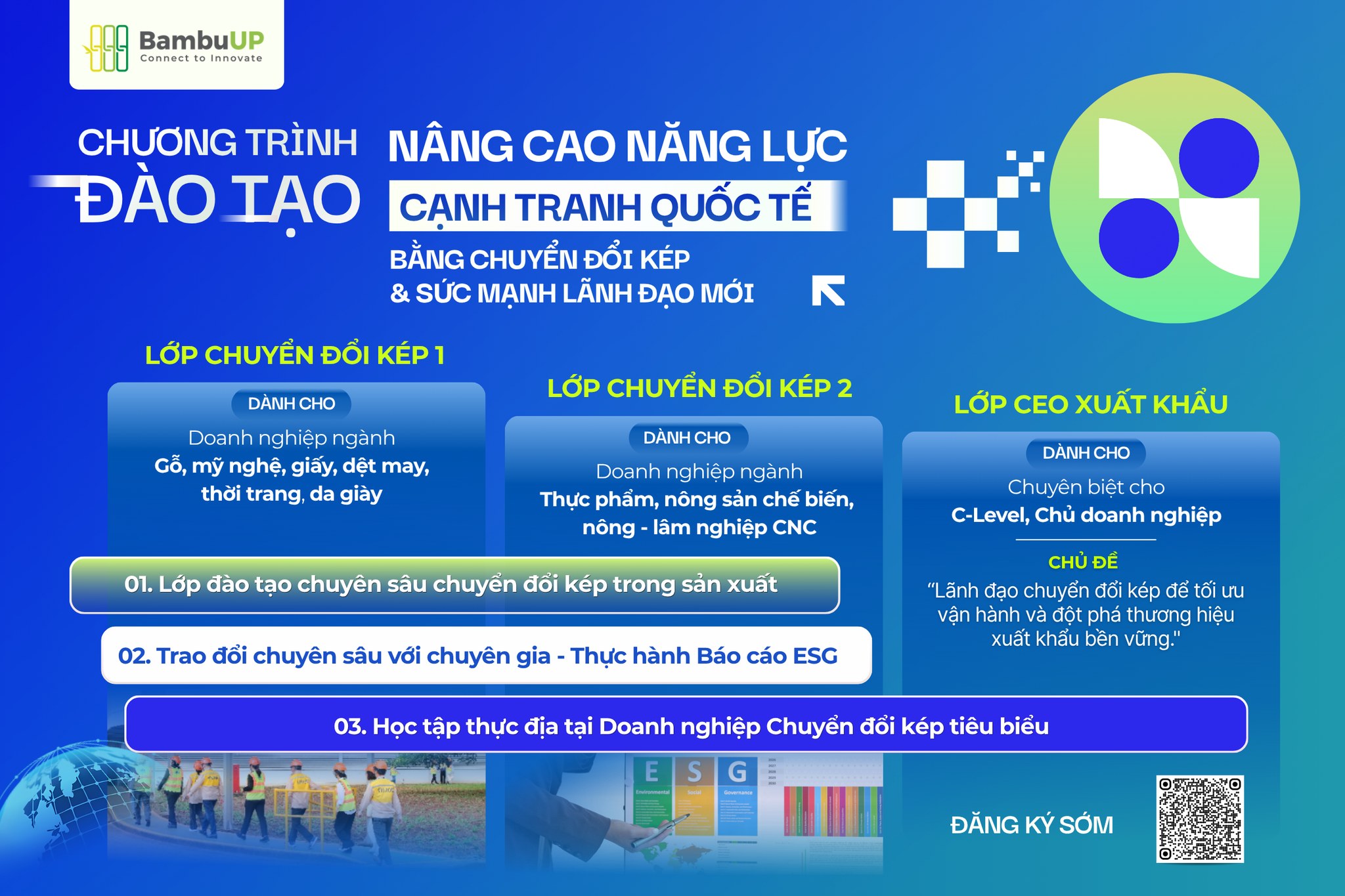
Technology only unleashes its full power when your team possesses commensurate transformation capabilities.
Instead of struggling with massive roadmaps, BambuUP partners with businesses to build an "innovation operating system" through practical training programs that shorten experimentation cycles and prepare for 2026 export barriers.
Exclusive roadmap to help businesses break through comprehensively:
-
Synchronized "three-legged stool" upgrade: The 2026 program upgrades strategic thinking for C-Level, optimizes operations for M-Level, and builds execution proficiency for Specialists.
-
"See it to believe it" field experience: Building on past visits to Coca-Cola, NS BlueScope, and Heineken, the 2026 program offers exclusive field trips where businesses can observe and learn from leading dual-transformation factories.
-
Ecosystem Power: Join a network of 20+ strategic partners and a community of 50+ pioneering dual-transformation businesses to receive multi-layered support.
👉 Early Bird Offer: 10% tuition discount for businesses registering before May 15, 2026.


